

The February Preliminary came in at 76.2, down 2.8 from the January Final. Investing.com had forecast 80.8. Since its beginning in 1978, consumer sentiment is 11.6 percent below the average reading (arithmetic mean) and 10.6 percent below the geometric mean.
Surveys of Consumers chief economist, Richard Curtin, makes the following comments:
Consumer sentiment edged downward in early February, with the entire loss concentrated in the Expectation Index and among households with incomes below $75,000. Households with incomes in the bottom third reported significant setbacks in their current finances, with fewer of these households mentioning recent income gains than anytime since 2014 (see the chart). When asked to assess their current financial position, the deep divisions become apparent: among those with incomes in the bottom third, just 23% reported improved finances, the lowest since 2014; in contrast, among those with incomes in the top third, 54% reported their finances had improved. Mentions of income gains fell to just 17% among those in the bottom third, compared with 44% in the top income third.
Presumably a new round of stimulus payments will reduce financial hardships among those with the lowest incomes. More surprising was the finding that consumers, despite the expected passage of a massive stimulus bill, viewed prospects for the national economy less favorably in early February than last month. In contrast, the proposed stimulus is expected to prompt a very strong pace of economic growth, with the differences mainly about the appropriate size and pace of federal spending. The legislative debate essentially focuses on whether low inflation or full employment is the more important policy goal, with one side accepting greater employment risks and the other side accepting greater inflationary risks. The expected strength in consumer spending in 2021 and 2022 critically depends on a significant reduction in precautionary motives, which in turn depend on progress against the pandemic as well as favorable trends in both inflation and employment. [More...]
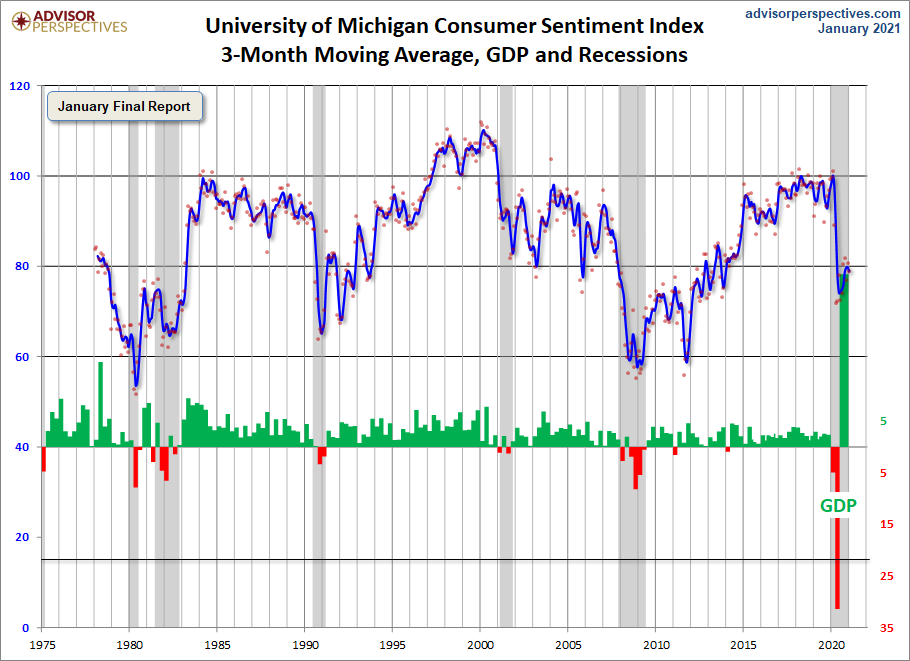
See the chart below for a long-term perspective on this widely watched indicator. Recessions and real GDP are included to help us evaluate the correlation between the Michigan Consumer Sentiment Index and the broader economy.

To put today's report into the larger historical context since its beginning in 1978, consumer sentiment is 11.6 percent below the average reading (arithmetic mean) and 10.6 percent below the geometric mean. The current index level is at the 24th percentile of the 518 monthly data points in this series.
Note that this indicator is somewhat volatile, with a 3.0 point absolute average monthly change. The latest data point saw a 2.8 point decrease from the previous month. For a visual sense of the volatility, here is a chart with the monthly data and a three-month moving average.
For the sake of comparison, here is a chart of the Conference Board's Consumer Confidence Index (monthly update here). The Conference Board Index is the more volatile of the two, but the broad pattern and general trends have been remarkably similar to the Michigan Index.

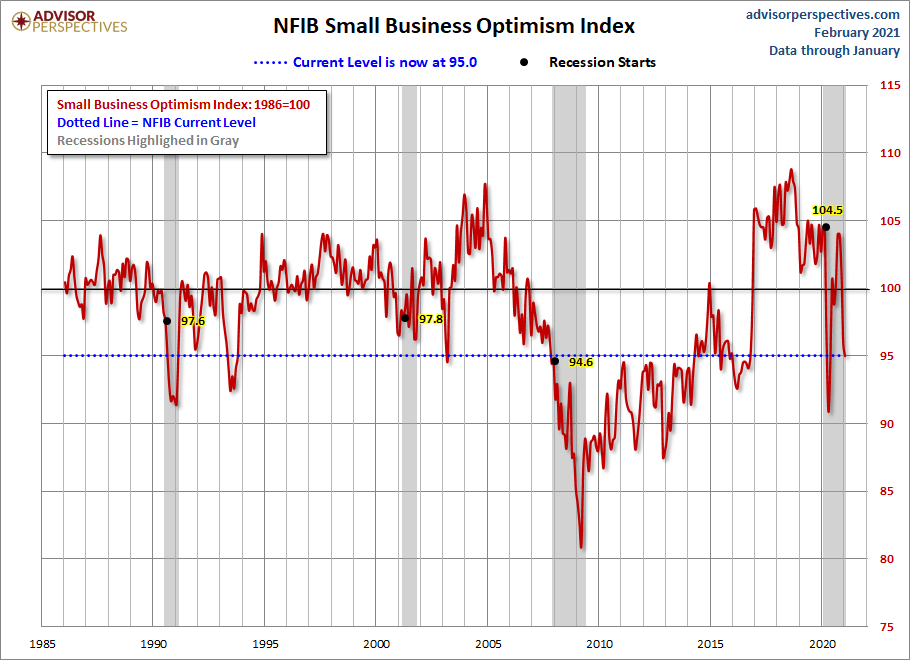
And finally, the prevailing mood of the Michigan survey is also similar to the mood of small business owners, as captured by the NFIB Business Optimism Index (monthly update here).

Comments
Log in or sign up to join the conversation.