
The Safety Net: A 20% Yielder Got A Downgrade

I last looked at Calumet Specialty Products Partners L.P. (Nasdaq: CLMT) in the Safety Net more than two years ago. At the time, I gave the stock a dividend safety rating of “D.”
Though its 10% yield at the time was attractive, the company’s distributable cash flow – a measure of cash flow used by MLPs – did not cover the distribution (MLPs pay distributions, not dividends).
The company makes products from oil. It produces things like lubricants, gasoline and jet fuel. Two years ago, the high price of oil hurt margins and sent DCF tumbling.
Let’s see if low oil prices have reversed the situation.
Though Calumet did not cut the distribution in the past two years, the stock has fallen hard, along with every other energy-related MLP. Today, the stock trades at half of what it was in 2014. And that’s after a 50% rise in the past month.
The fact that the stock plunged and the distribution per share remained the same means that Calumet now has a yield that is north of 20%.
At the time of my last analysis two years ago, Calumet generated only $7.9 million in free cash flow through the first three quarters of 2013. At the same time, it paid unit holders (MLP investors own units, not shares) $149 million in distributions.
That situation has improved, but not enough.
In 2015, Calumet’s DCF was $161.9 million, while unit holders collected $224.6 million in distributions. In other words, for every dollar it paid unit holders, the company generated only $0.72 in cash flow. That’s not good.
Going forward, DCF is expected to rise considerably. On a per-unit basis, Calumet generated $2.16 per share in DCF in 2015. Wall Street predicts that figure will climb to $2.61 in 2016 and $3.04 next year.
Unit holders currently receive $2.74 per unit annually in distributions. So even if analysts are right about this year, DCF will still not cover the distribution. It won’t be until next year that there is some breathing room.
The company has only about $6 million in cash and is saddled with $1.7 billion in debt, so it’s not like Calumet can dip into cash reserves to pay the distribution.
On its most recent quarterly conference call, management implied it would sell some businesses that do not generate sufficient cash flow in order to sustain the distribution.
CEO Tim Go added, “We will seek to grow our core business with a goal of supporting our current distribution, subject to market conditions.”
Management has clearly been committed to the distribution in the past. After cutting the distribution in 2008, it consistently raised it from 2010 until 2013, including 12 consecutive quarterly increases. But the distribution has remained the same since July 2013.
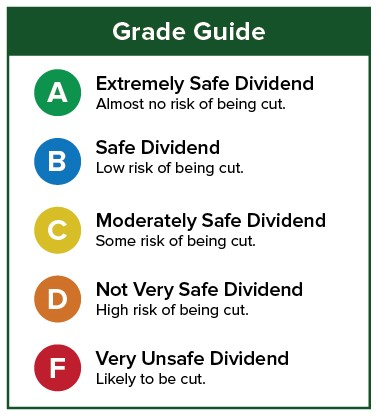
Calumet hasn’t covered its distribution in three years and likely won’t this year. The risk of a reduction in its distribution has increased. Calumet deserves the Safety Net’s lowest rating.
Dividend Safety Rating: F
Disclaimer: Nothing published by Wealthy Retirement should be considered ...
more


Comments


