


Image Source: Pexels
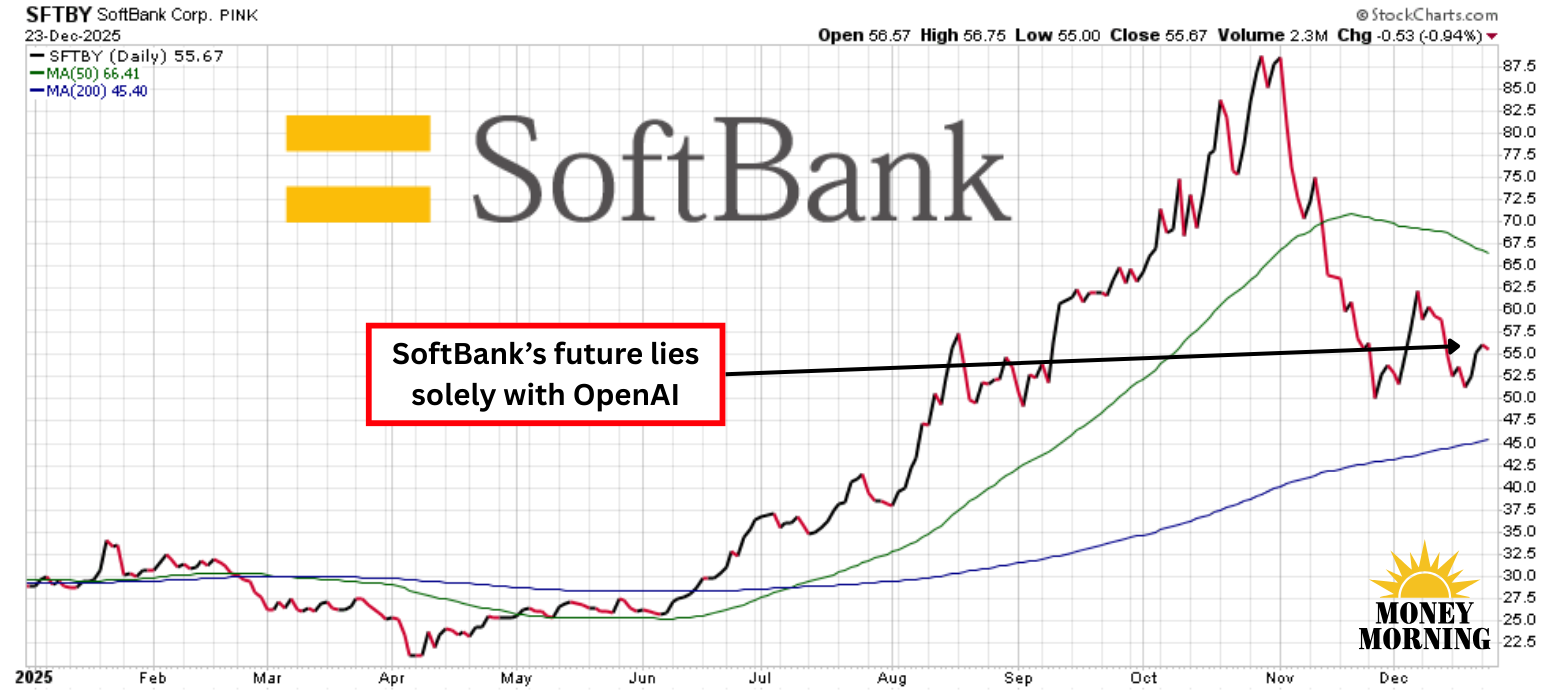
Visionary SoftBank (SFTBY) CEO Masayoshi Son is making one of the boldest moves in tech investing history. He's committing tens of billions to OpenAI, positioning the company as the cornerstone of artificial intelligence's future. While his conviction in AI's transformative power is inspiring, his approach of concentrating massive resources into a single entity carries extreme risk.
For most investors, this will turn out to be a cautionary tale of why diversification remains the bedrock of prudent wealth building.
Son's All-In Bet on AI Dominance
Son has long championed disruptive technologies, from early investments in Alibaba (BABA) to Arm Holdings (ARM). Now, he's going all-in – literally – on OpenAI, the pioneer behind ChatGPT. SoftBank has already poured in billions and is scrambling to fulfill a $22.5 billion commitment by Dec. 31, part of a larger $40 billion deal struck earlier this year.
To raise capital, Son notoriously liquidated SoftBank's entire Nvidia (NVDA) stake worth $5.8 billion – an AI bet that's been delivering phenomenal gains for investors for years –sold billions in other holdings like T-Mobile (TMUS) shares, slashed staff, and paused most new deals at the Vision Fund. He's even leveraging loans against Arm stock. All for a moonshot bet on a company bleeding red ink.
Son hopes to secure OpenAI's leadership in achieving artificial general intelligence (AGI) and beyond, partnering on massive projects like the $500 billion Stargate initiative for AI infrastructure. If OpenAI becomes the foundational layer for global AI, SoftBank could reap enormous rewards, cementing Son's legacy as the architect of the AI era.
Yet, this concentration is extraordinarily risky. OpenAI's valuation has soared, but it faces intense competition, especially from Google's Gemini; skyrocketing compute costs; and projected multibillion-dollar losses for years to come. A single misstep – technological, regulatory, or financial – could jeopardize SoftBank's stability and its future.
(Click on image to enlarge)
Why Diversification Protects Your Portfolio
History shows that putting all your eggs into one basket often leads to disaster. High-profile concentrated bets, like those in overvalued startups during past bubbles, have wiped out fortunes. Diversification spreads risk, ensuring no single failure devastates your holdings.
The goal isn't to mimic an index fund and own hundreds of stocks – that can dilute potential upside and incur unnecessary fees. Instead, a balanced approach works best: aim for about two dozen quality stocks across diverse sectors and industries. This provides exposure to growth opportunities in tech, healthcare, consumer goods, energy, and finance, while buffering against sector-specific downturns.
A diversified portfolio captures broad market gains with lower volatility, allowing compounding over time without the stomach-churning swings of concentrated positions.
The Prudent Path for Long-Term Growth
Diversification isn't about avoiding risk entirely – it's about managing it intelligently. Studies consistently show diversified portfolios outperform concentrated ones over long periods, especially for individual investors without an insider edge.
Son's strategy suits a billionaire with a tolerance for monumental swings, backed by leverage and a track record of big wins (and losses). But for everyday investors building wealth steadily, spreading investments reduces the chance of ruin and enhances your ability to sleep at night.
Bottom Line
Masayoshi Son is risking his entire fortune and SoftBank's future on OpenAI's success. If AI explodes as he envisions, the payoff could be historic. But failure would be catastrophic, potentially unraveling years of progress.
Individual investors planning retirement portfolios to live off of shouldn't emulate this high-stakes gamble. Stick to diversification for reliable growth and safety – it's the proven way to thrive without betting on a ride-or-die investment.
More By This Author:
Rigetti Computing Is Down 61%. Is Quantum Computing Hype Dead?Everyone Is Talking About Silver, But Don't Forget Gold
These 3 High-Flying Stocks Could Crash Hardest If The AI Bubble Pops



Comments
Log in or sign up to join the conversation.