

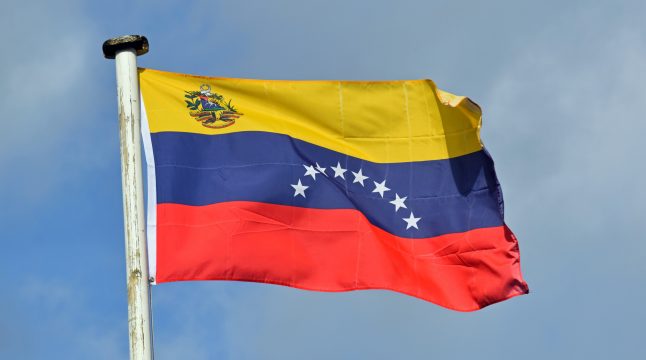
Image courtesy of 123rf.com
In a snatch and grab special operations action on Saturday, President Trump’s administration kidnapped Venezuelan President Nicolás Maduro and his wife Cilia Flores. They have since been brought to New York City on drug trafficking charges with the 92-year-old U.S. District Judge Alvin K. Hellerstein to preside over Maduro’s trial.
Although animosity towards Venezuela was initially attached to purported narco activities, President Trump left plenty of hints it is primarily about Venezuela’s massive oil supply, even greater than that of Saudi Arabia’s.
On Saturday, Trump noted that “we’re going to have our very large United States oil companies, the biggest anywhere in the world, go in, spend billions of dollars, fix the badly broken infrastructure, the oil infrastructure, and start making money for the country.”
Let’s examine what the implications are for the U.S. economy and its key sectors.
The Uncertain Control of Venezuela
Although President Trump said on Saturday that the U.S. “will run the country until such time as we can do a safe, proper and judicious transition”, the practical reality of that happening is far from certain. After all, removing the head of the state doesn’t necessarily imply the control of levers of power in Venezuela.
At the same time, it is safe to say that subverted government elements gave a stand down order to not engage the low-flying helicopters to any effective degree.
For a while, it seemed that institutionally prepared María Corina Machado was to take over, as she was recently given the Nobel Peace Prize. More importantly, as the leader of the Vente Venezuela opposition party, she pledged to restore ties with Israel and make Venezuela Israel’s “closest ally in Latin America.”
In contrast, the ousted Venezuelan President Nicolás Maduro has been largely framed as “antisemitic” and even working with Iran, Israel’s arch nemesis.
Given Trump’s proven track record of following Israeli-aligned interests across the globe, alongside Israeli PM Netanyahu’s recent insistence that Venezuela is “in cahoots” with Iran, this would make Machado the obvious choice as one of the transition leaders.
Moreover, in late January 2025, Israel’s Minister of Foreign Affairs Gideon Sa’ar teleconferenced with both Machado and Venezuela’s President-elect Edmundo González, followed by an in-person meeting with González mid-February in Germany.
However, President Trump appears to have dispelled Machado’s further role on Saturday, having noted that “it would be very tough for her to be the leader, she doesn’t have the support within – or the respect – within the country.”
In the meantime, Venezuela’s interim President and oil minister Delcy Rodríguez said in a televised address that Maduro’s capture “undoubtedly has a Zionist slant” and that “we will not be anyone’s colony; what is being done to Venezuela is barbaric.”
Previously, President Trump positively framed Rodríguez as “essentially willing to do what we think is necessary to make Venezuela great again.” To bridge this contradiction, the U.S. Secretary of State Marco Rubio said on Sunday that he had direct contact with Rodríguez and further actions would be deemed on “the basis of what they do, not what they say publicly.”
For the time being, Venezuela’s compliance seems to be constrained to a military quarantine on the country’s oil exports, rather than having physical military presence.
Ramifications of Venezuela’s Assets Being Harnessed by the U.S.
While the U.S.-aligned Saudi Arabia is the world’s second largest oil producer, after the U.S., Venezuela ranks number one in holding 299,953,000,000 barrels of proven oil reserves as of 2016. As a producer, for the same year, Venezuela ranked 12th, while its oil consumption accounted for only 0.62% of the world’s total oil consumption.
As of the February 2024 report for 2023, IEA estimated Venezuela to hold 303 billion barrels of proven crude oil reserves compared to Saudi Arabia’s 267 billion and the U.S.’ 48 billion. Accounting for around 20% of the world’s total global oil reserves, this makes Venezuela one of the most important countries to secure alliance with.
Specifically, by ensuring that this massive oil reserve is not traded with yuans, rubles or euros, but exclusively in USD to maintain the petrodollar’s status as the world reserve currency. After all, without this privileged monetary position, the U.S. would not be able to monetize its astronomic debt, or the ever-increasing budgetary deficits and welfare/military spending.
As the fate of Venezuela is being decided, Switzerland froze Maduro’s assets, once again confirming the Swiss abandoned their financial neutrality legacy. In the meantime, the Swiss private bank Lombard Odier Group is forecasting oil price in the high $50s during 2026, which is in line with current WTI price of $58.34.
Norbert Ruecker, Head of Economics & Next Generation Research at Bank Julius Baer, noted that “the oil market seems in a lasting surplus, largely due to structural factors, and able to weather geopolitics quite well.”
In other words, securing Venezuelan oil is more about securing the petrodollar than it having a trickle-down effect of benefitting end-consumers by lowering the cost of living. Case in point, fuel costs for transportation represent around 16% of US consumer budgets, without accounting for the passing of costs to the consumer down the supply chain.
On the other hand, gold price could have a repeat of its impressive 2025 performance (up 64%). According to global market strategist Yuxuan Tang at JP Morgan Private Bank, “rising political and geopolitical uncertainty in Latin America could drive increased demand for haven assets.”
It is yet to be seen if such turmoil would affect Bitcoin in the same manner. According to Chainalysis’ October report, Latin America’s crypto trading volume more than doubled year-over-year by 2024-end. The dominant leader is Brazil at $318.8 billion in crypto value received, while Argentina ranks second at $93.9 billion transaction volume.
Venezuela ranks 4th at $44.6 billion. Interestingly, El Salvador, noted for its crypto friendliness and Bitcoin reserves, achieved only $3.5 billion crypto volume. Overall, given the LATAM crypto growth trend, the Venezuelan situation is likely to boost exposure to Bitcoin.
US Sectors to Benefit from Venezuela Under Control
Under the assumption that the ousting of Venezuelan President Nicolás Maduro confers a shift in power on the ground, but without the US boots on the ground, US companies could tap into Venezuela’s total oil wealth worth up to $18.48 trillion, if the ceiling per barrel is $61.
However, under sanctions, Venezuelan infrastructure has greatly degraded over the last decade, as evidenced by its rapid decline in crude oil production and operational rigs.
For the mid-term, this means that a monetizable extraction value at around $40/bbl is significantly lower, within the $1.2 trillion to $2.4 trillion range. This is further under the assumption that Venezuela drastically expands its logistics and shipping capacity.
According to Venezuelan state-owned oil and natural gas company PDVSA, just to upgrade its 50-year neglected pipelines to peak capacity would cost up to $58 billion. This is where the US companies would be instrumental, according to Phil Flynn, senior market analyst at the Price Futures Group:
“If indeed this continues to go smoothly, and it looks like a masterful operation so far, and US companies are allowed to go back and rebuild the Venezuelan oil industry, it could be a game-changer for the global oil market.”
Although such heavy rebuilding efforts are likely to have measurable effects after 2030, Chevron (CVX), ExxonMobil (XOM) and ConocoPhillips (COP) have the largest stakes. For the wider infrastructure repairs, Schlumberger (SLB) and Halliburton (HAL) would be primary beneficiaries.
Lastly, if Venezuela is to fully fold under broader Israeli-aligned interests, data center buildup is likely, giving companies like Eaton (ETN), and even Palantir (PLTR), expanded footholds.
More By This Author:
Why Are Trane Technologies Shares Slipping? Nvidia’s Rubin Chips Spark HVAC ConcernsWhy Are Novo Nordisk Shares Rising In Premarket? GLP-1 Pill Launch Begins In U.S.
3 Dividend Stocks For A K-Shaped Economy In 2026

Comments
Log in or sign up to join the conversation.