


Image Source: Pixabay
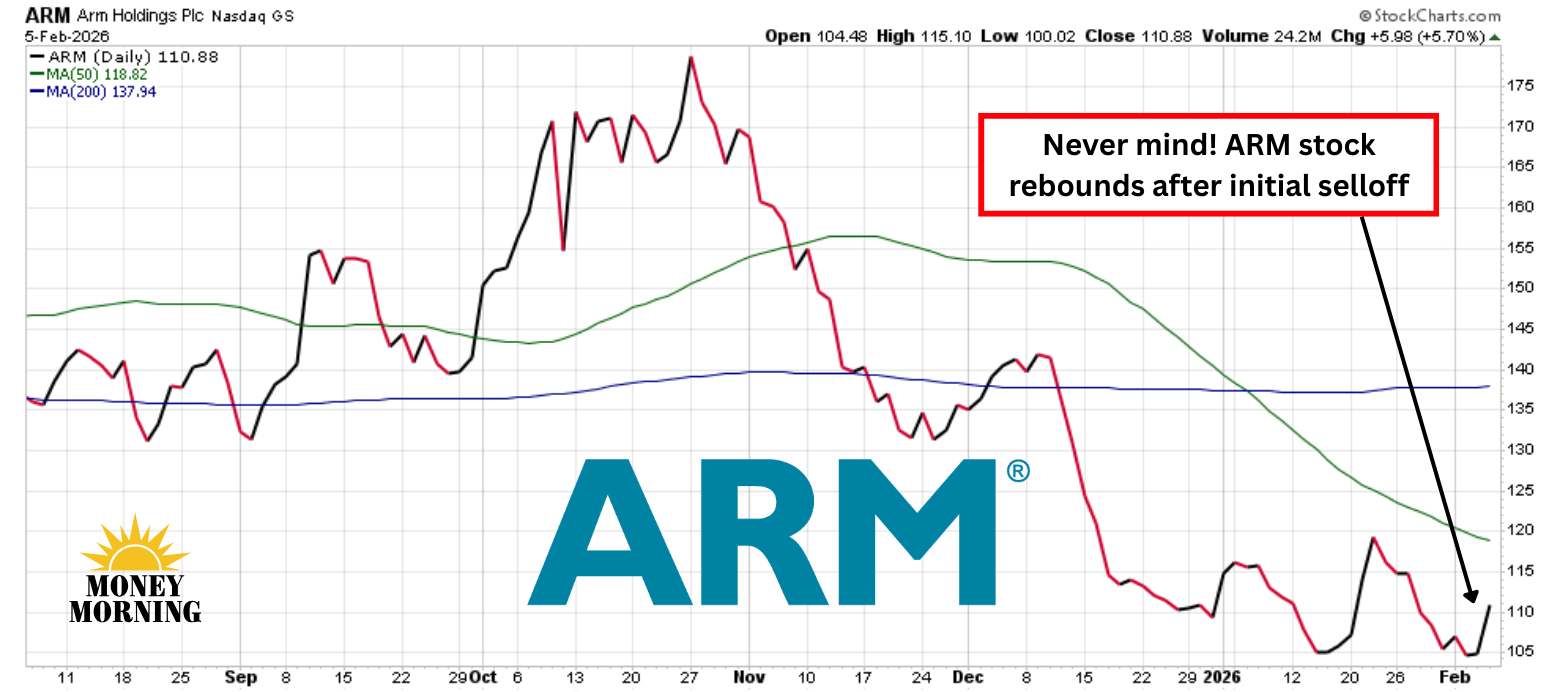
Arm Holdings (ARM) reported its fiscal third-quarter earnings on Wednesday after the market closed, delivering results that initially disappointed investors. The company posted revenue and adjusted earnings that beat Wall Street estimates, but licensing revenue came in short of expectations amid concerns over a smartphone market slowdown. This triggered an 8% tumble in after-hours trading.
Yet, by Thursday's close, the stock had rebounded 5%, even as the broader tech sector faced a worsening selloff, with the Nasdaq Composite dropping 1.2% amid AI fatigue and macroeconomic jitters. Investors appeared to reassess ARM's situation, focusing instead on its robust royalty growth and forward guidance, suggesting the initial reaction may have been overblown.
Disappointing Licensing Amid Smartphone Headwinds
Arm's results highlighted a mixed picture, with royalty revenue surging 27% on adoption of advanced architectures like Armv9 and growing data center usage. This segment benefited from higher royalty rates per chip and expanded deployment in AI applications. Total revenue marked the fourth consecutive quarter above $1 billion, underscoring Arm's momentum in a semiconductor landscape increasingly tilted toward energy-efficient designs.
However, the licensing shortfall drew scrutiny. Analysts initially pointed to Qualcomm's (QCOM) concurrent earnings warning about a global memory chip shortage, which could constrain smartphone production and sales. Qualcomm – a key Arm licensee – forecasted this headwind would dampen mobile demand, directly impacting Arm's upfront licensing fees from handset makers.
With smartphones historically accounting for over half of Arm's royalties, this raised fears of a broader slowdown. Summit Insights analyst Kinngai Chan noted the licensing miss as a key factor in the after-hours drop, emphasizing potential ripple effects on Arm's ecosystem. Several firms, including Barclays and Jefferies, trimmed price targets by 5% to 10%, citing near-term risks in the consumer electronics space.
(Click on image to enlarge)
Reconsidering the Bearish View
By Thursday, sentiment shifted as analysts dug deeper. Many argued the smartphone concerns were overstated, with premium device adoption – fueled by AI features in flagships like those from Apple (AAPL) and Samsung – poised to mitigate shortages. Arm's management highlighted strong traction in high-end mobiles, where Arm-based chips command premium royalties.
More compelling was the data center surge. Arm forecasted its share among top hyperscalers approaching 50% in 2025, up from low double-digits, as cloud giants ramp up Arm-powered servers for AI workloads. This diversification reduces reliance on mobiles, with data centers now projected to rival or exceed that segment. New Street Research upgraded Arm to "Buy" with a $145 target, calling royalty beats "what really matters."
While price targets averaged around $130 (down from $140 pre-earnings), most retained "Buy" or "Outperform" ratings, praising intact long-term growth from AI proliferation. Evercore ISI noted that even moderate success in infrastructure could drive 20% to 25% annual revenue growth through 2030.
Bottom Line
Arm's ambition to capture half the data center market from incumbents like Intel (INTC) and Advanced Micro Devices (AMD) is bold, given x86's dominance. Yet, it doesn't need full dominance to thrive – gains of 20% to 30% share could significantly boost royalties as AI inference shifts to efficient Arm designs.
More worrisome is Arm's pivot to producing its own chips, starting with server CPUs for clients. This moves Arm from a neutral IP licensor to a direct competitor, potentially alienating partners like Nvidia (NVDA), which relies on Arm tech for Grace CPUs. If customers perceive conflicts, it could erode trust and licensing deals, making Arm stock a riskier bet despite its AI tailwinds.
More By This Author:
D-Wave Tumbles As Quantum Revolution Put On HoldIt Ain't $100 Billion, But Nvidia's $20 Billion OpenAI Investment Isn't Nothing Either
AMD Tumbles 10% On AI Worries Despite Record Results



Comments
Log in or sign up to join the conversation.