

Image Source: Unsplash
Famed investor Michael Burry, who rose to prominence for predicting the 2008 housing crash, recently stunned Wall Street with massive bets against the artificial intelligence (AI) boom. Through his Scion Asset Management hedge fund, Burry acquired put options worth over $1 billion in notional value on Nvidia (NVDA) and Palantir Technologies (PLTR), two stocks that have become the face of AI.
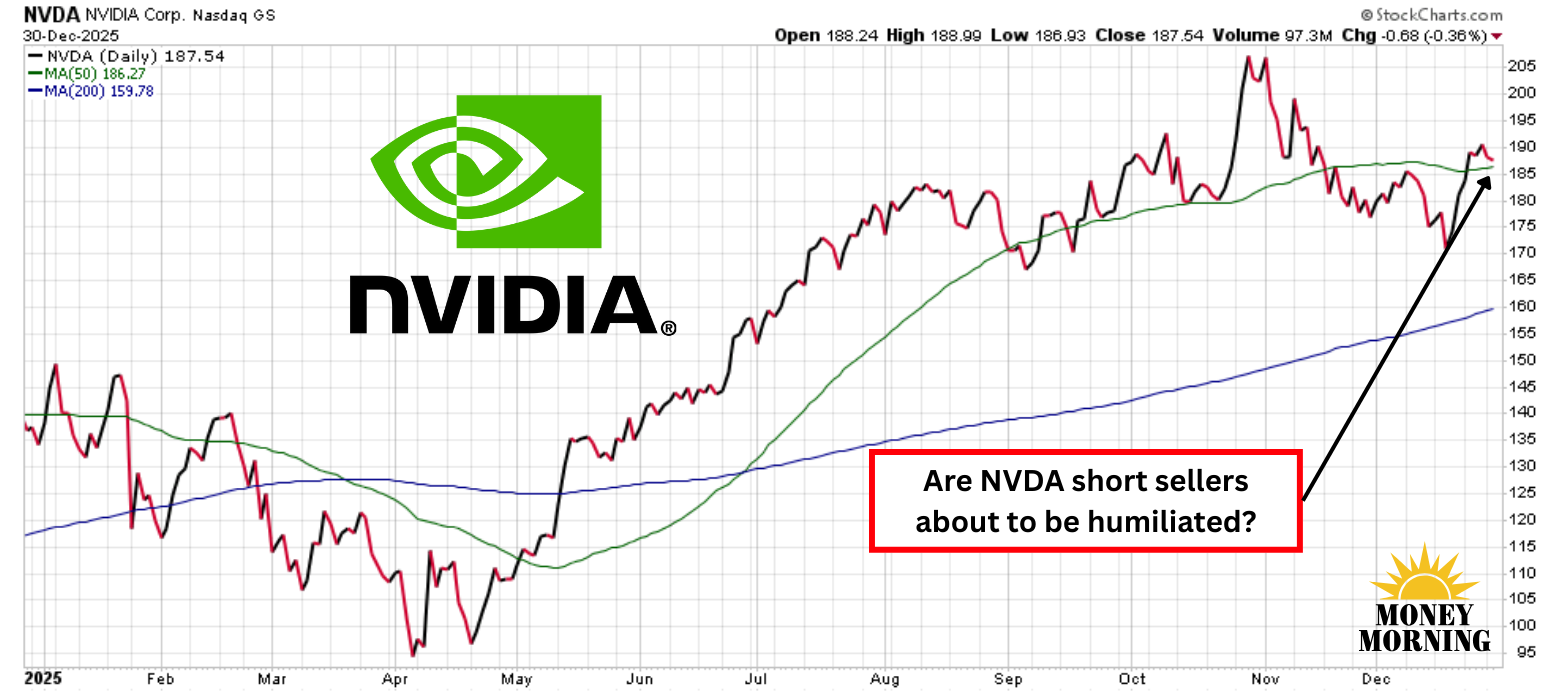
Signaling deep skepticism over mounting worries about Nvidia's future growth and valuation, the big bet – which is akin to shorting the stock – has caused the chip giant's stock to stall. Shares have largely gone nowhere since the beginning of August. Yet a new report suggests Nvidia is poised to humiliate Burry and fellow pessimists.
An Explosive Revelation
A recent exclusive report from Reuters says sources familiar with the matter says Chinese customers have placed orders for more than 2 million H200 chips after President Trump recently reauthorized the shipment of the AI accelerators to China. Because Nvidia only has about 700,000 H200 chips in stock, it is scrambling to negotiate additional supply from Taiwan Semiconductor Manufacturing (TSM), with production expected to begin in the second quarter of 2026. The timeline aligns with the end of the Chinese Lunar New Year holiday, potentially allowing Nvidia to re-enter a lucrative market that was killed off by U.S. export restrictions.
(Click on image to enlarge)
The H200 is Nvidia's second-most powerful processor for AI applications, built on Nvidia's Hopper architecture using TSM's advanced 4-nanometer process. Unlike the degraded H20 chip that was developed to comply with U.S. export restrictions on advanced technologies to China, the H200 is a full-power flagship chip that is far superior for training complex models, and has become a hot commodity in China.
Nvidia has set pricing for China-specific variants at approximately $27,000 per chip, making them an attractive option compared to pricier alternatives on the gray market.
This development highlights that robust demand from Chinese tech giants still exists, as they see the H200 as a major upgrade over restricted or domestic options. Initial deliveries could draw from existing stock, allowing Nvidia to start fulfilling orders sooner while scaled-up manufacturing addresses longer-term needs.
Supply Chain and Market Dynamics
Nvidia's push to expand H200 output comes even as the company prioritizes its cutting-edge Blackwell series and prepares for the upcoming Rubin lineup. The move underscores China's enduring importance as a key market for Nvidia, despite the trade barriers that slashed Nvidia's share there.
An Nvidia spokesperson emphasized that licensed H200 sales to authorized Chinese customers "will have no impact on our ability to supply customers in the United States," adding that a competitive Chinese market with growing local suppliers benefits U.S. interests by preventing total export blocks.
However, this ramp-up could also strain global AI chip availability, forcing Nvidia to carefully allocate resources amid growing worldwide demand. It also spotlights the delicate balance in U.S.-China trade relations, with the H200's performance edge potentially accelerating AI advancements on both sides.
Bottom Line
Reuters' exclusive report remains unconfirmed by official statements from Nvidia, TSM, or Chinese authorities, and significant risks remain. In particular, Beijing has not yet authorized any H200 imports, and regulatory hurdles could still emerge.
Nonetheless, if these plans materialize, Nvidia could win back a substantial portion of the China market it previously lost. It could generate billions in sales again, which could send NVDA stock soaring and leave the short sellers, well, short in the process.
More By This Author:
Sandisk Led The S&P 500 In 2025 -- Can It Repeat In 2026?SoftBank Is Betting Literally Everything On OpenAI – And That's A Terrible Idea
Rigetti Computing Is Down 61%. Is Quantum Computing Hype Dead?



Comments
Log in or sign up to join the conversation.