


Image Source: Unsplash
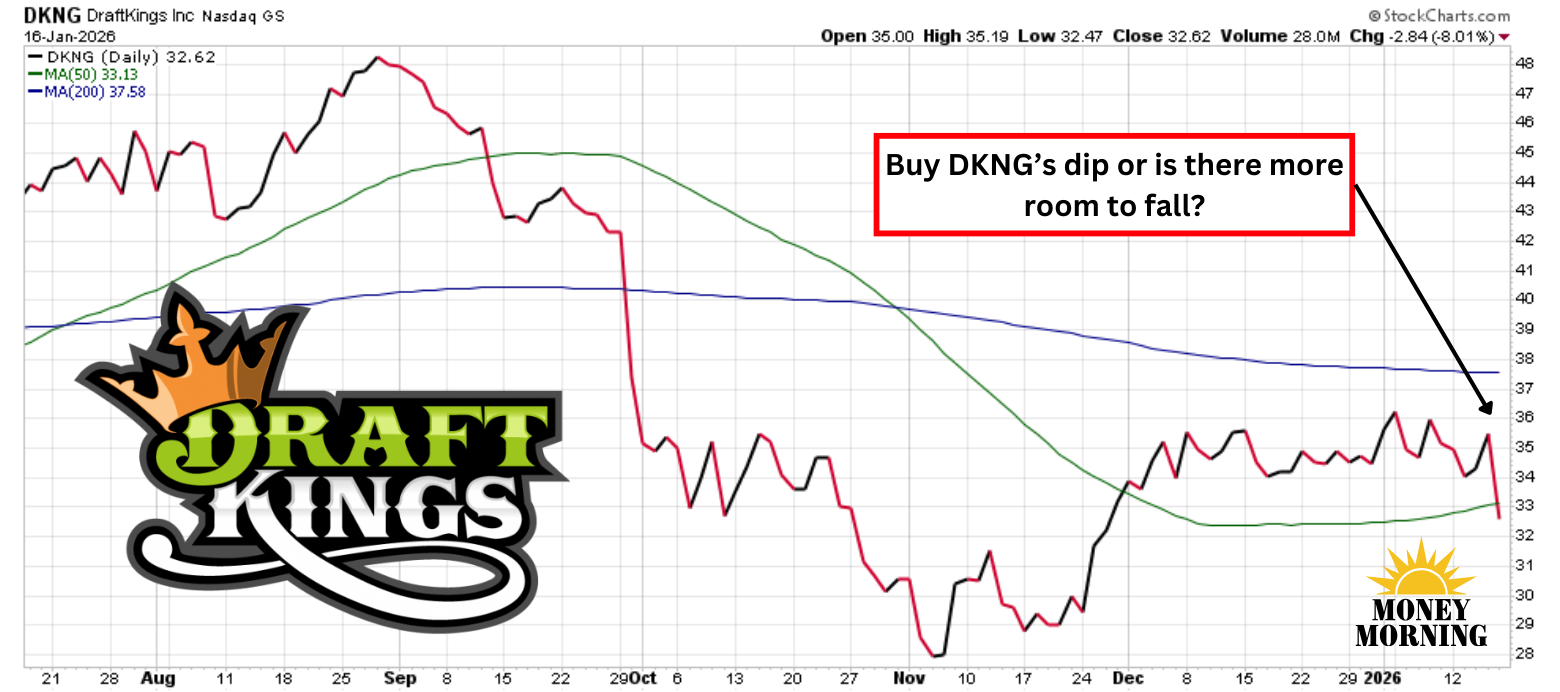
DraftKings (DKNG) shares plummeted 8% on Friday following the NCAA's urgent call to the CFTC to suspend prediction markets involving college sports, viewing them as akin to gambling and a threat to athlete integrity. This proposal is aimed at halting trades on collegiate outcomes and rattled investors in the sports betting sector.
Adding to the concern, prediction markets generally – like Polymarket and Kalshi – are surging in popularity, with explosive growth in 2025 that has continued into 2026, potentially siphoning users from traditional sportsbooks.
Meanwhile, New York – DraftKings' largest market – saw online wagering revenues plunge year over year in key months, such as September's 5.3% drop despite the higher handle seen, signaling profitability pressures. With these headwinds, is this dip a buying opportunity, or does uncertainty loom too large?
Betting on DraftKings' Business
DraftKings operates as a leading digital sports entertainment and gaming company, offering daily fantasy sports (DFS), online sports betting, and iGaming (casino games) across 28 U.S. states and select international markets. Its core revenue streams come from sportsbook (about 60% of total revenue), iGaming, and DFS, with innovative features like same-game parlays driving user engagement.
For all of 2025, DraftKings reported revenue of approximately $6 billion, up from $4.8 billion in 2024, though it lowered guidance mid-year due to unfavorable sports outcomes and higher payouts. While the company achieved its first profitable quarter in Q1 2025. it faced EBITDA losses in Q3 amid bettor-friendly results.
(Click on image to enlarge)
In the competitive U.S. online sports betting landscape, DraftKings holds a strong second place with about 34% market share based on gross gaming revenue, trailing Flutter Entertainment's (FLUT) FanDuel at 44%. Flutter – DraftKings' chief rival – posted $16.7 billion in total 2025 revenue, bolstered by FanDuel's dominance in the U.S. and international operations like Paddy Power. DraftKings' edge, though, lies in user acquisition, with 14 million monthly active users, but high marketing costs – over 30% of revenue – remain a drag.
The Role of NCAA Betting and Emerging Risks
NCAA games, including March Madness and college football, boost DraftKings' handle seasonally but contribute only a single-digit percentage of annual revenue – likely 3% to 5% based on historical patterns and indirect disclosures. In Q1, which includes the basketball tournament, revenue hit $1.41 billion, but upsets led to $170 million in lost earnings from high payouts. Professional sport leagues like the NFL dominate, accounting for over 40% of bets.
A greater risk, however, comes from prediction markets, which allow trading on event outcomes like elections or sports, directly challenging sportsbooks that form the bulk of DraftKings' revenue. These platforms exploded in 2025, with billions in volume and institutional interest from firms like Goldman Sachs. Robinhood's (HOOD) entry processed 2.5 billion contracts in October alone.
As they expand into sports, they threaten to erode DKNG's market share, especially with lower fees and broader appeal.
Bottom Line
The NCAA's proposal to ban college prediction markets remains just that – a request to regulators, not enacted legislation, though some state gaming commissions may follow suit amid integrity concerns.
Investors shouldn't dismiss it, as restrictions could dent seasonal boosts, but NCAA betting is a small slice of DraftKings' pie. Far more pressing is the rise of prediction markets – poised for even bigger growth in 2026 – potentially disrupting the sportsbook model. With N.Y. revenue fluctuations adding uncertainty, it's wise to hold off on buying the dip until greater clarity emerges.
More By This Author:
Western Digital Is Riding the AI Boom. Does This Rocketship Ride Ever End?Bitmine Immersion Makes $200 Million DeFi Bet On MrBeast
With $100 In Sight, This Is The Best Silver Play Today



Comments
Log in or sign up to join the conversation.