


Image Source: Pixabay
The U.S. Health and Human Services Dept. and the Agriculture Dept. recently unveiled the Dietary Guidelines for Americans, 2025–2030, which revives and updates the classic food pyramid. Released last week, this reset emphasizes real, whole foods as the cornerstone of health, prioritizing nutrient-dense options like high-quality proteins, healthy fats, fruits, vegetables, and whole grains while urging avoidance of highly processed items and refined carbohydrates.
The guidelines aim to combat chronic diseases by promoting balanced, customizable eating patterns that fit diverse lifestyles and budgets. While traditional meat processors and dairy producers might see boosts from the protein focus, an unexpected beneficiary could be Beyond Meat (BYND). As consumers seek more protein-rich diets, plant-based alternatives like those from BYND might gain traction among those opting for non-animal sources.
The Rise and Fall of Beyond Meat
Beyond Meat burst onto the scene in 2019 with its plant-based burgers, sausages, and other meat mimics, positioning itself as a revolutionary force in food. The company's initial public offering was a smash hit, with shares skyrocketing from $25 to a peak of over $239 in just months, as investors bet big on the shift toward sustainable, health-conscious eating. It seemed like the next big thing, with partnerships at fast-food chains like McDonald's (MCD) and Dunkin' fueling hype.
Revenue climbed rapidly, hitting a high of about $464 million in 2021, driven by curiosity and environmental concerns. But the sizzle faded fast, and sales growth stalled as consumers balked at high prices, unfamiliar tastes, and questions about the "ultra-processed" nature of the products. Broader economic pressures, including inflation, made shoppers stick to familiar, cheaper real meat.
Revenue plummeted to around $343 million by 2024, with ongoing losses mounting. Sales are down 20% through the first three quarters of 2025. BYND stock cratered, shedding over 99% of its value from the peak and today trades at just under $1 per share.
(Click on image to enlarge)
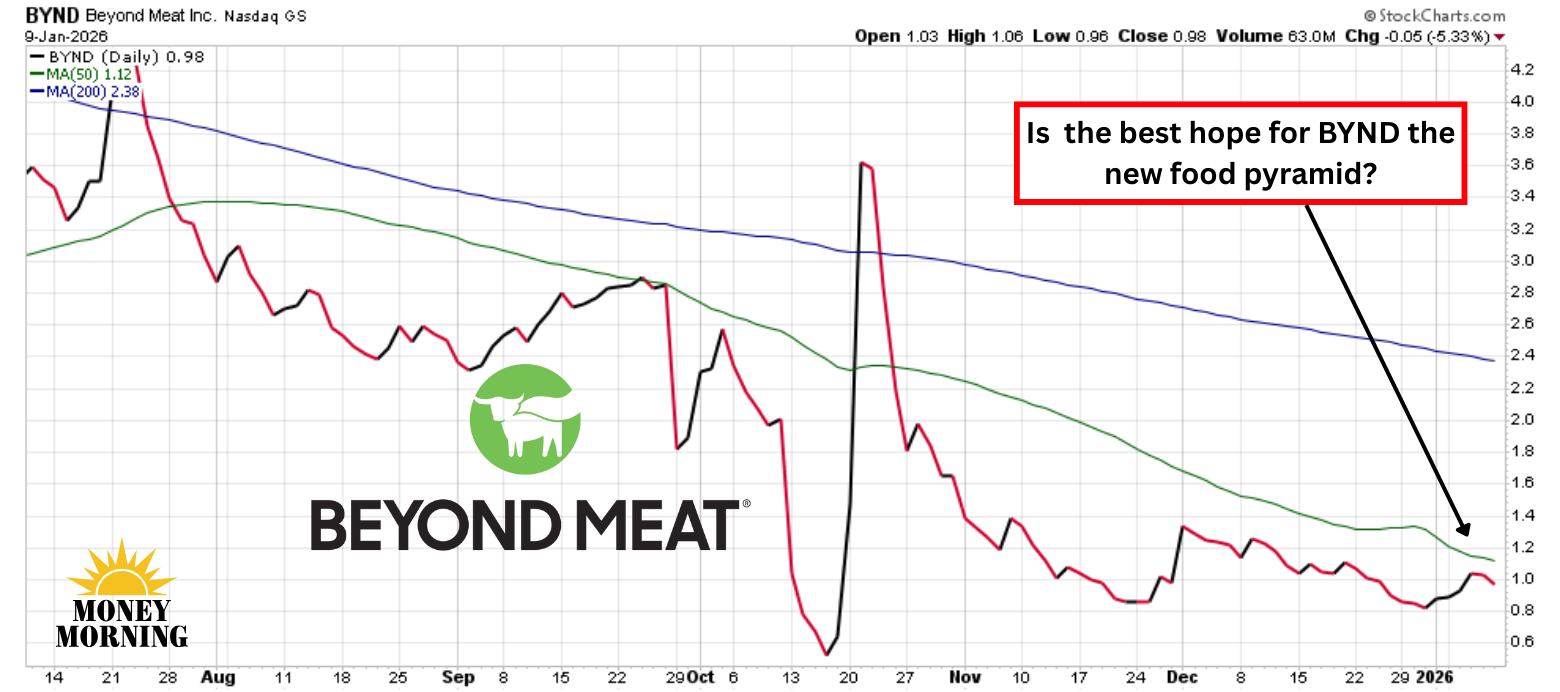
How the New Guidelines Could Provide a Lift
The updated dietary guidelines could offer Beyond Meat a much-needed revival by aligning with the push for more protein in everyday meals. Previously, BYND struggled to convert trial buyers into regulars because plant-based meats were seen as novelties rather than staples. Now, with the pyramid highlighting protein from both animal and plant sources – including beans, peas, lentils, nuts, seeds, and soy – consumers might view BYND's offerings as viable ways to meet these needs without traditional meat.
However, the guidelines' emphasis on avoiding highly processed foods is a double-edged sword: While critics label BYND products as processed, the company argues they use simple, plant-derived ingredients like peas and rice for protein. If positioned as a "nutrient-dense" alternative, BYND could appeal to flexitarians aiming for more protein without over-relying on red meat.
Bottom Line
Despite the intriguing potential, saving Beyond Meat remains a tough sell. The company couldn't sustain momentum even when plant-based eating was trendy; now, with guidelines encouraging more protein, most consumers will likely just amp up real beef, chicken, and pork consumption rather than faux versions. Besides, consumers' dietary choices are not often driven by what the food pyramid says.
While it potentially opens a door, BYND's history of hype and bust means investors should steer clear of the stock.
More By This Author:
Did Exxon Mobil Just Dash Hope For A New Oil Boom?President Trump Just Lit A Fuse Under Opendoor Technologies Stock
flyExclusive Explodes 130% on Starlink Deal: Hidden Gem Or Just Hype?



Comments
Log in or sign up to join the conversation.