

As we enter 2020, equity markets are facing some cross-currents over different timeframes. Investor sentiment is getting extended and prices are reaching overbought levels, which means that some kind of pullback or consolidation should be expected in the short term.
However, the economic outlook is improving and momentum is pointing in the right direction, which has bullish implications for 2020.
The Big Opportunity Has Passed
Through 2019, most analysts were expecting a recession and a bear market, and this was providing an opportunity because those fears were misplaced. Here are some screen captures showing how the media was portraying recession risk during the whole year.
(Click on image to enlarge)
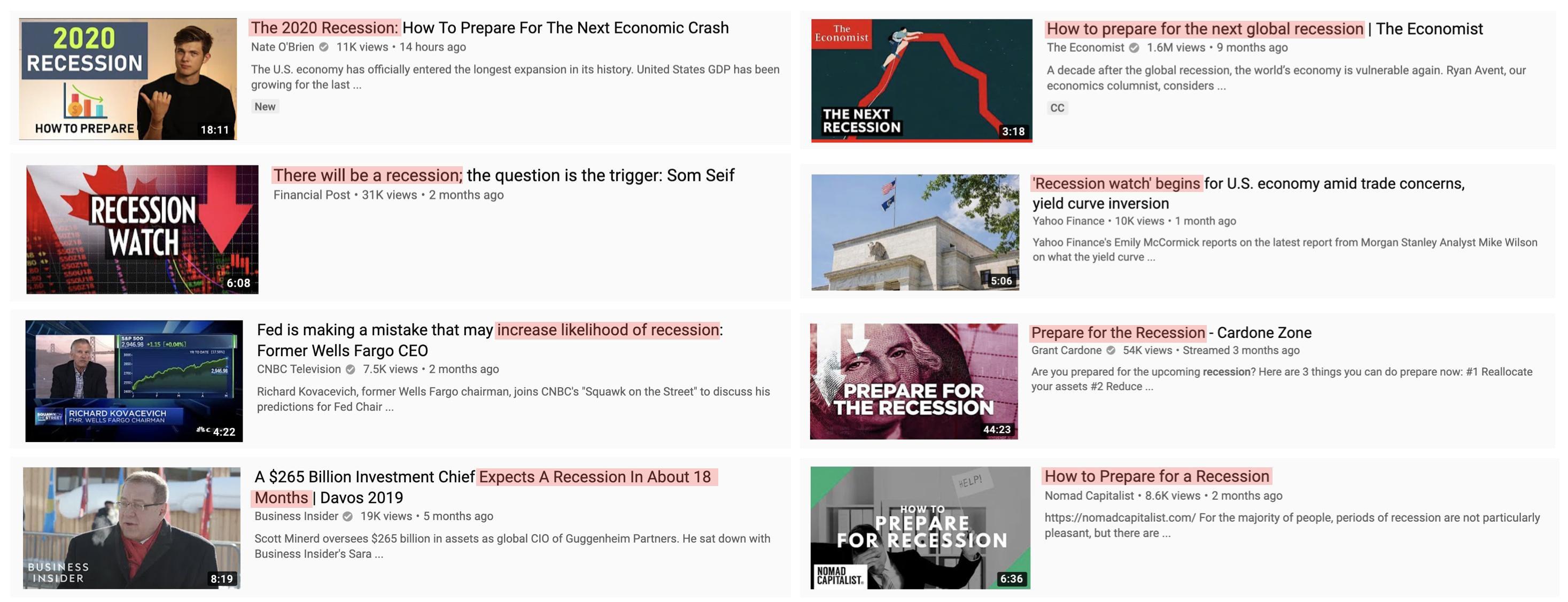
Source: @TihoBrkan
Emotions such as fear generally produce opportunities for investors who can keep a clear perspective supported by hard data as opposed to opinions and emotions. While manufacturing data and indicators related to international trade were showing weakness, the U.S. consumer has remained strong through 2019, and consumer spending accounts for roughly 70% of US economic growth.
The following paragraphs are from the October 13 article:
Most often than not, times of generalized market pessimism are good entry points in the market. Investors tend to be too influenced by fear and anxiety, and the media generally magnifies the psychological impact of negative news, so the market tends to overstate the significance of those negative data points.
But the stock market is a forward-looking mechanism, and the main factor is whether the data is going to better or worse than expected. A low bar is relatively easy to beat, so low expectations set the stage for better than expected data and rising stock prices going forward.
How close are we to a recession?
I think the most likely scenario is that the US will not enter a recession in the next 3-6 months. After that, we need to re-evaluate the data.
Fast forward to today, and the market is much higher as the global economy seems to be avoiding a recession.
The Fund Manager Survey from Bank of America shows how rapidly things have changed. Just a few months ago, respondents were "The Most Bearish Since The Financial Crisis". But now fund managers are expecting much better economic performance over the next year.
(Click on image to enlarge)
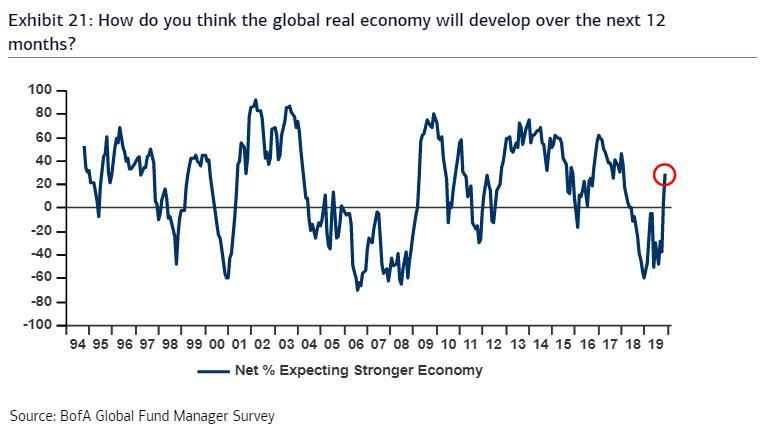
Source: Bank of America
Having an independent mindset and relying on hard evidence as opposed to emotions can make a huge difference in your returns. Importantly, the hard part is not understanding the concept, but having the mental fortitude to implement the strategy in real life.
Back to what this means for the stock market, it's good to see that the economy is avoiding a recession in spite of big headwinds from trade and manufacturing. But the bad news is that this is already being acknowledged by market participants, so the opportunity is not as attractive as it was a few months ago.
When the market is expecting a recession and you think that a recession is unlikely, you have a big opportunity to buy stocks. This was the environment a couple of months ago.
Now the economic data is looking better, and investors are starting to realize this. The opportunity to buy stocks, in general, is not as attractive as it was in the past few months, especially with the market at all-time highs and reaching overbought levels.
Short-Term Corrections And Long-Term Trends
The chart from SentimenTrader shows the evolution of the S&P 500 (SPX) and the Equity Put/Call Ratio. The indicator has approached record levels of optimism, and markets have a tendency to deliver disappointing returns over the short term when this happens.
(Click on image to enlarge)
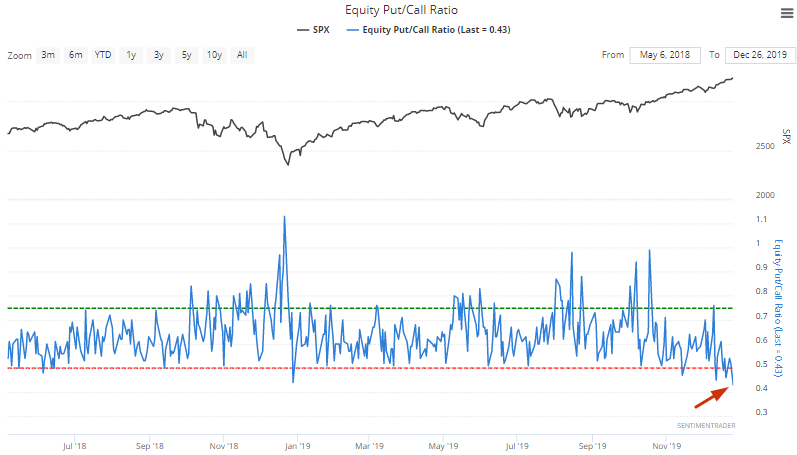
Source: SentimenTrader
On the other hand, the chart from Arun Chopra puts the sentiment data in a broader context by considering different market environments. When the market is in a sideways range, times of elevated optimism can be good selling points. However, a rising price trend is a game-changer, and markets in an uptrend can deliver big gains over the middle term even when optimism is elevated.
(Click on image to enlarge)
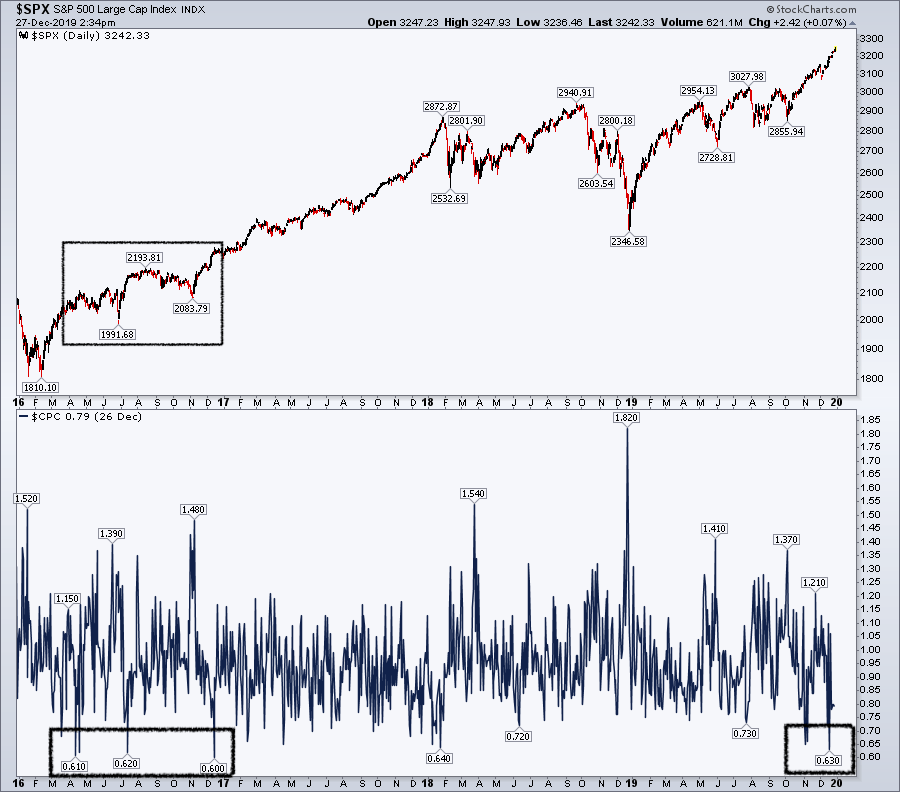
Source: @FusionptCapital
It is interesting to note how much things can change in the stock market over a year. By the end of 2018, markets were deeply in the red and oversold. As a reminder, several indexes declined by over 20% in the fourth quarter of 2018. Fast forward to today, and prices are in a vigorous uptrend, with many indexes trading at overbought levels.
What kind of performance can be expected, based on the historical evidence, when the market delivers big gains after being down in the prior year?
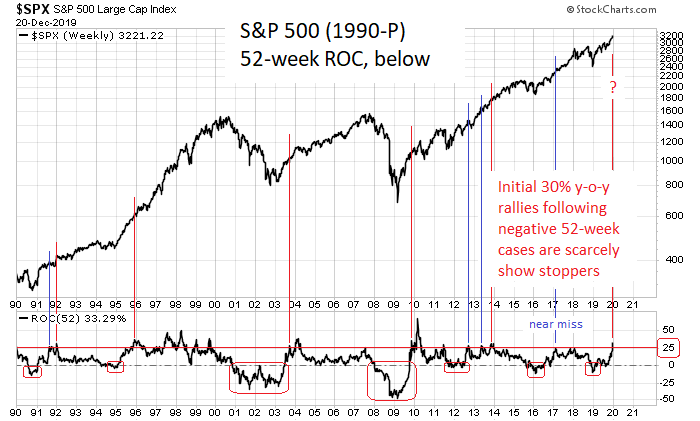
The chart from Mark Ungewitter shows that pullbacks happen frequently, but returns are mostly solid over the middle and long term. In other words, only because the market has made considerable gains in 2019, this does not mean that 2020 should be a bad year for stocks.
(Click on image to enlarge)
Source: @mark_ungewitter
The Strategy Moving Forward
The market is overbought and investor sentiment is optimistic in the short term, so any correction in the coming weeks should be no surprise at all. A 5%-10% pullback would be very reasonable and even to be expected to some degree.
But the market the environment still looks favorable for stocks over the next 6 to 12 months. Momentum is pointing in the right direction, the global economy seems to be stabilizing, and central banks all over the world are providing ample liquidity, which is a major driver for prices.
How to approach this environment?
It all depends on your timeframe, risk tolerance levels, and other particular considerations, but we can still highlight some key tactical considerations.
If you are a short-term trader, meaning that you hold your positions over days or months, the smart thing to do is raising your stops. If the market keeps running you let your winners run and you keep raising stops. When the correction comes, you will be selling stocks and taking profits.
If you are a long-term investor, meaning that you hold your positions for months and even years, patience is the best strategy. This is not a good time to be aggressively buying stocks, and the ones that are too extended should be particularly avoided. You need to be selective in your purchases and keep some cash at hand in case there are better entry prices in the near term.
But you don't want to rush into selling too soon either. Sometimes the market keeps rising and then it pulls back from higher price levels, so there is no guarantee that you will be able to get lower entry prices in the coming weeks. It is one thing to avoid chasing stocks at this level, and a very different one to start being defensive too soon.
In plain English, short-term positions should be managed by raising stops and protecting profits, while long-term investors should stay the course and be patient with new purchases.


Comments
Log in or sign up to join the conversation.