Thursday, January 22, 2026 10:50 PM EST

Image Source: Pexels
Inflation slowed mostly due to energy subsidies
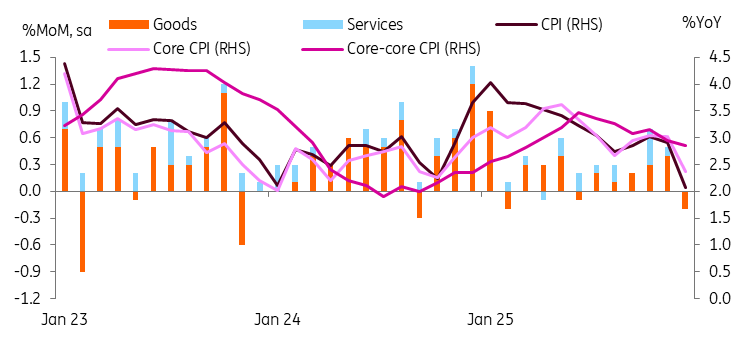
Japan’s headline consumer price index inflation slowed to a 2.1% year-on-year pace in December (vs 2.9% in November, 2.2% market consensus). Core inflation excluding fresh food also eased to 2.4% (vs 3.0% in November, 2.4% market consensus).
The sharp decline stemmed from changes to the energy subsidy programmes over the past two years. Not only were new subsidies introduced last month, but the expiry of energy subsidies in November 2024 set a high base for December's figures.
Headline and core inflation are likely to decline in the first half of the year, supported by energy subsidies, lower rice prices, and expanded social welfare programs such as free tuition. Rice prices spiked 100% in mid-2025 but have since dropped to a 34% rate in December and are expected to continue cooling. Global energy price gains are also projected to slow down. Prime Minister Takaichi's fiscal policy will also provide a wide range of social welfare programmes, which are likely to reduce some public service prices.
Meanwhile, we will see quite sticky movements in core-core inflation, which excludes fresh food and energy. It only edged down to 2.9% in December (vs 3.0% in November and 2.8% market consensus), suggesting that, aside from monthly fluctuations caused by energy subsidy programmes, underlying price pressures remain persistent. This is mainly due to strong wage growth and a weak yen.
We expect the BoJ to communicate a cautious tone about the economy's inflationary path. Persistent core-core inflation could support further policy normalisation, but slowing headline and core inflation may lead to a wait-and-see approach in coming months.
Tokyo inflation data is scheduled for release next week. We expect it to decelerate to 1.7% YoY from 2.0% in December. This would likely reinforce our view that the Bank of Japan will maintain a cautious approach regarding additional rate hikes.
Energy and food prices pulled down headline, but core-core prices remained at an elevated level
Source: CEIC
More By This Author:
Strong Polish Data Suggests The Pause In Rate Cuts Will Continue FX Daily: Davos Relief Can Bring Focus Back To Macro And Fed The Commodities Feed: US Natural Gas Surges Amid Freezing Conditions
Disclaimer: This publication has been prepared by the Economic and Financial Analysis Division of ING Bank N.V. (“ING”) solely for information purposes without regard to any ...
more
Disclaimer: This publication has been prepared by the Economic and Financial Analysis Division of ING Bank N.V. (“ING”) solely for information purposes without regard to any particular user's investment objectives, financial situation, or means. ING forms part of ING Group (being for this purpose ING Group NV and its subsidiary and affiliated companies). The information in the publication is not an investment recommendation and it is not investment, legal or tax advice or an offer or solicitation to purchase or sell any financial instrument. Reasonable care has been taken to ensure that this publication is not untrue or misleading when published, but ING does not represent that it is accurate or complete. ING does not accept any liability for any direct, indirect or consequential loss arising from any use of this publication. Unless otherwise stated, any views, forecasts, or estimates are solely those of the author(s), as of the date of the publication and are subject to change without notice.
The distribution of this publication may be restricted by law or regulation in different jurisdictions and persons into whose possession this publication comes should inform themselves about, and observe, such restrictions.
Copyright and database rights protection exists in this report and it may not be reproduced, distributed or published by any person for any purpose without the prior express consent of ING. All rights are reserved. ING Bank N.V. is authorised by the Dutch Central Bank and supervised by the European Central Bank (ECB), the Dutch Central Bank (DNB) and the Dutch Authority for the Financial Markets (AFM). ING Bank N.V. is incorporated in the Netherlands (Trade Register no. 33031431 Amsterdam). In the United Kingdom this information is approved and/or communicated by ING Bank N.V., London Branch. ING Bank N.V., London Branch is deemed authorised by the Prudential Regulation Authority and is subject to regulation by the Financial Conduct Authority and limited regulation by the Prudential Regulation Authority. The nature and extent of consumer protections may differ from those for firms based in the UK. Details of the Temporary Permissions Regime, which allows EEA-based firms to operate in the UK for a limited period while seeking full authorisation, are available on the Financial Conduct Authority’s website.. ING Bank N.V., London branch is registered in England (Registration number BR000341) at 8-10 Moorgate, London EC2 6DA. For US Investors: Any person wishing to discuss this report or effect transactions in any security discussed herein should contact ING Financial Markets LLC, which is a member of the NYSE, FINRA and SIPC and part of ING, and which has accepted responsibility for the distribution of this report in the United States under applicable requirements.
less
How did you like this article? Let us know so we can better customize your reading experience.