
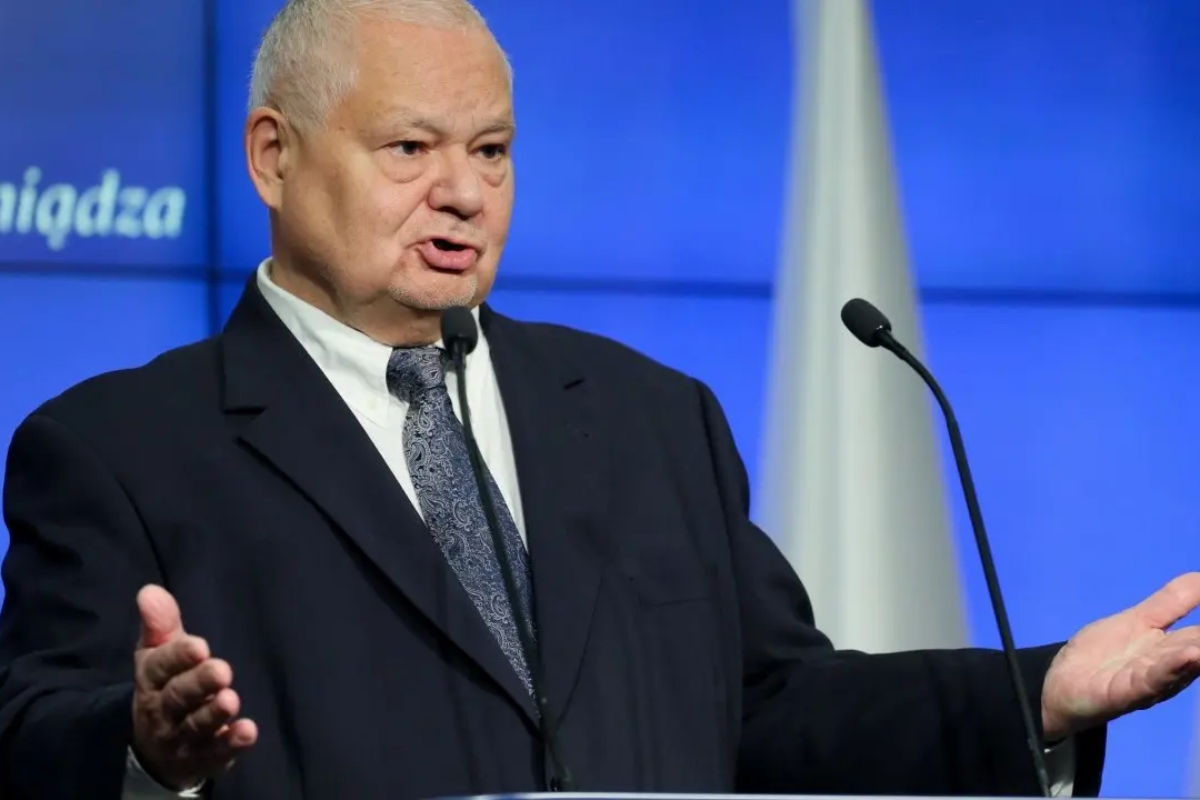
In a press conference today, National Bank of Poland Governor Adam Glapiński did not provide clear guidance on further MPC decisions, but the Council remains open to further monetary policy easing. Since we project low inflation in 2026, the NBP could cut interest rates to 3.25% next year, in our view
Rationale behind the decision
Monetary Policy Council Chairman Adam Glapiński explained in a press conference on Thursday that yesterday’s decision for another 25bp rate cut was driven by inflationary trends and favourable medium-term prospects. In November, inflation fell slightly more than forecast to 2.4% year-on-year. Furthermore, independent analysts' forecasts indicate that inflation will remain close to the NBP's target in the coming years. The central bank forecasts that inflation will stay within the +1/-1pp tolerance band from the 2.5% NBP target. The governor noted that the NBP's projection assumes the current level of electricity tariffs will be maintained, although there are signs that they may be reduced.
Monetary policy easing was also supported by a further decline in core inflation to its lowest level in six years. Also, service price inflation is gradually decreasing, non-food market goods are becoming cheaper, and producer prices (PPI) are falling.
Another important factor behind the rate cut was the slowdown in wage growth, now at its lowest in five years, contained by the continued decline in employment in the enterprise sector. Previously, wage growth had been cited by the NBP as one of the main inflationary risks.
Drop in CPI inflation to the NBP target
As expected, Governor Glapiński expressed satisfaction with the fall in inflation to the target, noting that in February 2023 it was in double digits, reaching 18.4% year-on-year. He also highlighted the sharp drop in core inflation from about 12% to below 3% in November this year. This was achieved while maintaining a solid pace of economic growth and without an increase in unemployment.
Economic situation
The NBP Governor stated that data for 3Q 2025 and October envisage favourable economic trends. He mentioned that the economy is growing at nearly 4%, while inflation remains low (a so-called goldilocks economy). Among potential inflationary pressures, he cited the expected influx of EU funds in 2026, which could boost demand. However, he added that it is unclear whether these funds will be fully utilised.
In our view, there is also a third way: full utilisation of EU funds, but over a longer period. We anticipate that some grants from the National Recovery Plan (NRP) will be disbursed to final beneficiaries in 2027, helping to ease the concentration of payouts in 2026. Meanwhile, NRP loans, once transferred to Polish institutions, will be disbursed over several years.
Inflation risks
Governor Glapiński has traditionally highlighted inflation risks. The NBP still sees elevated service price inflation and a high public sector deficit. A newly identified risk factor mentioned by the central bank is the aforementioned EU fund spending. Also, potential increases in global commodity prices may also have a pro-inflationary impact. But at the same time, he noted the disinflationary effect of increased imports from China - a welcome development, as we have repeatedly raised this point with the NBP.
Monetary policy outlook
Once again, the NBP Governor announced that the MPC will act cautiously, taking decisions month by month based on incoming data and forecasts. Glapiński emphasised that the Council is currently not in any cycle and does not have a target interest rate level. He also admitted that it would be beneficial to adopt a wait-and-see approach and observe how the previous rate cuts have worked. After this evaluation, the MPC may proceed with further cuts.
Governor Glapiński described the current interest rate level (4.0%) as excellent from his perspective, but other members may have differing opinions, and it will be up to them to decide whether further cuts in the cost of borrowing are warranted. Nevertheless, in the Governor's opinion, real interest rates remain high.
Inflation may be lower than the NBP assumes; rates could be cut further
As expected, the press conference did not provide clear guidance on further MPC decisions, but the Council remains open to further monetary policy easing. Our baseline scenario assumes that in the coming months, the MPC will focus on monitoring the Polish economy and inflation outlook after the recent downward interest rate adjustments. The first opportunity for further rate adjustments will be the publication of the March macroeconomic projection.
Nevertheless, current data remains crucial for MPC decisions. We expect CPI inflation to rise slightly in December 2025, with both headline and core inflation falling back again in 1Q 2026. However, if disinflationary trends outweigh the impact of the exceptionally low statistical base from December 2024 - and CPI and core inflation surprise to the downside this month, accompanied by further weakening in wage and employment growth - the likelihood of a January rate cut would increase.
Our inflation scenario assumes average inflation below 2.5% in 2026. Some inflation risks mentioned by the NBP Governor may not materialise. The staggered rollout of investment projects from the NRP, with distribution starting in early 2027, combined with a potential further decline in core inflation, could push CPI inflation below 2.5%. In addition, a high savings rate may continue to offset the inflationary effects of expansionary fiscal policy. For these reasons, we believe NBP rates could ultimately be reduced to 3.25% next year.
More By This Author:
Low Czech Inflation Bolsters Odds For A Future Rate CutFX Daily: Negative USD Seasonality Starting To Show
Rates Spark: Treasuries Ranging But Poised For A Breakout
Comments
Log in or sign up to join the conversation.