


Image Source: Unsplash
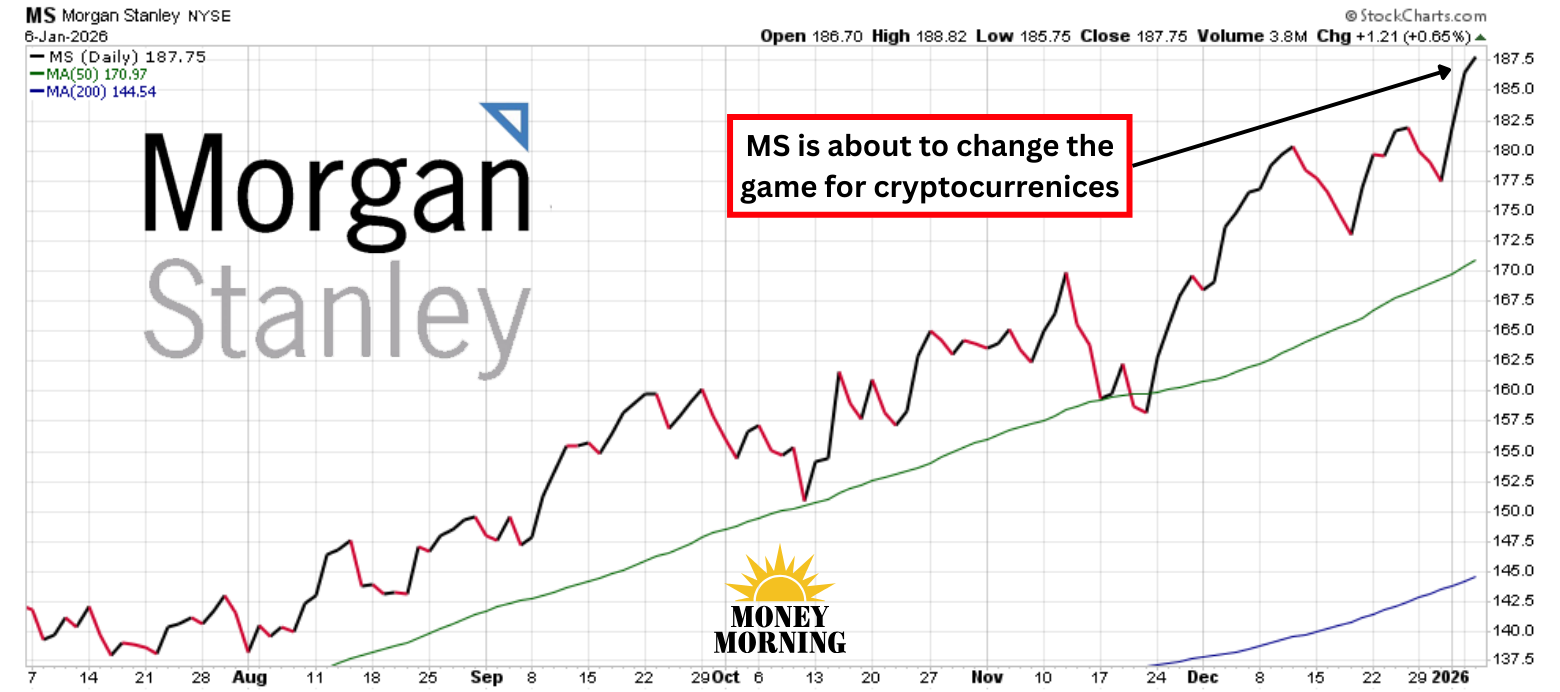
In a bold move signaling mainstream finance's deepening embrace of cryptocurrencies, Morgan Stanley (MS) has filed S-1 registration statements with the SEC for spot ETFs tracking Bitcoin (BTC) and Solana (SOL). Yesterday's filings mark the first instance of a major U.S. bank launching its own branded crypto ETFs, rather than merely distributing third-party products. With trillions in assets under management, Morgan Stanley's entry could accelerate broader institutional adoption, potentially flooding the market with fresh capital.
This development comes as interest in crypto ETFs surges, which have amassed over $120 billion in assets, highlighting a shift from skepticism to strategic integration in traditional portfolios.
Spot ETFs for Bitcoin and Solana
The Bitcoin Trust, sponsored by Morgan Stanley Investment Management, is designed as a passive fund that directly holds Bitcoin and tracks its price via a benchmark index. If approved, shares would trade on a national exchange, offering investors seamless exposure without the complexities of direct custody.
Similarly, the Solana Trust holds SOL tokens and incorporates staking to generate network rewards, which would boost the fund's net asset value and provide yield alongside price appreciation.
Preliminary documents omit details on custodians or listing exchanges, but approval would position Morgan Stanley alongside giants like BlackRock (BLK) and Fidelity in the regulated crypto space.
(Click on image to enlarge)
Solana Over Ethereum?
Notably, Morgan Stanley opted for Solana rather than Ethereum (ETH), the longstanding No. 2 cryptocurrency by market cap. This selection raised eyebrows, as Ethereum boasts a more established ecosystem with decentralized finance (DeFi) and NFTs.
So why did the bank choose SOL? Analysts speculate it's due to Solana's high-speed, low-cost transactions, making it attractive for scalability in real-world applications. Recent network upgrades have enhanced Solana's reliability, and its staking yields – often exceeding 5% – align with investor demand for income-generating assets.
By choosing Solana over Ethereum, Morgan Stanley may be betting on its growth potential in an environment of intense competition, differentiating from other ETH-focused products already saturating the market.
Drivers and Community Reactions
Morgan Stanley's filings build on its gradual crypto expansion, including advisor permissions for ETF recommendations in late 2025 and on limited digital asset allocations. Key drivers include the explosive inflows into existing Bitcoin ETFs so far this year and regulatory tailwinds like faster listing standards. By issuing in-house products, the bank can capture fees internally amid fierce competition.
Crypto traders and Solana enthusiasts hail it as vindication and validation of the network's institutional appeal, while Bitcoin's Runes protocol and even Litecoin garnered speculative buzz from mentions in risk disclosures, though these seem precautionary rather than indicative of future plans.
Bottom Line
Morgan Stanley's initiative could shatter barriers, encouraging rivals like JPMorgan (JPM) or Goldman Sachs (GS) to launch their own crypto ETFs. As a watershed milestone, it underscores major financial institutions' acceptance of crypto as a legitimate alternative asset class, potentially enhancing liquidity, reducing volatility, and democratizing access for everyday investors.
If the dam is indeed breaking, expect a torrent of innovation in blended traditional-crypto finance.
More By This Author:
Why Bloom Energy Is The Surprising Winner From AI's Insatiable Power AppetiteIs CVX The 1 Oil Stock You Need To Buy Now After Venezuela?
Micron Technology Picks Up Right Where It Left Off



Comments
Log in or sign up to join the conversation.