

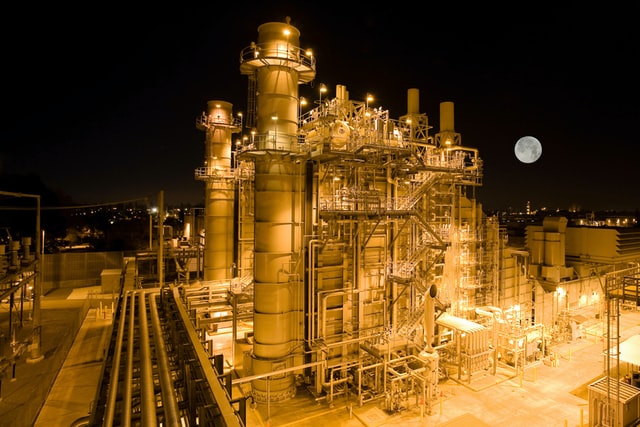
Photo by American Public Power Association on Unsplash
Oil prices are higher today as President Trump said that an armada is headed toward Iran, but maybe we won’t have to use it. That is nice to know . This as a massive arctic blast is raising concerns and prices for heating fuels due to expectations of strong demand, as well as weather-related outages. And his historic speech in Davos, Switzerland, the market is coming to grips with the fact that President Trump’s policies are working both economically and geopolitically.
President Trump’s economic influence was further enhanced by the explosive GDP number, which saw the U.S. economy roaring as real gross domestic product surged at a revised 4.4% annualized rate in Q3 2025, the fastest pace in over two years and smashing expectations. Consumer spending is holding strong, exports are kicking in, and investment is firing on all cylinders. Even the Atlanta Fed’s GDP Now is signaling a blistering 5.4% for Q4—talk about momentum! And let’s give credit where it’s due: President Trump’s America First policies are supercharging this growth.
Now just consider the fact that China, with all its government spending, has a year-on-year GDP growth of 5%. This shows every critic of Trump’s economic policies that they were wrong. As we pointed out, we are basically free market people, but when it came to tariffs, the rest of the world was taking advantage of the United States. We also, of course, pointed out in the very beginning that tariffs do not cause inflation—something many economic critics of President Trump just didn’t want to understand.
You see, so many of the so-called experts deluded themselves into believing things about the economy that just weren’t so. The truth is, and the numbers show, that not only has President Trump brought down energy prices, but he has also brought economic growth which to the fastest pace in over two years and smashing expectations.
This comes as consumer spending remains strong, exports are accelerating, and investment is firing on all cylinders. Even the Atlanta Fed’s GDPNow is signaling a blistering 5.4% for Q4—talk about momentum.
This is happening because of game-changing tax cuts in the “big, beautiful bill” to slashing red tape, boosting domestic energy production, and enforcing smart trade deals that put American workers first—these moves are unleashing investment, creating jobs for Americans, and keeping more money in people’s pockets.
Lower energy costs, historic stock market highs, and a rebound in confidence are all part of the package. We’re talking about the strongest economic tailwinds in modern times—tax relief fueling business expansion, deregulation sparking innovation, and pro-growth strategies positioning the U.S. to outperform the world.
Goldman Sachs is already calling for 2.5%+ growth in 2026, beating consensus, and administration voices like Commerce Secretary Lutnick are eyeing even bigger numbers ahead with rate cuts and those massive tax refunds on the way. And this is mainly happening in the private sector as president trump reduces waste fraud and abuse in the government streamlining many governments operations
not to mention the fact that president trump’s strong foreign policy with reducing removing the dictator Maduro and taking over Venezuelans oil assets that were originally built and owned by United States company is laying the groundwork for stable oil prices in the future it also sent you the message to OPEC that the hemispheric energy policy long dreamed of in this part of the world is becoming a reality.
Of course, the other reality for energy prices is, man, is it cold outside. It’s called Fern, I guess—this storm, which seems too warm and fuzzy of a name to be a winter storm. Fox Weather says that more than 235 million people across more than 40 states, from Arizona to Maine, are in the path of a potentially historic winter storm that’s expected to extend over 2,300 miles and deliver crippling snow and ice, beginning tonight.
We’ve already heard some reports of refinery outages during the cold, especially Citgo in Lemont, Illinois, but this type of cold raises significant challenges for producers, pipelines, and refineries but Chris Wright, the U.S. Secretary of Energy, and the Department of Energy (DOE) say they “ have taken decisive action as Winter Storm Fern—a significant arctic system—threatens much of the United States in January 2026. Their primary focus has been on ensuring the reliability of the nation’s power grid and preventing blackouts during this period of extreme cold weather.
On January 22, 2026, Secretary Wright issued a formal letter to grid operators across the country. In this communication, he urged operators to maintain close coordination with the DOE throughout the storm’s duration and to prepare to deploy unused backup generation resources if necessary.
These resources, which include backup capacity from data centers and other major facilities, are estimated by the DOE to exceed 35 gigawatts nationwide. Wright emphasized that activating this reserve capacity is an “emergency preparedness measure to keep the grid stable, save lives, prevent blackouts, and help lower costs for potentially hundreds of millions of Americans facing snow, ice, and record cold temperatures.”
Secretary Wright made clear the administration’s priorities, stating that the Trump administration “would not allow the previous administration’s reckless energy subtraction agenda to jeopardize lives during the storm,” and underscored that “the safety of Americans is a top priority, and the DOE stands ready to assist.”
And right now ther haven’t been any widespread major outages confirmed yet, but the threat level remains high—particularly for natural gas production and the supporting infrastructure. The main worry right now is pipeline freeze-offs: when extreme cold causes water or hydrates in wells, pipelines, and related equipment to freeze, it can block flows and sharply reduce output.
There should be significant disruptions and reports say that there could be more than 70 billion cubic feet (Bcf) of cumulative freeze-offs in the coming days and weeks.
Energy Aspects, a leading consultancy, estimates that the U.S. might lose up to 63.7 Bcf of natural gas production over the next two weeks or so because of pipeline and well freezes.
The highest risks are in critical regions like the Permian Basin (West Texas and New Mexico), the Haynesville Shale, Oklahoma, Appalachia, and parts of the Northeast. Production has already dropped by about 4 Bcf per day in recent days—either from early freeze-offs or operators taking precautionary shut-ins. And all eyes are on Texas because the cold blast there would be the deciding factor whether natural gas retreats or continues to surge. If the freeze offs in Texas becomes significant if the weather gets cold enough there that could be a game changer for natural gas but right now the market seems to be very volatile based on bets about how cold it will be and for how long. pipelines are making preparations for the deep freeze, but if temperatures stay low, flows could still be disrupted. This would affect power plants, LNG exports, and the overall natural gas supply chain—a situation.
More By This Author:
While Europe Gently Sleeps - The Energy ReportNo Mercy - The Energy Report
Trump Wants Them To Pay Their Fair Share - The Energy Report

Comments
Log in or sign up to join the conversation.