

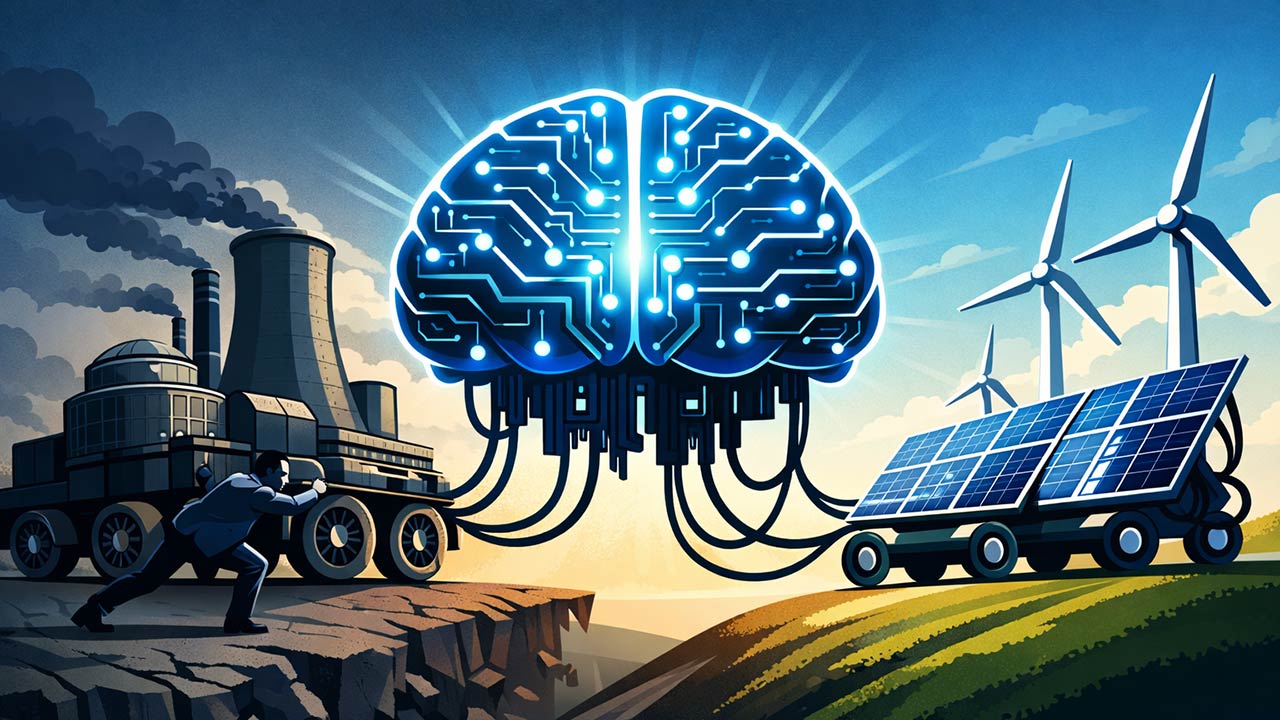
The Trump administration just bet $80 billion that nuclear energy can power America’s AI ambitions. The market has other plans.
In May, the president signed executive orders mandating ten new large reactors by 2030. In October, the government struck an $80 billion deal with Westinghouse, though details remain scarce. Energy Secretary Chris Wright declared in September that AI progress “will be accelerated by rapidly unlocking and deploying commercial nuclear power.” According to Gallup 2025 data, public support for nuclear power is at its highest level since 2010.
Google (GOOGL), Amazon (AMZN), and Microsoft (MSFT) have inked deals with nuclear companies to power data centers. Microsoft joined the World Nuclear Association and is backing the restart of Three Mile Island with a $1 billion federal loan. Two of the three nuclear plants that closed since 2020 are being considered for restarts with tech industry backing.
The administration has also thrown lifelines to coal. More than two dozen generating units scheduled for retirement are now staying online, some with years long reprieves. Wright ordered two plants slated for closure to remain operational via emergency order.
Utility-scale solar and onshore wind remain the cheapest forms of energy, even without subsidies. According to S&P Global, almost all of the ten largest U.S. utilities are significantly slashing their reliance on coal, with many looking to replace it with nuclear. Coal now comprises just 17 percent of the U.S. power mix, down from 45 percent in 2010.
I have been watching this space for decades, and the pattern is consistent. Government favoritism for specific energy sources has a poor track record of overriding economic fundamentals. Unsurprisingly, the tech giants scrambling for additional electrical power have not partnered with struggling coal plants.
Nuclear’s construction costs and timelines remain problematic regardless of regulatory changes. I’ve seen estimates ranging from 10-20 years to spin up a nuclear power plant from scratch. In the meantime, you are going to hear a lot about SMRs (small modular reactors), factory-built units designed to deploy faster than traditional plants, and MSRs (molten salt reactors), which use liquid salt as coolant for improved safety.
Google (GOOGL), Amazon (AMZN), and Microsoft (MSFT) are all betting on these next-gen designs. Whether they deliver on timeline and cost is the open question.
More By This Author:
Netflix To Acquire Warner Bros. For $83 Billion
The Great AI Model Race Intensifies
Vibe Revenue And The AI Bubble


Comments
Log in or sign up to join the conversation.