


Image Source: Pixabay
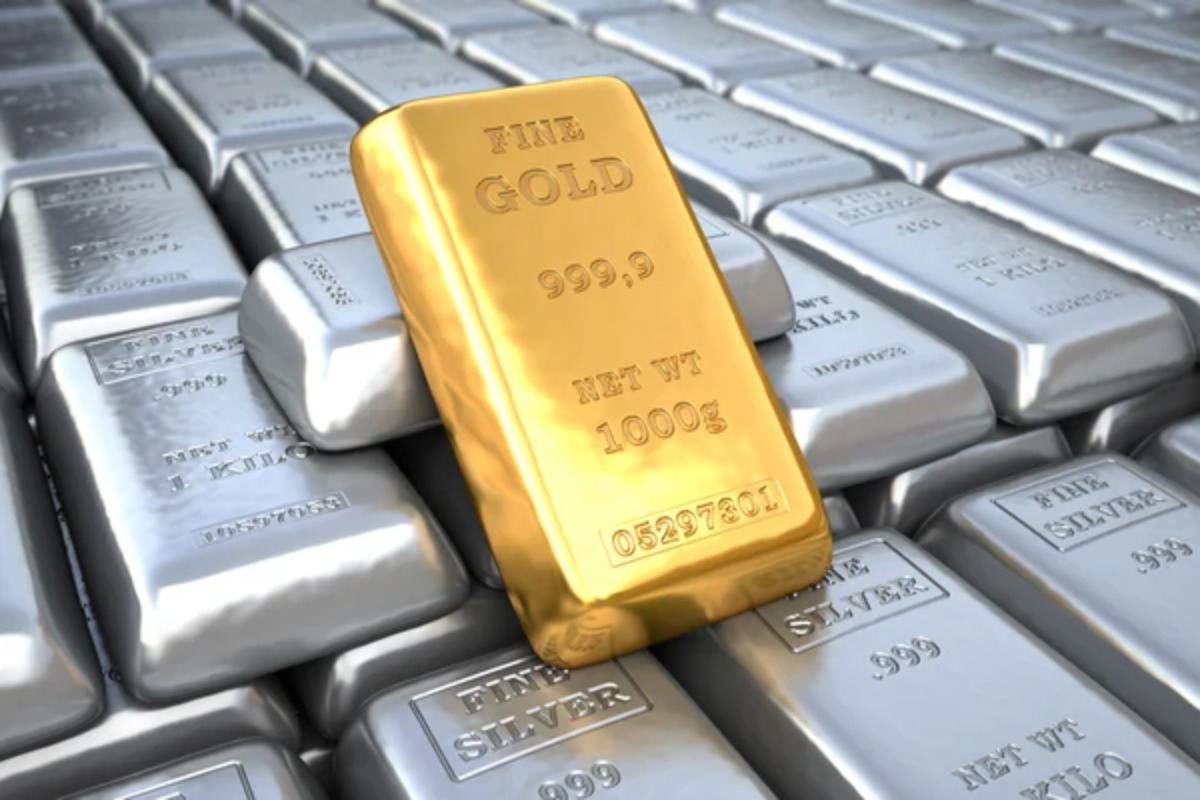
Gold and silver prices rallied again on Tuesday, with this time the bigger move coming on the silver side.
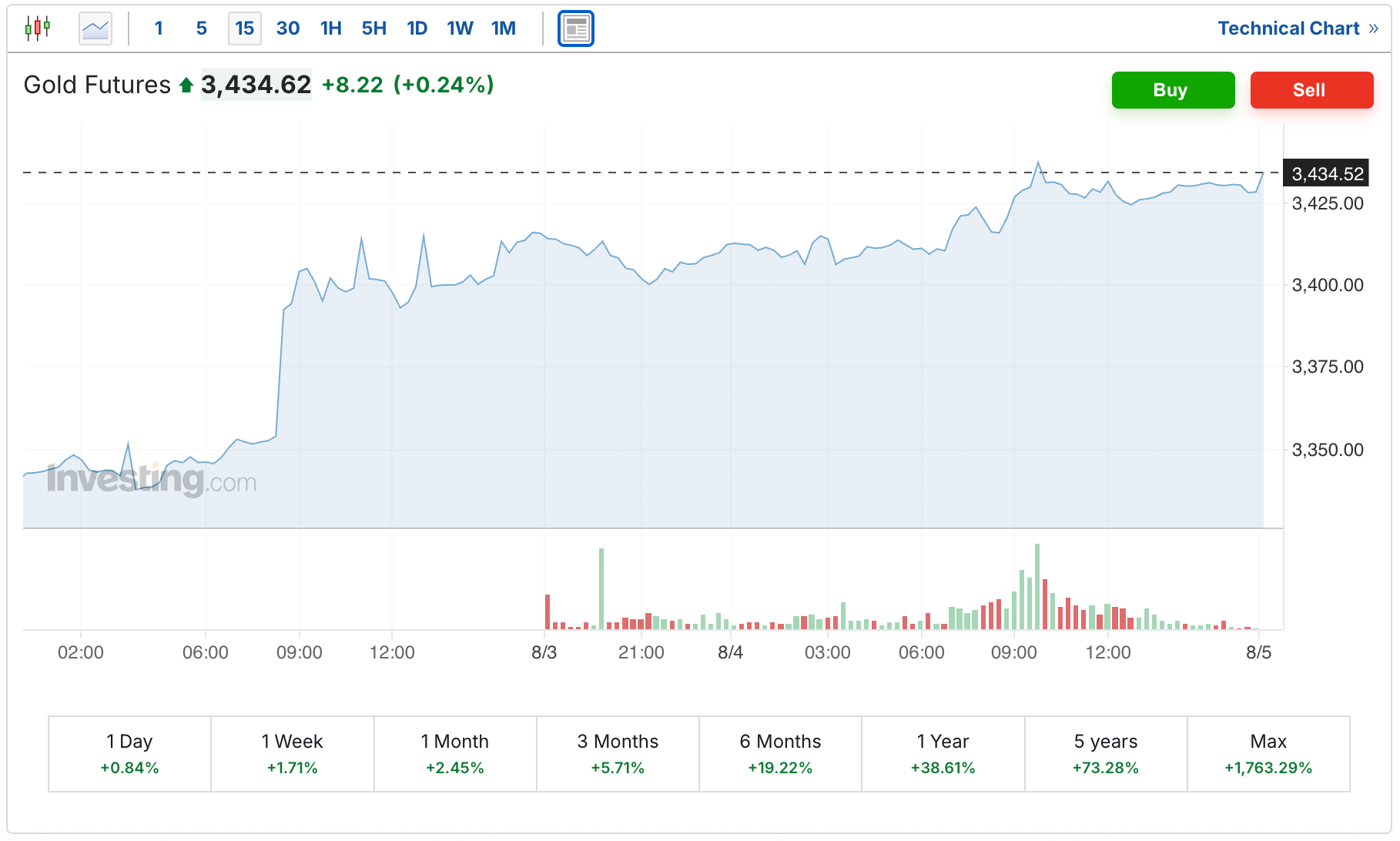
The Gold futures were up $8 to $3,434.
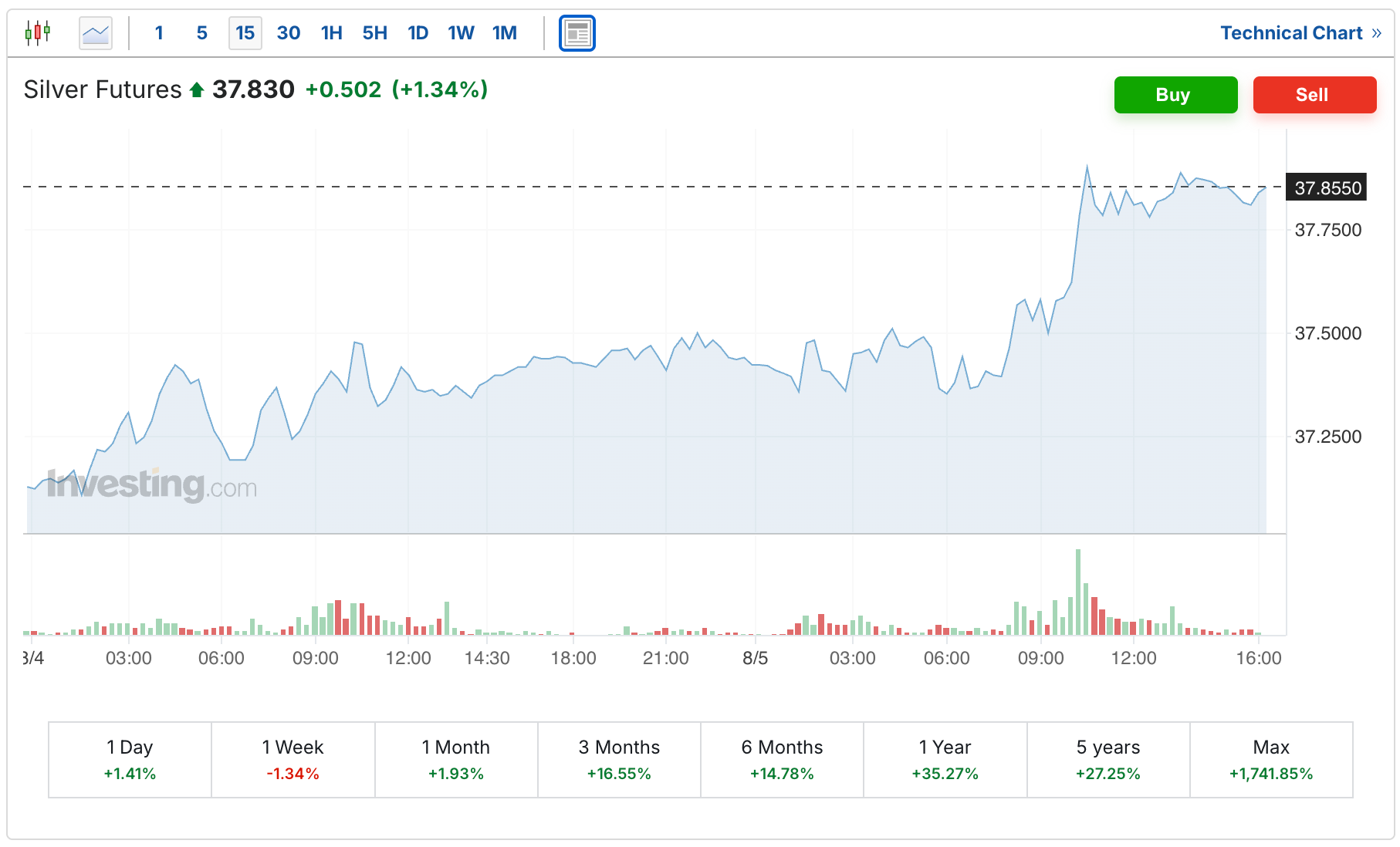
While Silver rose another 50 cents, and is once again within shouting distance of the $38 level at $37.83.
As I've mentioned in recent weeks, it's remarkable the way the prices have bounced back following sell-offs over this 19-month old rally. Especially if you were investing in gold and silver any time between 2013 and early 2020, you may still have scars from the way the markets would react back in those days.
So it's encouraging to see how different the environment is now compared to back then. Which isn't to say that things will never change again, or that it will always be like this. But at least in terms of looking for indications that there really is some strength behind a rally, this is one that has really stood out to me, and is an encouraging sign for investors who are long precious metals right now.
As I mentioned yesterday, there were a few interesting Metals Focus reports that I've been wanting to comment on. We did the first one yesterday, and the second one, which we will do today, touches on the industrial thrifting of silver.
As of the end of June, silver closed at $36.33, marking a 102% increase from its 2019 price of $17.94 and a 54% rise from 2023. This increase in gold and silver prices is placing considerable stress on the cost-sensitive electronics industry.
As a result, manufacturers have been increasingly focused on implementing measures once again for precious metal thrifting and substitution to mitigate the impact of eroding margins. The electronics industry has made notable progress in reducing precious metals usage across several mainstream applications over the past two years.
This progress is a direct response to the persistent increase in metal prices, prompting manufacturers to innovate with regard to cost control and thus help maintain competitiveness.
One of the big changes in the solar sector in recent years, is that the manufacturers have been using panels that require more silver. So at a time when the market was growing and more silver-intensive panels were being used, that helped to drive the silver consumption numbers even higher.
Those newer panels are still being used, although as all of this was happening, there have been continued efforts to reduce the amount of silver needed in any way possible, much in the same way that any diligent manufacturer is always looking for the most efficient way to do things.
Despite record-breaking new PV installations driving demand for silver in the solar sector to over 197Moz (6,000t) last year, the industry is actively reducing its per-unit silver consumption through continuous technological advancements and cost-reduction initiatives.
Consider the mainstream TOPCon (Tunnel Oxide Passivated Contact) cell, for instance. When it debuted in 2019, the silver loading exceeded 25mg per watt. However, this figure had sharply declined to just 9mg/W at the end of last year, with other solar cell technologies demonstrating similar reduction progress.
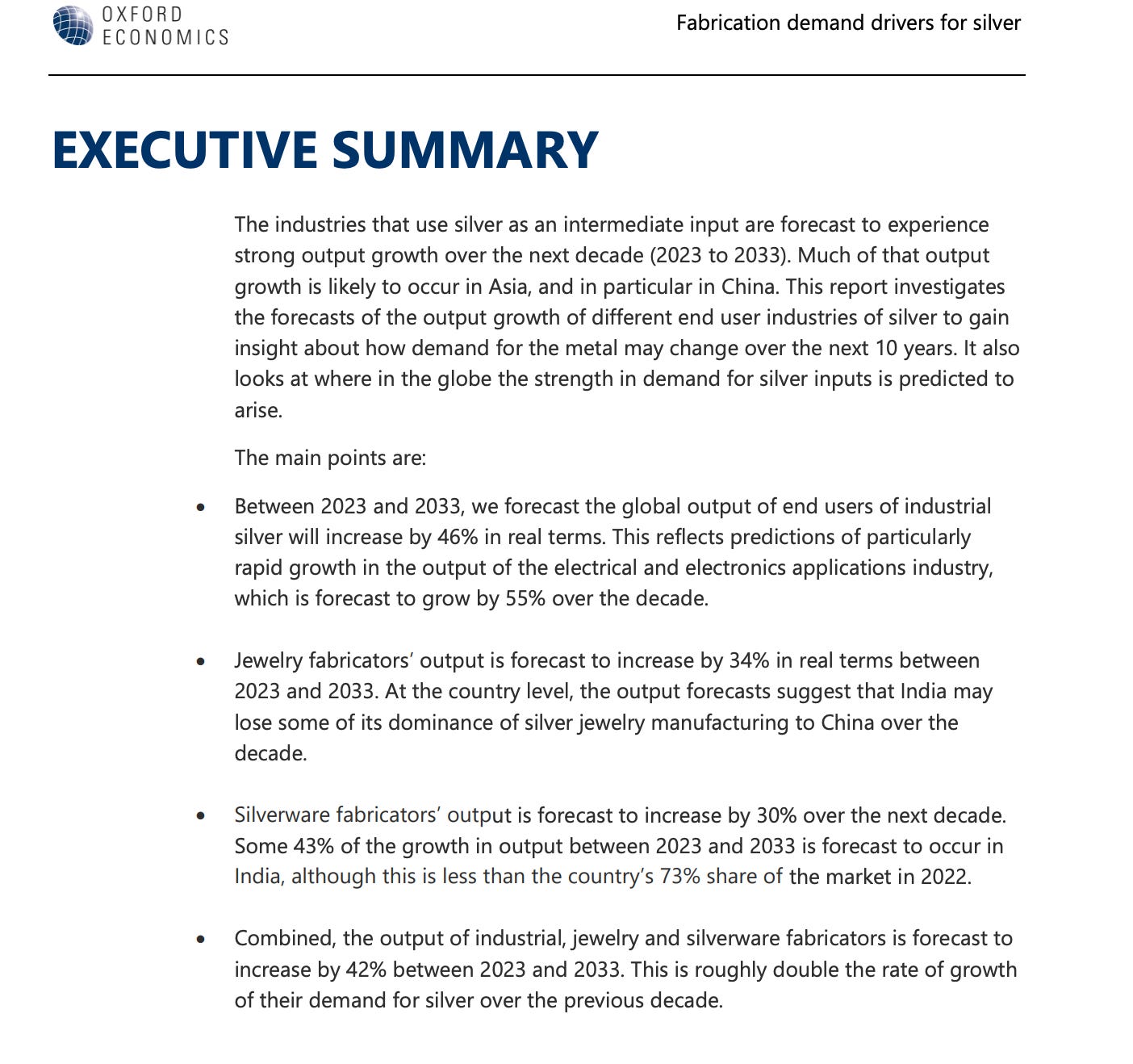
Of course, counterbalancing the thrifting has been the overall increase in industrial demand, which according to Oxford Economics, they forecast to grow another 46% over the next decade.
Lastly, in terms of some guidance in the years ahead, Metals Focus had the following to say:
Looking ahead, more thrifting and substitution measures are expected to be achieved through the broader adoption of several key innovations. These include: advancements such as Zero Busbar (0BB) technology, which eliminates traditional busbars to reduce silver consumption and increase light-receiving area; ongoing refinements in printing technologies, enabling finer lines and more precise paste applications; and continued improvements in silver-coated copper paste formulations, allowing for effective silver reduction while maintaining high conductivity and performance.
These innovations are effectively lessening the PV industry’s reliance on silver, albeit extremely modestly, equipping the electronics sector with a more resilient production strategy against precious metal price volatility. As such, the growth in silver usage will continue to lag behind the overall expansion of the PV industry.
With regard to the electronics industry this is demonstrating increasing resilience to precious metal price volatility. Faced with escalating material costs, the sector has pro-actively sought alternative materials, optimized designs, and so has prioritized increased recycling rates for precious metals. This multifaceted approach not only helps to mitigate the impact of high raw material costs, but also represents an important stride towards more sustainable development, all of which will continue to help inform the industry’s supply chain dynamics.
Also worth mentioning is that many of the applications that actually use silver use very small amounts per unit. APMEX wrote an article that estimated that there are 0.34 grams of silver in an iPhone. So if that number is even in the general ballpark, even if the price of silver doubles or triples, that doesn't make a material impact on the overall cost of many of the products that use the silver.
Ultimately, there is always going to be a balance of thrifting and at least at the rate we're going now, new applications for silver. Hopefully, today's article helped to at least put some of the things to think about in their proper context.
More By This Author:
Gold & Silver Rebound After Last Week's Selloff, & Notes On Retail Precious Metals DemandGold & Silver Rebound After Weak Labor Report, And Then Trump Fires The Woman In Charge Of Compiling The Data
Gold & Silver Mixed After Wednesday's Sharp Fed-Day Selloff

Comments
Log in or sign up to join the conversation.