

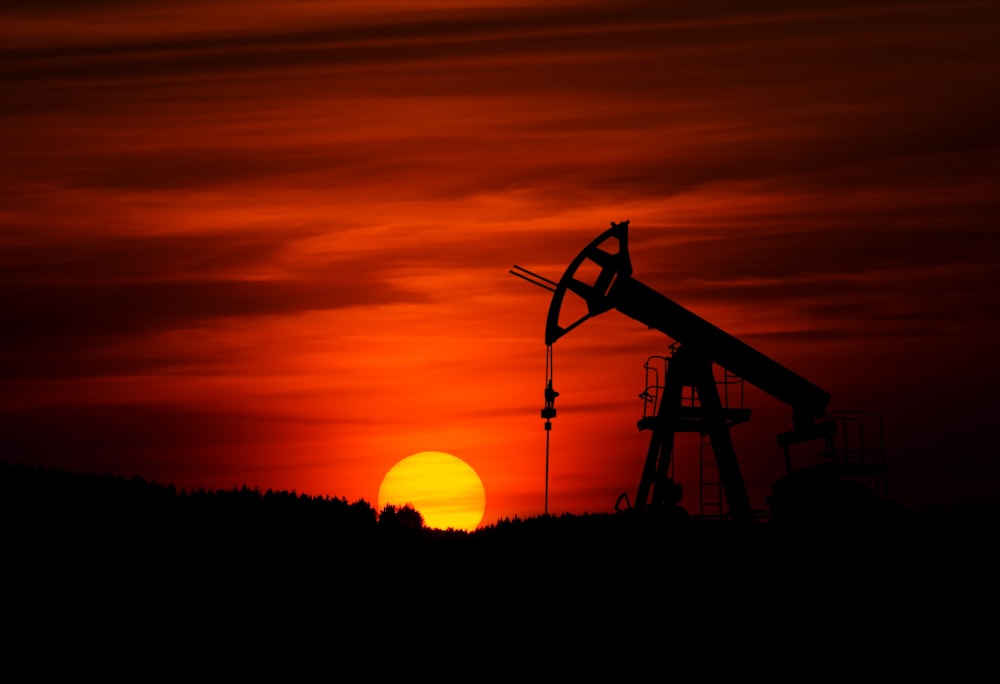
Image Source: Unsplash
Here are responses from AI, the WSJ, and an energy investor who posts on my blog.
How Fast the Ramp Up?
Current output is around 800,000 to 1.1 million barrels per day (less than 1% of global supply), down sharply from peaks of over 3 million bpd in the past due to years of underinvestment, mismanagement, and sanctions. With the recent political changes (Maduro’s removal on January 3, 2026), President Trump has signaled strong U.S. involvement, including potential investments by American oil companies to rebuild infrastructure. However, experts across sources agree there’s no quick ramp-up:
- Short-term (2026) — Production might stay flat or even dip temporarily due to ongoing disruptions (e.g., export blockades and storage issues). Goldman Sachs forecasts it remaining around 900,000 bpd in 2026.
- Medium-term (2–5 years) — Some optimistic estimates suggest a return to 1.5–2 million bpd could be possible in 2 years with stable governance and existing operators (like Chevron) scaling up. More realistic views point to meaningful increases taking 5–7 years as infrastructure is repaired.
- Long-term (to higher levels like 2–3+ million bpd) — This could take a decade or more, requiring $100–110 billion in investments (per Rystad Energy and analysts like Francisco Monaldi).
The oil is mostly heavy crude from the Orinoco Belt, which is expensive and complex to extract/process, and the industry’s infrastructure is severely decayed (pipelines unreplaced for decades). Political stability, legal reforms, and massive capital will be key factors.
In summary, significant new production won’t flow quickly—think years to decades for a major boost, not months. If things stabilize smoothly, we could see gradual improvements starting in the next couple of years.
A Huge Challenge Awaits
The above answer is from Grok. The Wall Street Journal has a similar answer.
Please consider Trump Wants to Unlock Venezuela’s Oil Reserves. A Huge Challenge Awaits.
“We’re going to have our very large United States oil companies, the biggest anywhere in the world, go in, spend billions of dollars, fix the badly broken infrastructure, the oil infrastructure, and start making money for the country,” he said.
But getting foreign companies to flock back to Venezuela will be a massive challenge. Chevron is the only major U.S. oil company there and is the country’s largest foreign investor. Other oil executives will be forced to gauge the stability on the ground in a country where the industry has fallen into disarray after more than two decades of mismanagement and corruption.
The other obstacle facing Trump’s effort to put more of Venezuela’s viscous crude into the global market is that the world doesn’t have much of an appetite for more oil. U.S. oil prices are languishing below $60 a barrel, a level that discourages investment for most American producers. Global supplies are expected to continue rising this year.
“One thing that works against it is the price of oil,” said Ali Moshiri, the former head of Chevron’s operations in Latin America and Africa. “In the environment we’re in, if you’re going to invest, do you put it in the Permian [Basin in the U.S.] or do you put it in Venezuela? That’s going to be a tough choice.”
Venezuela has produced some 900,000 barrels of oil a day this year, with Chevron pumping about one-third of that. The type of crude Venezuela produces is thicker than most oil consumed on the global market, and refiners from the U.S. Gulf Coast to China and India can wring more profit out of it than other grades of crude, making it highly attractive for fuel makers.
ConocoPhillips and Exxon Mobil pulled out of Venezuela in 2007 after then-President Hugo Chávez nationalized their assets. Conoco later sued the Venezuelan government for more than $20 billion; Exxon sued for $12 billion. The companies were awarded fractions of their losses in protracted arbitration proceedings. Conoco and Exxon didn’t immediately respond to requests for comment.
Orlando Ochoa, a Caracas-based economist and a visiting fellow at the Oxford Institute for Energy Studies, described the Herculean task of jump-starting the moribund energy industry, which has seen tens of thousands of trained professionals flee the country under Maduro’s authoritarian rule.
He said that includes drafting a broad economic stabilization plan to attract the financing Venezuela badly needs from multilateral lenders to rebuild infrastructure and rusted oil-field installations. Local laws need to be modified to allow private energy firms to operate without state overreach, he added. And the government has to restructure some $160 billion in debt and settle pending arbitration cases with foreign companies to convince them to come back.
“What the U.S. needs to do is to implement a form of a Marshall Plan,” said Ochoa, referring to the economic program that helped rebuild Europe after World War II. “This is about much more than coming into the oil and gas sector just to extract crude from the ground.”
“It used to be to the victor belong the spoils,” Trump said in a 2016 presidential forum. “Now, there was no victor there [in Iraq], believe me. There was no victor. But I always said: Take the oil.”
Energy Comments
PapaDave, an energy investor and commentator on my site, offered these thoughts.
Regarding Venezuela’s massive oil reserves of 303 billion barrels. Most of it (86%) is pretty undesirable. It is too heavy and requires special refineries to process. There isn’t much interest in that oil. Of the remaining 45 billion barrels of more useful oil, it will take a decade to rebuild the infrastructure necessary to make use of it. And I don’t know who will take the risk of spending the capital necessary to rebuild it.
US companies, like Chevron, will be cautious in committing much more investment in this region, based on their past experiences with regime change. Most companies like some political certainty, and “rule of law” before committing capital. Neither exists here.
Note: The US itself is becoming a region of political uncertainty, and the “rule of law” is disappearing right in front of us. A recent example is Trump cancelling 6 federally approved offshore wind projects. One company, Orsted, is suing, as they had already spent billions and their project was 87% complete. The US as a destination for investment is sliding down a slippery slope.
If the US wants more oil, it is readily and cheaply available from Canada. It’s better oil. There’s more of it. Our refineries are designed to use it. It’s cheaper to produce than in Venezuela. It’s much closer and easier to ship south through pipelines. We should be invading them instead. [Mish comment. That last sentence was sarcasm.]
There are different levels of “heavy”.
WTI is typically light with viscosity of around 40 API. WCS (Canadian) is heavy at viscosity <20 API. 86% of Venezuelan oil is extra heavy and sour <8-10 API (though 14% is just heavy).
This may appear to be a “strategic” move, but it doesn’t really make much sense after our experience with similar strategic moves in Libya and Iraq. Trillions spent for almost zero benefit.
My long term concern is how this will isolate the US as we rely on fear to get our way. Successful relationships rely on win-win outcomes; not win-lose.
The last century was dominated by the US as we aspired to be the shining example of democracy and freedom, and inspire the rest of the world to follow our lead. We have now abandoned that and we will all suffer as a result.
Who Knew What, When?
The oil companies were informed about an act of war before it happened, Congress was not.
— Yassamin Ansari (@yassaminansari) January 5, 2026
That, my friends, is what an authoritarian regime run by oligarchs looks like. https://t.co/a1xBPdVjzM
Regarding Greenland
Trump: "We'll worry about Greenland in about 2 months…We need Greenland from a national security situation. It's so strategic…We need Greenland from the standpoint of national security. And Denmark is not going to be able to do it. You know what Denmark did recently to boost up… pic.twitter.com/Rs3s6u32yW
— The Bulwark (@BulwarkOnline) January 5, 2026
Question of the Day
MAGA is pro-war.
— Joshua Reed Eakle 🗽 (@JoshEakle) January 4, 2026
Anti-free market. Anti-capitalist.
Pro-police state. Pro-surveillance.
Pro-corruption. Pro-dictator.
Pro-degrowth. Anti-innovation.
Anti-Constitution. Anti-rule of law.
If you're right of center and don't reject Trump, what principles do you have left?
“If you’re right of center and don’t reject Trump, what principles do you have left?”
Related Posts
January 4, 2026: Is Venezuela’s New President the Puppet Trump Says She Is?
Delcy Rodríguez “was quite gracious,” said Trump. Rodríguez then blasted Trump.
If she is not the puppet Trump demands (or even if she is and the military will not go along) things are going to quickly get very messy.
January 4, 2026: Trump Now Says “We Need Greenland for National Security” and the EU Knows That
Trump is seriously out of control and more so every day.
But I always said: Take the oil.” Now it’s take the minerals.
There is no respect for the rule of law or the Constitution from anyone in this administration.
More By This Author:
Bankruptcies Are Soaring, Especially Small Businesses And HouseholdsWhat Was The Overall Impact Of Trump’s Tariffs In 2025?
Fearless Predictions, Ten Key Events To Expect In 2026

Comments
Log in or sign up to join the conversation.