

Image Source: Unsplash
On Tuesday, trading on the US stock market concluded with a decline. By the end of the day, the Dow Jones (US30) fell by 0.34%, the S&P 500 (US500) decreased by 0.84%, and the tech-heavy Nasdaq (US100) closed lower by 1.43%. The primary pressure fell on companies related to artificial intelligence and semiconductors: Nvidia dropped 2.8%, Broadcom lost 3.3%, and Micron fell by 4.2%. The negative sentiment was amplified by rising US Treasury yields; the increase in long-term rates raised discount rates for growth stocks, making them less attractive.
The US Bureau of Labor Statistics (BLS) has officially announced a delay in the publication of the January Non-farm Payrolls report due to the partial government shutdown. The absence of this key data is heightening uncertainty among market participants.
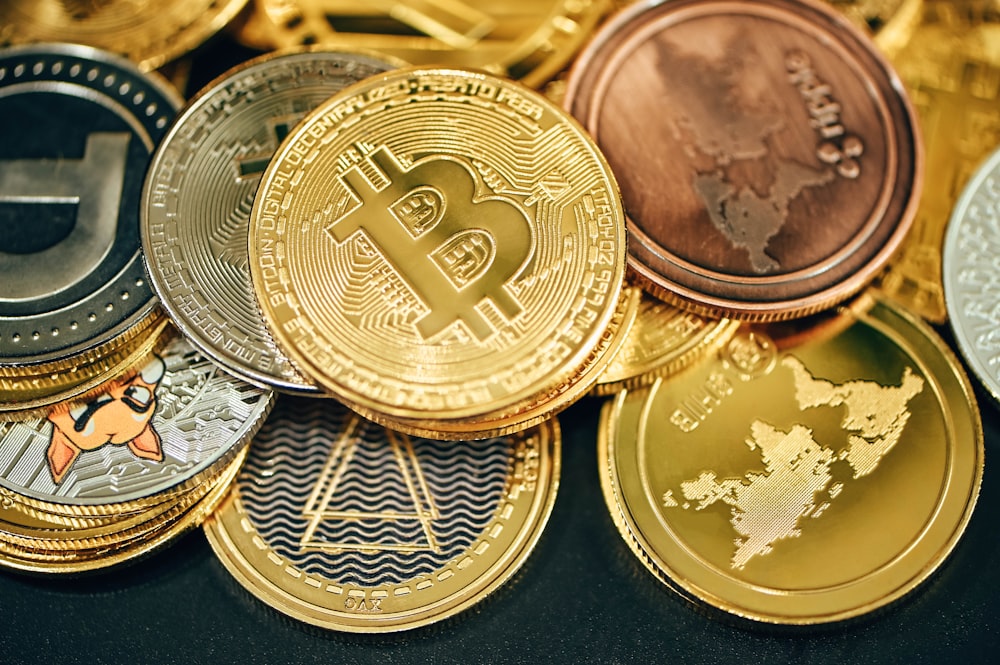
In early February, Bitcoin declined to $72,800, reaching its lowest level since November 2024 amid an increase in forced liquidations of leveraged positions and accelerating capital outflows. Industry data showed that over $730 million was liquidated during the sell-off. Bitwise CIO Matt Hougan stated that Bitcoin is in a multi-month bearish phase, noting that active institutional adoption and increased regulatory clarity may have led to investor overconfidence.
European equity markets traded without a single trend on Tuesday. The German DAX (DE40) fell by 0.07%, the French CAC 40 (FR40) closed down 0.02%, the Spanish IBEX 35 (ES35) rose by 0.02%, and the British FTSE 100 (UK100) ended at a negative 0.26%. On Wednesday, European markets opened lower, influenced by a global sell-off in tech stocks amid growing fears of potential disruptions in key industries due to AI developments. Investors in Europe are also awaiting the release of January Eurozone inflation data to gauge future monetary policy steps. The ECB and the Bank of England will announce their decisions on Thursday, with the market consensus expecting rates to remain unchanged.
On Tuesday, the silver market recorded a price surge of more than 10%, bringing quotes to $87.5 per ounce. Despite the volatility, the geopolitical risk premium remains high. Markets are closely monitoring preparations for talks between the US and Iran scheduled for Friday. Simultaneously, tensions persist on the Eastern European front: Ukraine has stated its readiness to resume peace talks amid another escalation of missile strikes by the Russian Federation.
Platinum (XPT) has once again consolidated above $2,200 per ounce, as investors actively bought the metal following a recent sell-off where quotes dipped below $2,000 for the first time since December. The sharp volatility resulted from profit-taking after last week’s record rally and was intensified by Donald Trump’s nomination of Kevin Warsh as the next Fed Chair, whom the market views as a more hawkish candidate. However, downside potential remains limited by fundamental supply factors – the platinum market remains in a structural deficit, and mining in South Africa (accounting for about 70% of global production) is constrained by chronic underinvestment and operational issues.
Asian markets mostly rose yesterday. The Japanese Nikkei 225 (JP225) jumped 3.92%, the FTSE China A50 (CHA50) fell by 1.26%, Hong Kong’s Hang Seng (HK50) increased by 0.22%, and the Australian ASX 200 (AU200) showed a positive result of 0.89%.
On Wednesday, the New Zealand dollar (NZD) declined to 0.603 USD, retreating from a nearly seven-month high following mixed labor market data that strengthened expectations for the RBNZ to hold interest rates steady. The Q4 unemployment rate rose to 5.4%, the highest since 2015 and slightly above both the previous figure and market expectations of 5.3%. Money markets indicate that the cash rate will likely remain at 2.25% until at least September, with the probability of a 25-basis-point hike by that time estimated at approximately 78%.
The offshore yuan (CNH) held near 6.93 per dollar, remaining close to its highest level since May 2023, amid improved outlooks for the currency and strengthening market sentiment. Major international investment banks have become more optimistic about the yuan’s potential after it firmly consolidated below the key 7.00 level at the end of last year. Throughout 2025, the yuan strengthened by approximately 4.5% against the US dollar, supported by a weakening Greenback and growing confidence in China’s macroeconomic stabilization.
- S&P 500 (US500) 6,917.81 −58.63 (−0.84%)
- Dow Jones (US30) 49,240.99 −166.67 (−0.34%)
- DAX (DE40) 24,780.79 −16.73 (−0.07%)
- FTSE 100 (UK100) 10,314.59 −26.97 (−0.26%)
- USD Index 97.36 −0.27% (−0.28%)
News feed for: 2026.02.04
- Australia Services PMI (m/m) at 00:00 (GMT+2); – AUD (MED)
- Japan Services PMI (m/m) at 02:30 (GMT+2); – JPY (MED)
- China RatingDog Services PMI (m/m) at 03:45 (GMT+2); – CHA50, HK50 (MED)
- Eurozone Services PMI (m/m) at 11:00 (GMT+2); – EUR (MED)
- UK Services PMI (m/m) at 11:30 (GMT+2); – GBP (MED)
- Eurozone Inflation Rate (m/m) at 12:00 (GMT+2); – EUR (MED)
- US ADP Non-Farm Employment Change (m/m) at 15:15 (GMT+2); – USD (MED)
- US ISM Services PMI (m/m) at 17:00 (GMT+2); – USD (MED)
- US Crude Oil Reserves (w/w) at 17:30 (GMT+2). – WTI (HIGH)
More By This Author:
US Natural Gas Prices Collapsed By 21%
Donald Trump Appoints A New Successor For The Fed Chair
The US And European Stock Indices Are Under A Sell-Off


Comments
Log in or sign up to join the conversation.