


Photo by Steve Johnson on Unsplash
It has become clear to many analysts that the amount of money being poured into AI-related investment doesn’t make sense. The numbers just don’t add up, meaning that there appears to be little chance that many of the individual investments will achieve reasonable returns and no chance that the investment, in the aggregate, will achieve a reasonable return. This is true, but the rapid rate of spending probably will continue. Fortunately, there is a way to profit that doesn’t involve trying to pick winners in the technology race and doesn’t rely on the AI-related spending being profitable for the companies making the investments.
The rapid rate of spending on AI will probably continue, for two main reasons. The first is that although concerns regarding the magnitude of capital spending by formerly capital-light companies such as Oracle (ORCL) are beginning to appear in both the stock market and the bond market, it’s likely that the senior managers of the mega-cap tech companies view falling behind in the AI race as an existential threat. In other words, the current rate of spending creates a big risk, but failing to spend enough and thus falling behind one’s competitors could be an even bigger risk.
The second is that political leaders in both the US and China clearly believe that for both military and economic purposes, AI-related development in their country must at least keep up with the AI-related development in the country perceived to be their main adversary. Therefore, it’s reasonable to expect that there will be government pressure and incentives to ensure that the private sector continues to invest massive sums in AI and the associated infrastructure.
We think that the safest way to participate in this on-going investment boom is to own the shares of the companies that produce the raw materials that are needed to 1) build datacentres and the equipment that goes into them, and 2) build and fuel the systems that supply power to datacentres. Examples include the producers of natural gas, uranium, copper, tin, REEs and lithium.
The strategy of owning the stocks of companies that produce the raw materials required for the AI boom has worked well for us over the past 12 months and probably will work well for at least another 1-2 years, with — naturally — the occasional gut-wrenching correction along the way. Moreover, this strategy not only obviates any need to pick the AI winners, but also meshes with the fact that we have entered the phase of the economic cycle in which industrial commodities would likely perform well even without the additional impetus provided by the AI spending binge.
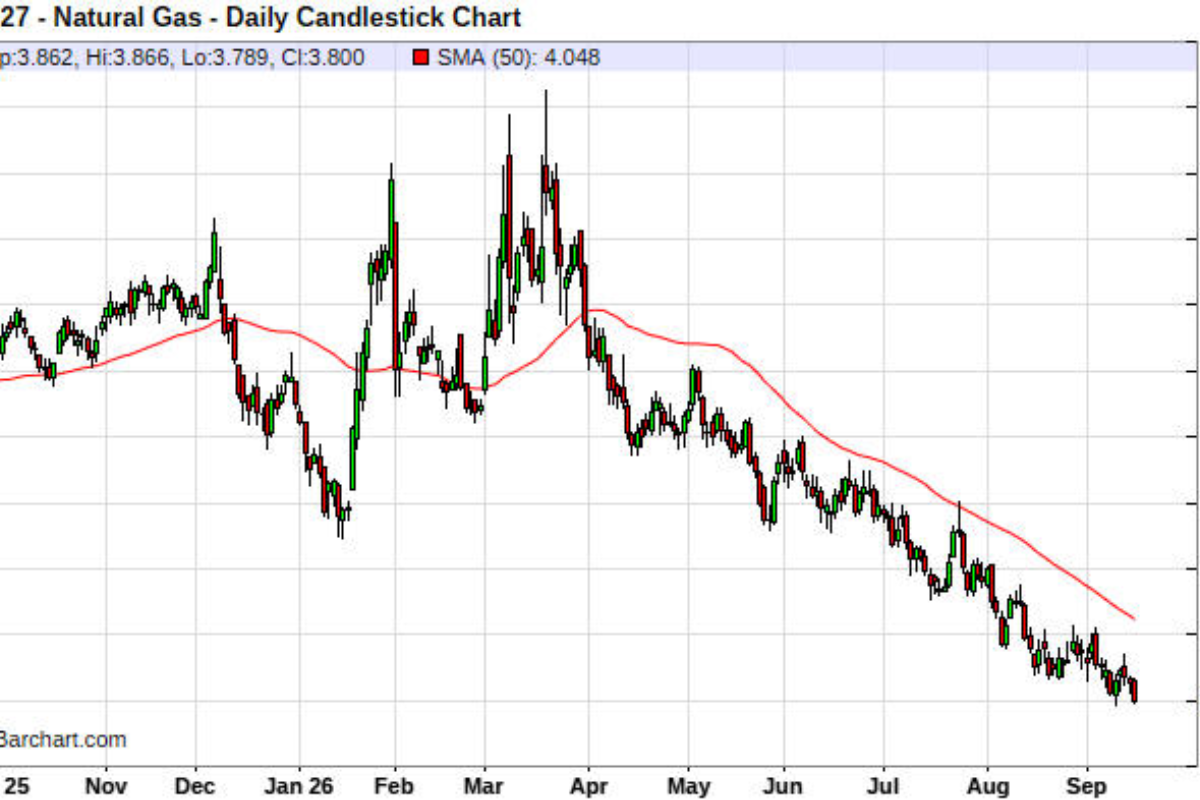
A final related point is that while the commodities mentioned above probably have all commenced cyclical bull markets, they tend to rally and correct at different times within these overarching cyclical upward trends. For example, the stocks of REE- and uranium-focussed companies were star performers during the second and third quarters of this year, but during September-November the focus shifted to lithium stocks and over the past few weeks the focus shifted again — to natural gas stocks. This means that it is not uncommon for a short-term selling opportunity in the stocks of companies focussed on one commodity to coincide with a short-term buying opportunity in the stocks of companies focussed on a different commodity.
More By This Author:
Statistical Aggregates Have Never Been Less UsefulSomething Changed In October
The Rare Earth Element Bubble Bursts

Comments
Log in or sign up to join the conversation.