


Image Source: Pixabay
The S&P 500 gapped up on the first trading day of 2026. Then it closed down.
Retail traders immediately started debating whether this year would be bullish or bearish. They dissected every tick of the index. They watched Nvidia and Tesla. They all watched the wrong market entirely.
The bond market tells the real story. And it has quietly flashed a warning signal that will determine the direction of equities, the economy, and your portfolio for the entire year ahead. So, why don’t most people see it?
TLT (the 20+ year bond ETF) is giving a sell signal on the yearly timeframe. IEF (the seven-10 year bond ETF) sits at fair price. Yet, no buyers are stepping in.
Let me tell you something: lower bond prices mean higher interest rates. And higher rates mean one thing for 2026: forget about expecting a big economic rally. This is the signal institutional money watches. This is what will actually move markets. And almost nobody in retail seems to be paying attention.
The Setup Nobody's Discussing
IEF opened 2026 at fair price on the yearly monkey bars. Bond prices are balanced. Neither bulls nor bears have control. But TLT tells a different story.
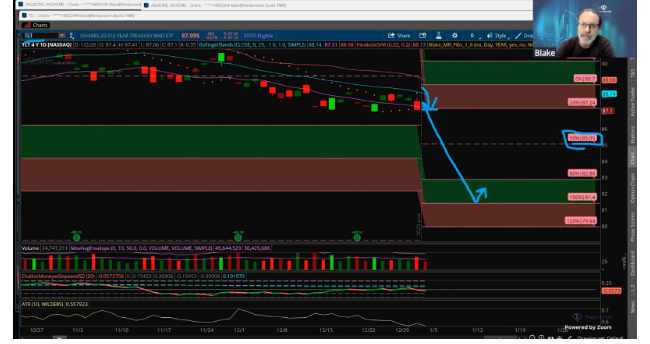
The longer-duration bond ETF is giving a sell signal on the yearly timeframe. The target pullback sits at the $85.05 fair price. Potential downside extends to the $82 level.
Lower bond prices mean higher interest rates. That math is simply unavoidable.
Why This Matters for Everything Else
Here's the connection most traders miss completely. Unless bond prices go higher and rates drop, don't expect a big recovery. Don't expect a significant rally in the economy. The borrowing rate data is showing this right now.
IEF needs to push higher. Without that move, 2026 would become a year of sideways choppiness at best. Bond vigilantes stepping in would push prices lower and rates higher. That scenario would keep pressure on equities regardless of earnings or sentiment.
The Equity Picture
The S&P 500 started the year with a gap up and a close down. The monkey bars show the recent price action sitting between fair price levels and overbought territory.
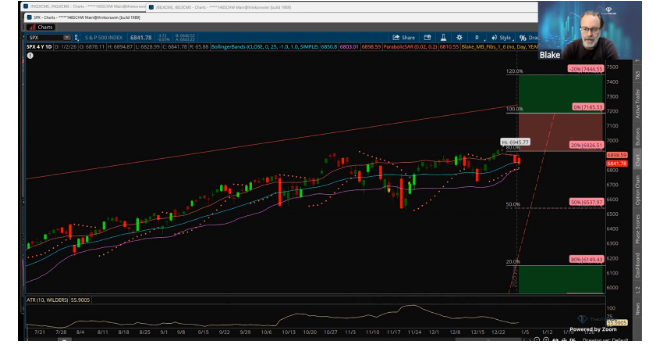
If we push it up to the 7185 area, that's the overbought zone. A pullback to the 6537 mark would represent a minimum 5% correction from there. A test of the yearly high followed by a rejection could mean a 9% drop just to find a fair price.
This kind of framework gave the correct directional bias 80% of the time in 2025. One fake buy signal, one small loss on a short, then a clean run to target. Overbought territory from August through year-end meant range trading, not trend following.
The data works. The question is whether or not you use it.
What the Capital Flow Shows
Tax loss harvesting just ended. The rotation is real. On Dec. 30, 61 issues were down versus 39 up in the S&P 100. The advance/decline ratio looked bearish. But capital flow showed something completely different.
2 and a half times more money was flowing into those 39 advancing stocks than the 61 declining ones. The indexes stayed green despite more stocks falling.
If you traded purely on the advance/decline ratio, you would have been bearish while the market held firm. Capital flow told the real story. This pattern will continue into the new year.
Where to Position Now
4 sectors deserve attention heading into 2026.
Utilities: This sector has been breaking out of oversold territory on both weekly and daily closes. The target range runs from $43.07 to $45.87. This sector can act as a substitute for fixed income.
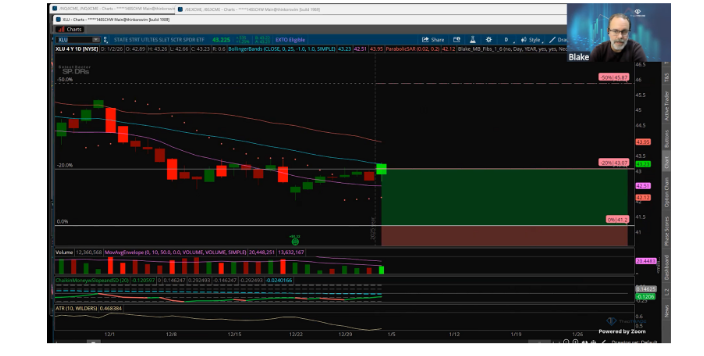
With bonds at fair price levels and rates uncertain, dividend-paying utilities will become the play. Duke pays 3.6%. Dominion and Sempra offer similar yields. The sector ETF is giving a buy signal, while individual stocks sit at fair price levels or the zero line.
Energy: Do not abandon this sector unless crude closes below $55. Recent prices above that level keep energy stocks compelling. The sector gained nearly 2% on the first trading day, while technology dropped a quarter percent.
Suncor pays 3.8%. Shell pays 4%. Kinder Morgan pays 4%. Dividend income plus directional potential creates a triple-dip opportunity when combined with covered calls.
Healthcare: This sector needs a pullback before entry. Healthcare remains strong, but it is not at ideal buying levels yet.
Consumer Staples: I am watching for discounted names and bounces in this space. The sector has held steady, but not yet triggering any major signals.
The Iron Condor Setup
With IEF at a fair price and no strong directional signal in sight, premium selling makes sense.
The structure sells one standard deviation out on both sides. At-the-money options price around 96 cents combined. That gives strikes near $97 on the call side, and $95.50 on the put side. If assigned, you would collect the 3.9% dividend while waiting. Probability math works in your favor when the underlying sits at fair price with no momentum.
The premium is a bit light right now. Patience pays here.
The Bottom Line
The bond market drives the economy. The economy drives earnings. Earnings drive stock prices. That chain reaction starts with TLT and IEF. If bond prices can't rally and rates stay elevated, equities face headwinds regardless of daily S&P 500 action.
Utilities and energy may offer income while you wait for clarity. Both sectors are giving buy signals right now. Healthcare and staples need some patience.
The yearly monkey bars gave correct directional bias 80% of the time last year. They're showing fair price to slightly bullish on equities, with a potential 5%-9% correction if we test overbought levels and fail.
The bond signal is flashing. Now you know what it means and how to trade it.
More By This Author:
The Hertz Time BombNew Year Same Risk
When Everyone Agrees, Everyone's Wrong



Comments
Log in or sign up to join the conversation.