


Image Source: Pixabay
Barron's recently published a short article on the proliferation of 2X single stock ETFs and the extent to which they represent an intersection of where market participation becomes gambling. At the far opposite end of the spectrum was a comment from a Barron's regular on another article who said that after 40 years, his dividend on Coca-Cola (KO) exceeds his cost basis.
This metric is called yield on cost, and it is certainly is a fun idea, but it's not a real metric to evaluate a portfolio. Coca-Cola has been a great long-term hold, outperforming at times, lagging at times, which has often yielded close to 3%.
It got me to think about a permanent, individual stock portfolio. Instead of 25% each into an equity index, long bonds, gold, and cash, what about a portfolio that puts 25% each into individual stocks that seem to combine staying power as well as some sort of easily identified demand story that bodes well -- not necessarily for outperformance, although that would be nice, but to benefit from survivorship bias.

In choosing those names, I am a big believer in having defense industry exposure, as the demand is never ending. I chose Lockheed Martin (LMT) instead of the one I own for clients. Johnson & Johnson (JNJ) is a long time client holding.
Some might think of Pfizer (PFE) in this context, too. I've never been a fan of Pfizer. In fact, I wrote an article for the Motley Fool in 2004 bagging on the company, and I still don't view the name any differently. Johnson & Johnson, however, has evolved over the years by necessity, so I am optimistic it can continue to do that when needed.
Looking back at Coca-Cola, people may have not been able to get enough soda (I realize there are a lot of other products as well), but to own it going forward is to believe they can figure out what to do if carbonated sugar water becomes less popular. This is a similar idea as a long-term client holding, Philip Morris. Smoking has become less popular, so they bought Swedish Match to get into nicotine pouches.
Microsoft (MSFT) also has shown it can evolve, but it has gone through painfully long periods of underperforming. 25 years ago, someone doing this exercise might have picked Intel INTC). Intel owned the world at one point, but in this century it has compounded at 1.65% despite having a strong run from 2014 to mid-2021. If I had to guess, to repeat this exercise going forward, I might substitute Google (GOOGL) in for Microsoft, but I don't think Microsoft is going to disappear in the next 75 years.
20% or 25% in one stock is way more than I would ever consider. This is just a thought experiment trying to explore simplicity. Holding four ubiquitous stocks that avoid crazy CEO risk and benefit from some sort of underlying demand story that could continue many years into the future would be simple, but not very well diversified.
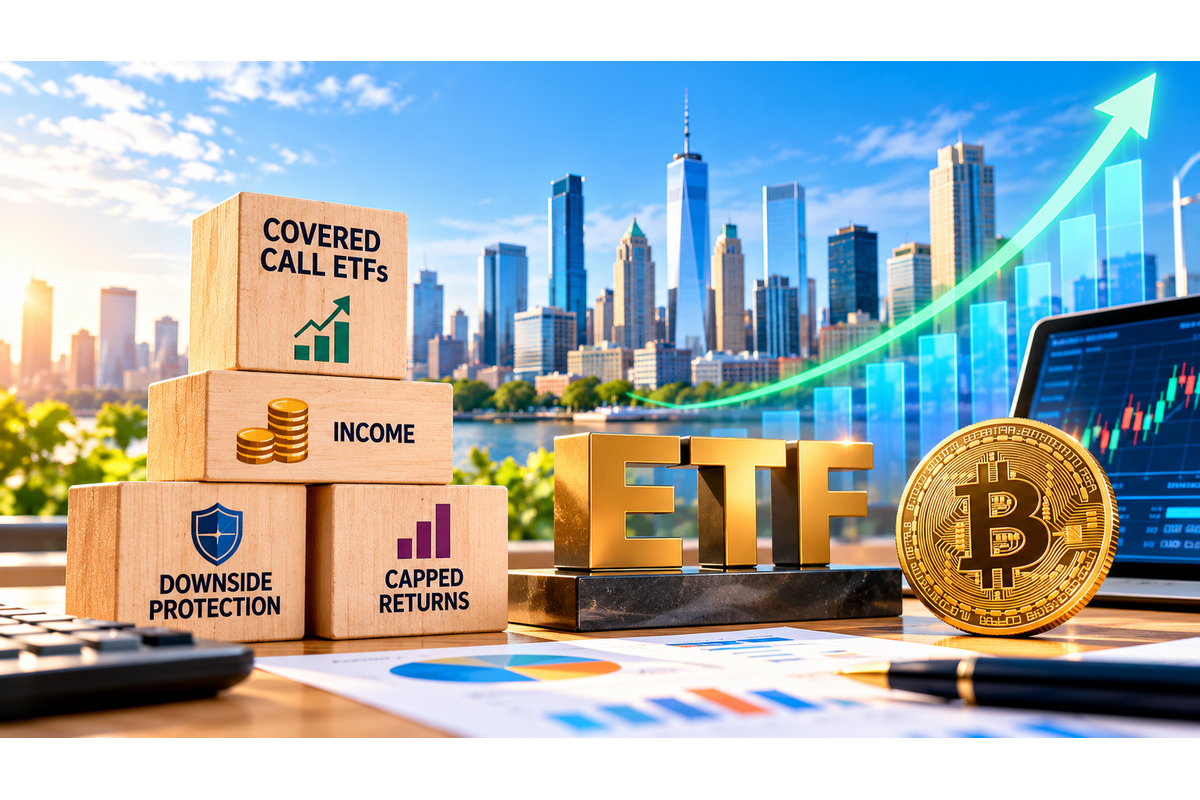
And a quick pivot to a comment on a WSJ article about do-it-yourselfers trying to sort out whether there is an AI bubble. The commenter indicated that he is older, and that he has 60% in a covered call ETF tied to the Nasdaq and 40% in "diversified high yield." That seems pretty nutty, so the result was very surprising.

One of the two places 60% in the Neos Nasdaq 100 High Income (QQQI) fund with 40% in the HYG ETF, and the other one is VBAIX, which is a generic proxy for a 60/40 portfolio. The price compounding of the QQQI/HYG blend is 4.1%, so it "yields" about 12%. The 4.1% reading is about 130 basis above the rate of inflation over the period of the backtest.

The example above is worth adding to the discussion. When looking at the discussed portfolios, it is important to understand that high yield bonds take on some equity beta, and a derivative income fund tracking the QQQ is likely to fall more than a derivative income fund tracking the S&P 500 if there is some sort of AI meltdown.
The WisdomTree Trust (WTPI) sells puts on the S&P 500. Another portfolio with WTPI and bonds would be less volatile, would go down less and go up less, but the "yield" would still be close to 12%. The real return, though, would be negative if all of the "yield" was taken out of the account, with a price return of 1.79% versus a 2.82% inflation rate.
A week or two ago, I mentioned Christine Benz writing about a "good enough" portfolio. If 60% in a Nasdaq 100 derivative income fund with 40% in high yield is good enough for the original commenter, then who are we to question what he should do? I wouldn't suggest anyone do this, but hopefully it continues to be good enough for him.
If there is an AI bubble that pops, then a portfolio holding 60% in QQQI, or some other covered call ETF tied to the Nasdaq, will get pummeled. That is, unless the original commenter has some sort of trigger point to sell which could spare him the pummeling, or it could turn out to be a mistake if his trigger point turns out to be the low in an immediately-forgotten-about dip.
If the Nasdaq gets cut in half, the large distributions from QQQI could spare this guy a couple of hundred basis points, but that wouldn't mean much in a down 50% world. This person has painted himself into something of a corner, but his idea is nonetheless interesting.
More By This Author:
Risk Parity Is Having A Strong Year
Just Don't With 30 Year Debt
Nouriel Roubini's ETF Is Doing Well

Comments
Log in or sign up to join the conversation.