

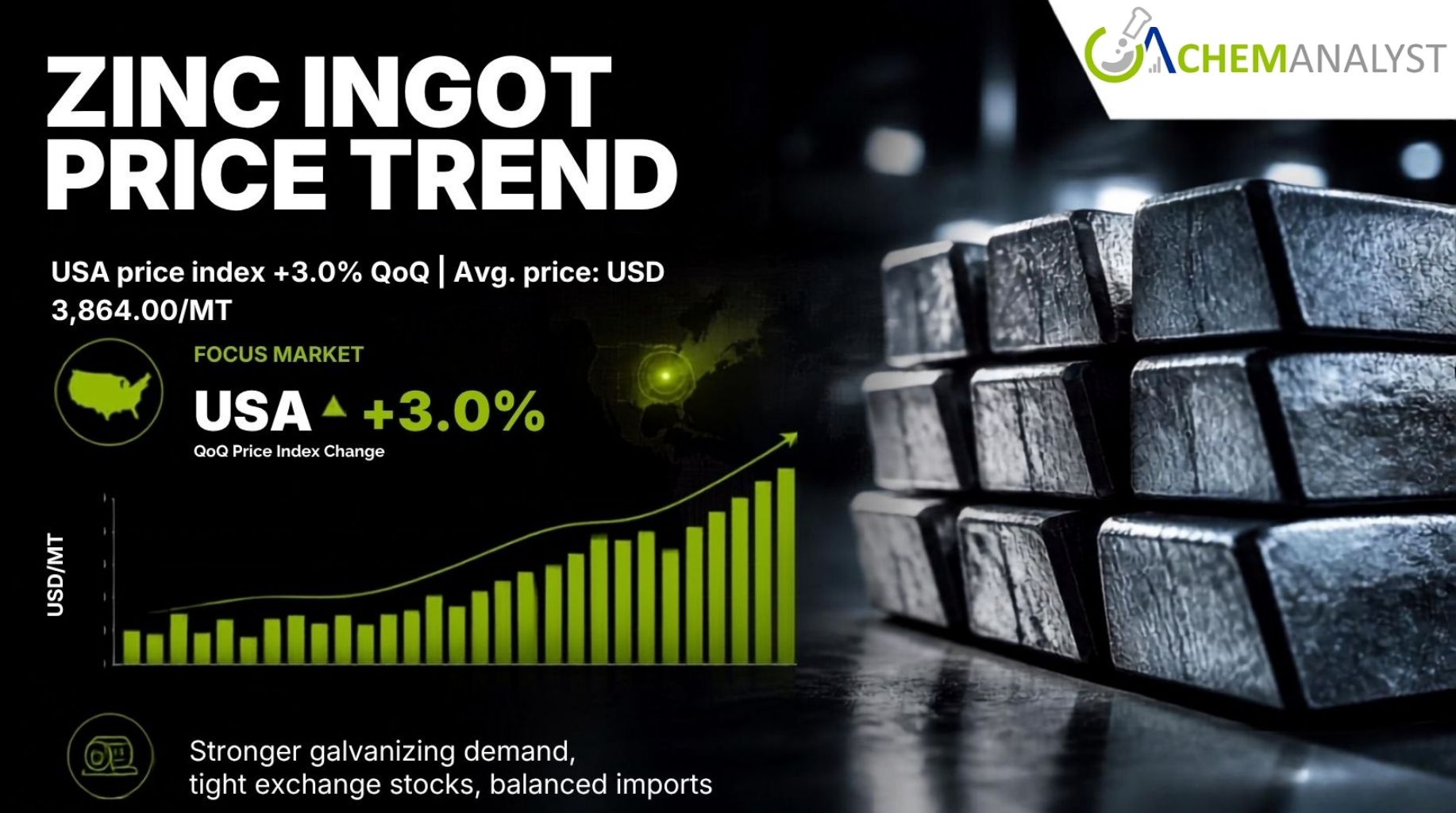
The Zinc ingot price experienced mixed regional movements during the latest quarter as changing industrial demand, import dynamics, inventory levels, and manufacturing activity shaped global pricing trends. While North America and Europe witnessed moderate price gains driven by stronger consumption and tighter supply conditions, Asia-Pacific experienced a decline due to weaker downstream demand and oversupply.
According to ChemAnalyst Zinc Ingot Price: - https://www.chemanalyst.com/Pricing-data/zinc-ingot-1280
As one of the world's most widely used non-ferrous metals, zinc plays a critical role in galvanizing steel, die-casting, automotive manufacturing, construction, infrastructure, batteries, chemicals, and alloys. Consequently, fluctuations in zinc ingot prices directly impact multiple downstream industries and procurement strategies.
Global Zinc Ingot Market Overview
The global zinc market remained relatively balanced during the quarter despite differing regional fundamentals. Industrial production, infrastructure investments, automotive manufacturing, steel galvanization demand, mining output, and international trade collectively influenced price movements.
Several macroeconomic factors shaped pricing across global markets, including:
Manufacturing activity
Infrastructure spending
Automotive production
Steel consumption
Energy costs
Mining production
Import-export flows
Currency movements
Inventory levels
Government industrial policies
Although no major supply disruptions occurred, regional demand variations created noticeable differences in pricing trends.
North America Zinc Ingot Price Analysis
USA Zinc Ingot Price Trends
The USA Zinc ingot Price Index increased by 3.0% quarter-over-quarter, supported primarily by improving demand from the galvanizing industry.
According to ChemAnalyst, the average Zinc ingot price reached approximately USD 3,864 per metric ton, reflecting balanced market fundamentals and stable import availability.
Several factors contributed to higher prices throughout the quarter:
Stronger Galvanized Steel Demand
Infrastructure investments and ongoing construction projects increased demand for galvanized steel products, leading manufacturers to purchase more zinc ingots.
Since galvanized steel accounts for the largest share of zinc consumption globally, even moderate improvements in steel production significantly influence zinc prices.
Balanced Import Flows
Unlike previous periods marked by supply disruptions, imports remained relatively steady during the quarter.
Balanced import availability prevented sharp price spikes while still supporting gradual market appreciation.
Manufacturing Recovery
Steady industrial activity across automotive, construction, and machinery sectors also contributed to stronger zinc consumption.
Manufacturers maintained consistent procurement schedules, preventing excessive inventory accumulation.
Read the LinkedIn Article: - https://www.linkedin.com/pulse/zinc-ingot-price-trends-2026-global-market-analysis-regional-singh-pnlec/
APAC Zinc Ingot Price Analysis
Japan Zinc Ingot Price Trends
In contrast to North America, the Japan Zinc ingot Price Index declined by 2.21% quarter-over-quarter.
According to ChemAnalyst, the average quarterly price reached approximately USD 3,760 per metric ton, reflecting weaker downstream demand and cautious purchasing behavior.
Several factors pressured prices during the quarter.
Oversupply Conditions
Domestic inventories remained relatively comfortable, reducing the urgency for additional purchases.
Adequate availability allowed buyers to negotiate lower prices while maintaining sufficient inventory.
Weak Industrial Demand
Demand from construction, electronics, and manufacturing sectors softened during the period.
Lower production schedules translated into reduced zinc consumption across multiple downstream industries.
Limited Restocking Activity
Instead of aggressive purchasing, many manufacturers adopted conservative inventory strategies.
This muted restocking behavior prevented meaningful price recovery despite stable supply conditions.
Europe Zinc Ingot Price Analysis
Germany Zinc Ingot Price Trends
Germany experienced a moderate increase in zinc prices during the quarter.
According to ChemAnalyst, the Germany Zinc Ingot Price Index rose by 2.83% quarter-over-quarter, while the average quarterly price reached approximately USD 3,713 per metric ton.
Tightened Import Availability
Reduced import volumes tightened market availability, encouraging higher domestic pricing.
Although shortages were limited, buyers responded proactively by increasing procurement activity.
Restocking Demand
Industrial consumers gradually rebuilt inventories after previous cautious purchasing cycles.
This restocking trend supported sustained market demand throughout much of the quarter.
Weekly Price Volatility
Despite overall quarterly gains, prices experienced noticeable week-to-week fluctuations.
Changing import arrivals, currency movements, and evolving industrial demand created temporary market uncertainty.
Major Factors Influencing Zinc Ingot Prices
Galvanizing Industry Demand
Nearly half of global zinc production is consumed in galvanizing steel.
When construction, infrastructure, and automotive production expand, zinc demand rises accordingly.
Galvanized steel remains essential for:
Bridges
Buildings
Highways
Transmission towers
Automotive bodies
Industrial equipment
Mining Production
Global zinc concentrate production directly affects ingot availability.
Lower mining output often raises smelter costs and limits refined zinc production.
Conversely, higher mine production typically improves supply conditions.
Smelting Costs
Energy represents one of the largest operating expenses for zinc smelters.
Electricity prices, natural gas costs, and environmental compliance expenses influence production economics.
Higher smelting costs generally support stronger zinc ingot prices.
Import and Export Activity
International trade plays an important role in balancing regional supply.
Import restrictions, freight costs, port congestion, and shipping availability all affect local pricing.
Markets dependent on imported zinc often experience greater volatility.
Inventory Levels
Warehouse inventories provide an important indicator of future price direction.
Low inventories usually support higher prices, while abundant stocks tend to reduce purchasing urgency.
Procurement teams closely monitor inventory trends before placing large orders.
Zinc Ingot Applications Across Industries
Zinc ingots serve as essential raw materials for numerous industrial sectors.
Major applications include:
Steel Galvanization
The largest end-use application protects steel from corrosion and extends product lifespan.
Automotive Industry
Manufacturers use galvanized steel extensively for vehicle bodies and structural components.
Construction
Residential, commercial, and infrastructure projects rely heavily on galvanized steel products.
Die Casting
Zinc alloys are widely used for producing precision components in electronics, appliances, and automotive manufacturing.
Chemicals
Zinc compounds serve as raw materials in fertilizers, pharmaceuticals, rubber processing, and pigments.
Procurement Insights for Zinc Buyers
Organizations purchasing zinc ingots should monitor several market indicators before making procurement decisions.
Key considerations include:
Global mining production
Smelter operating rates
Infrastructure spending
Automotive manufacturing trends
Import volumes
Freight rates
Currency fluctuations
Inventory levels
Construction activity
Industrial production indices
Strategic procurement planning helps reduce exposure to short-term market volatility while improving purchasing efficiency.
Zinc Ingot Price Forecast
The outlook for Zinc ingot prices remains cautiously optimistic over the coming quarters.
North America is expected to maintain relatively healthy demand, supported by infrastructure investment and stable manufacturing activity.
Europe could continue experiencing moderate price support if import availability remains constrained and industrial demand strengthens further.
Meanwhile, the Asia-Pacific market may remain under pressure until downstream manufacturing activity improves and excess inventories decline.
Overall, future zinc prices will largely depend on:
Global steel production
Infrastructure investments
Automotive manufacturing
Mining supply
Energy costs
International trade
Economic growth
Industrial purchasing activity
Conclusion
The latest Zinc ingot price trends demonstrate how regional market dynamics continue to shape global pricing despite broadly balanced supply conditions. North America and Europe recorded moderate gains, supported by healthy galvanizing demand, tighter imports, and strategic inventory replenishment, while Asia-Pacific faced softer prices due to weaker industrial activity and oversupply.
Looking ahead, procurement professionals should closely monitor steel production, mining output, infrastructure investments, inventory movements, energy costs, and international trade patterns to anticipate future pricing shifts. As zinc remains indispensable across construction, automotive, manufacturing, and infrastructure sectors, understanding regional market developments will be essential for effective sourcing strategies and informed purchasing decisions throughout 2026 and beyond.
Frequently Asked Questions (FAQs)
What determines Zinc ingot prices?
Zinc ingot prices are primarily influenced by mining production, galvanizing demand, industrial activity, import-export flows, energy costs, inventory levels, and global economic conditions.
Why did Zinc ingot prices increase in the USA?
Prices increased because stronger demand from the galvanizing sector, stable manufacturing activity, and balanced import flows supported higher procurement activity.
Why did Japan experience lower Zinc ingot prices?
Japan saw weaker downstream demand, oversupply, and muted restocking activity, which reduced purchasing pressure and contributed to lower prices.
Why were Zinc ingot prices higher in Germany?
Germany experienced tighter import availability, increased industrial restocking, and periodic supply constraints that supported moderate price growth.
Which industries consume the most Zinc ingots?
The largest consumers include galvanized steel manufacturing, automotive production, construction, die casting, infrastructure, electrical equipment, chemicals, and machinery manufacturing.
Contact -
Address:
420 Lexington Avenue, Suite 300
New York, NY 10170
United States
Phone: +1 332 258 6602
Website: www.chemanalyst.com
LinkedIn: https://www.linkedin.com/company/chemanalyst/
X (Twitter): https://x.com/chemanalysts
Facebook: https://www.facebook.com/ChemAnalysts/
Comments
Log in or sign up to join the conversation.