

The Austrian Theory of the Business Cycle shows us that the business cycle is a monetary phenomenon. That is why including changes in the money supply in (especially longer term) macro analysis is not only important, but actually crucial.
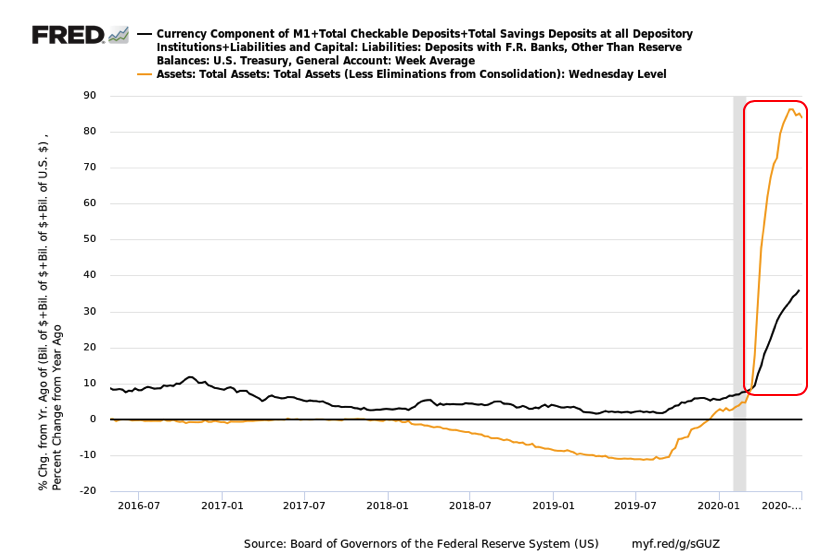
According to Federal Reserve figures reported last night, the money supply growth rate continued to decline this week, falling below 6% on a y/y basis for the first time since 2008 (black line).

These declines are due to sharp falls in bank lending growth, driven especially by declines in commercial and industrial lending. On a shorter-term basis, the money supply continued to fall and the growth rate has now been negative for five consecutive weeks. The last time this happened was in the immediate run-up to the 2008 banking crisis (September).

Though it is difficult to use declines in the money supply for timing economic busts and stock market crashes accurately (as it takes time for market participants to adjust to the new money relation), the current declines in the money supply do signal a potential increase in economic stress. The economic distortions created by a previously inflated money supply will reveal themselves when the money supply growth rate later drops. The more frequent these drops and the bigger they are, the larger the economic reaction will necessarily be.
Comments
Log in or sign up to join the conversation.