

Image Source: engin akyurt on Unsplash
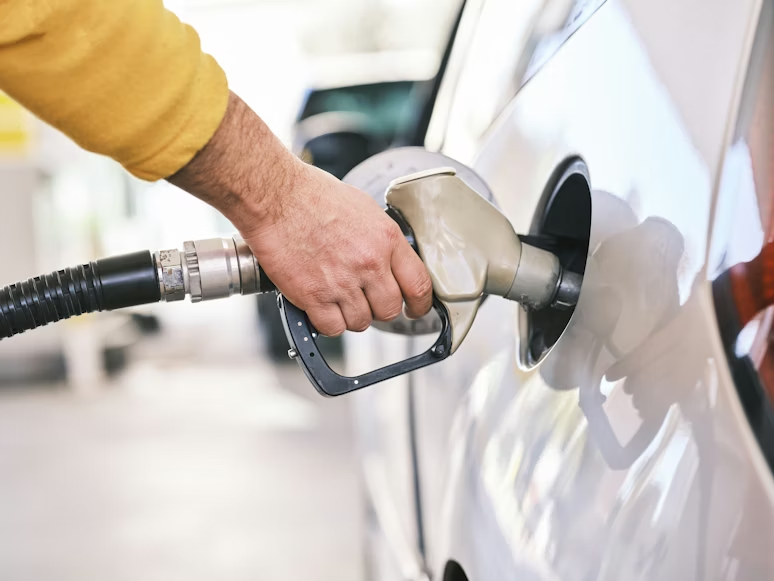
I filled up my truck last week, and I noticed the price had jumped again. Most people see that higher number and feel defeated. They grumble, they pay, they drive away. I looked at the same number, and I saw a trade signal.
On Thursday, crude oil broke through the $78 level I had been watching for weeks and pushed to $81. I told traders in our session that the crude-versus-copper divergence was flashing stagflation.
Rising costs, falling demand; The worst combination for consumers.
Then, Friday happened. Crude blew past $90 a barrel. The economy lost 92,000 jobs. The Dow dropped nearly 500 points. Everything I warned about on Thursday arrived 24 hours later.
Everything That Moves Costs More
When crude oil breaks out like this, fuel is only the beginning. The ripple effect touches everything that requires transportation.
Your groceries get delivered by truck. Your Amazon packages ride in vans burning diesel. Your clothing ships across oceans in vessels powered by bunker fuel. UPS, FedEx, the postal service. Every delivery cost goes up.
The government strips food and energy out of the core CPI number to make inflation data look calmer. But your grocery bill did not come down when CPI came down. You know that. I know that.
On Thursday, I did the math in our session. Energy accounts for roughly 17% of CPI. At $81, crude was already up 22% for March. That alone would add 3.7% annualized to CPI, potentially pushing the April report above 6.5%.
Now crude is above $90, and those projections just got worse.
You Are Already in This Trade
Here is the part that most people miss. You are already short oil.
In commodity terms, being "short the basis" means you need something you do not own. Every person who drives a car, heats a home, or buys groceries is short the basis on oil.
You consume energy daily without holding any position to offset that cost. When prices rise, you just pay more. There is no hedge. There is no offset.
Farmers figured this out centuries ago. A wheat farmer hedges by selling or shorting wheat futures to lock in the price and guarantee payment. They then buy gas futures to offset their rising costs
Airlines do the same thing with jet fuel hedging. They go long the futures to balance out the cost they know is coming. You can do the same thing in your brokerage account.
How to Hedge Your Own Fuel Cost
The simplest version is buying energy stocks. Companies like Devon Energy and Coterra Energy are direct beneficiaries of rising crude.
Their margins expand when oil prices hold above $66. At $90, those margins are exceptional.
On Thursday, Devon Energy gapped up and showed a breakout pattern on the Monkey Bars. The stock closed inside the oversold area, gapped higher, and pressed against the Bollinger Band single deviation.
The easy target would be near $48. That represents roughly 10% upside from Thursday's levels. Devon also has a dividend coming up on March 13.
If you are not sure about buying the stock outright, you can sell an at-the-money put about four weeks out. That collects around 4% return on risk. If the stock stays flat or rises, you keep the premium. If it falls and you get assigned, your effective cost basis drops to around $42.30. That level sits well below the recent bounce zone. It would require a complete breakdown in the energy trade.
The broader XLE energy ETF is another option for those who want sector-wide exposure rather than a single name.
The Hedge in Action
Think about the math on a personal level. If gas prices continue higher, you could be paying an extra $50 to $75 per month at the pump. That adds up to $600 to $900 over the next year.
A single position in Devon Energy or a short put strategy on XLE could offset that cost entirely. You are not eliminating the higher prices at the pump. You are balancing the ledger by profiting on the same move that is costing you money.
Energy companies will pass costs onto consumers. The question is whether you sit on the receiving end of that transfer, or position yourself on both sides.
Copper Confirmed It on Friday
On Thursday, I pointed to the other side of this trade. While crude was breaking out, copper was breaking down.
Copper closed down 1.74%, and it gave a bearish signal on the Monkey Bars targeting the $5.75 level, and potentially $5.60. Copper measures industrial demand. When copper falls and oil rises simultaneously, it signals inflation without economic growth. I told our session on Thursday that this divergence was pointing to stagflation.
Friday's non-farm payroll report confirmed it. The economy lost 92,000 jobs in February. Economists had expected a gain of 50,000. The previous month was revised down to 126,000. Unemployment ticked up to 4.4%.
Rising energy costs and falling employment in the same report. That is the definition of stagflation. It is not a forecast anymore. It is showing up in the data.
The hedge works because energy stocks benefit from the same forces that drain your wallet. Rising crude means higher margins for producers. Falling copper and falling employment mean the broader economy will not rescue consumer budgets anytime soon.
Next time you pull up to the pump and see that number climbing, do not just drive away frustrated. Open your brokerage app and look at the other side of that trade.
Comments
Log in or sign up to join the conversation.