

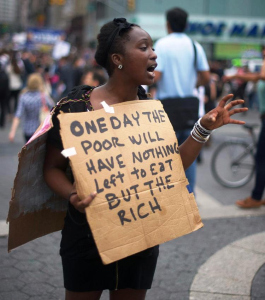
Fed Chairwoman Janet Yellen's recent testimony in front of the House Financial Services Committee was telling on many fronts. Yellen gave her take on the direction of interest rates and defended Fed policy on its effectiveness in stimulating the economy. On day two Yellen got into a shouting match with Rep. Mick Mulvaney, Republican from South Carolina, after he questioned her about why she gave a speech on inequality:
The Fed Chairwoman, her voice rising, said that her predecessors had always discussed important economic problems facing the economy. The exchange only ended when Mulvaney's time to ask questions ran out.
The speech in question was probably the October 2014 speech Yellen made at the Conference on Economic Opportunity and Inequality at the Federal Reserve Bank of Boston. Yellen described how wealth inequality had been expanding, particularly amongst advanced countries. That inequality paused during the Great Recession after those in the top income brackets experienced outsized losses. After the economy rebounded and the stock market recovered, wealth and income inequality resumed.
What Happened?
Inequality was never a major part of the national conversation prior to the crisis. The million dollar question is, "Why now?" What happened between 2008 - the start of the Great Recession - and now? Thomas Piketty's blockbuster book, Capital, has been the talk of the economics world since it debuted this past summer. Piketty described wealth inequality across several nations, going back several years. Piketty's now famous formula - r > g - describes how returns on capital have historically outstripped wage growth of the general population; therefore, the income of those with access to capital - the rich - tend to get richer.
The "Federal Reserve" Happened
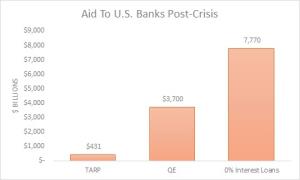
Contrary to Piketty, I do not believe current inequality in America was caused by "r" or "g" or any of the other alphabets; it was caused by Fed policy and the actions of politicians and lawmakers. Fed policy since the crisis has been under the guise of attempting to spur the economy. In actuality that policy has served to protect the banking industry. The Troubled Asset Relief Program ("TARP"), quantitative easing ("QE") and zero interest loans to Wall Street firms - these are just the programs we know about - have all led to inequality.
TARP
TARP was signed by President Bush at the height of the crisis in 2008. It purchased assets and equity from troubled financial institutions - giving these institutions a lifeline. According to the CBO, the government disbursed about $431 billion in TARP funds.
Zero Interest Loans
Starting around 2008 the government gave Wall Street firms zero interest loans totaling about $8 trillion. The loans were designed to relieve liquidity strain at these firms. Bloomberg Markets magazine had to get a court order to force the government to release to the public the existence of these loans.
Quantitative Easing
QE was the Fed's plan to buy trillions in bonds in order to drive down interest rates. The lower rates were expected to be a boon to the economy. However, the lower rates have created bubbles in the stock market and real estate market, and mostly inured to the benefit of big business and the wealthy. Former Fed official, Andrew Huszar, referred to QE as a backdoor bailout of Wall Street. QE increased the Fed's balance sheet by about $3.7 trillion.
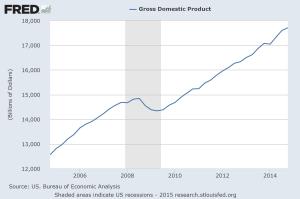
Despite efforts from the Fed and central bankers around the world, brent oil prices have declined about 50% from their peak in June 2014 - signaling a global recession. Gross Domestic Product ("GDP") has rebounded and shown impressive growth since the crisis, but how will it fare since QE ended in Q4 2014? Ironically, oil prices also peaked after the Fed set in motion the steps to end QE in the second half of 2014.
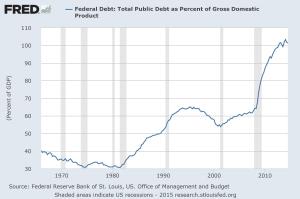
Meanwhile debt-to-GDP is now above 100% - the highest in U.S. history. In many ways the ratio is a measure of a country's creditworthiness. While the benefits of the Fed's stimulus efforts have inured to the few, the costs - and the debt we borrowed to fund it - will be borne by future generations.
Conclusion
Investment professionals and economists alike are beginning to look askance on the effectiveness of Fed policy, and its contribution to income and wealth inequality. My grandmother once said, "A hit dog is going to holler." The Fed and Yellen are getting hit - her October speech was an attempt to pre-empt the situation. If you believe the book, Shock Exchange: How Inner-City Kids From Brooklyn Predicted The Great Recession And the Pain Ahead, Yellen may eventually make a speak addressing social unrest:
It would be naïve to assume that if the economy goes into a deeper recession the populace won't place the blame at Wall Street's doorstep. Double-digit interest rates, debt-to-GDP ratios approaching 100%, untenable rates of unemployment, and deflation in the housing sector while big business swims in billions of taxpayer funds, will be more powerful than 500 pounds of iron sash weights.



Comments
Log in or sign up to join the conversation.