


Another XLV ETF trading opportunity is taking shape. Our Elliott Wave analysis identified a clear 3-wave correction from the recent peak. The price then reached the Equal Legs area, marked as our Blue Box buying zone. This is the type of setup we closely monitor in our trading service. The Blue Box gives us a defined area to look for an entry, while the Elliott Wave structure helps us manage the trade and define the next targets.
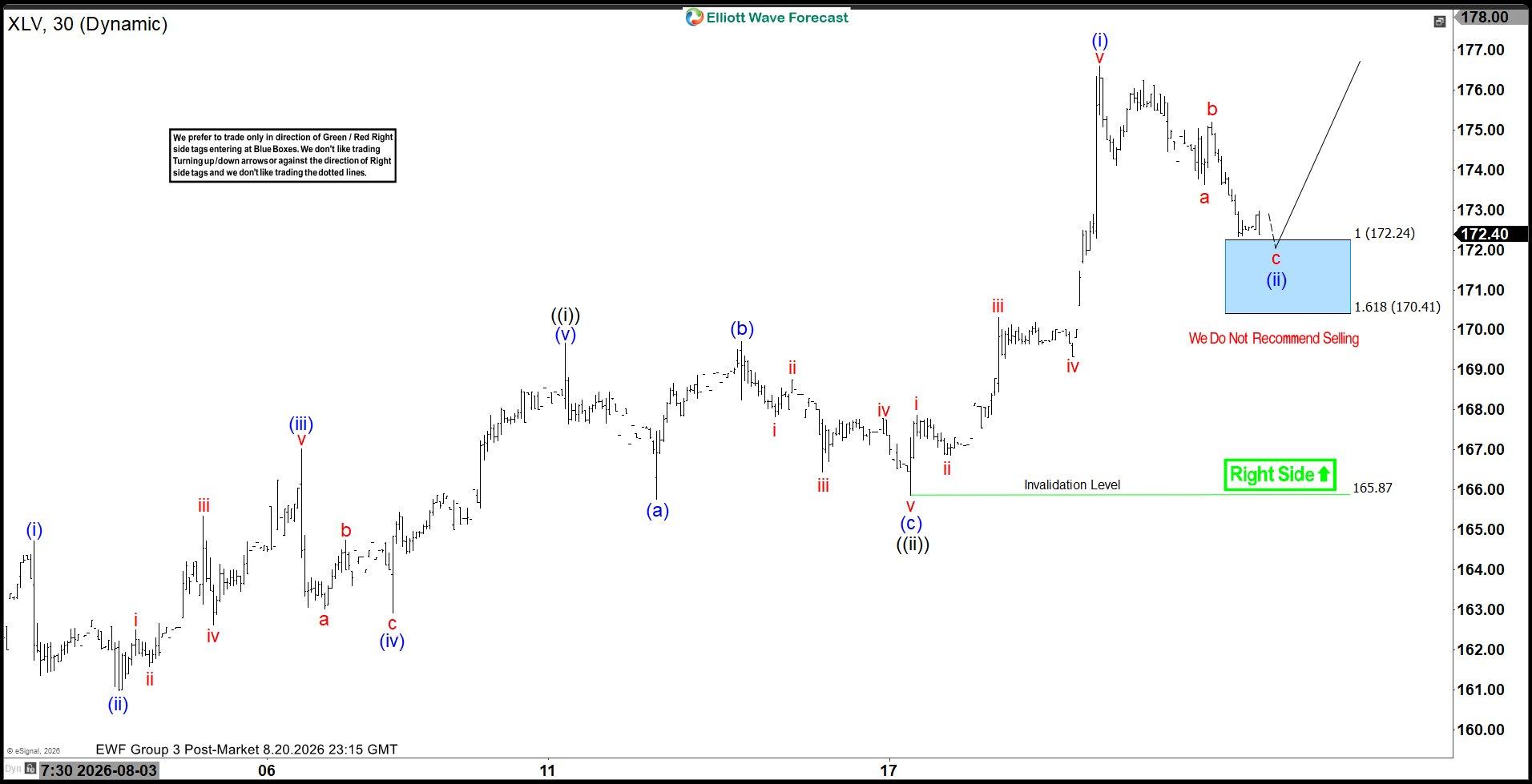
XLV Elliott Wave 4-Hour Chart – 08.20.2026
XLV is showing a clear 3-wave correction from the recent peak. The price is now approaching the Blue Box buying zone at 172.24–170.41.
This is a key area for the current setup. At this stage, we do not favor selling XLV. Instead, we continue to look for a long opportunity from the marked zone.
From this area, XLV could produce at least a 3-wave bounce. If the bullish trend resumes, the ETF could continue higher and potentially reach new highs.
The setup also gives us a clear way to manage risk. Once the bounce reaches the 50% Fibonacci retracement against the red B-wave high, we can move the stop loss to breakeven and secure partial profits.
How to Read Our Charts
Red bearish stamp + Blue Box = Selling setup
Green bullish stamp + Blue Box = Buying setup
Black stamp = No trade zone
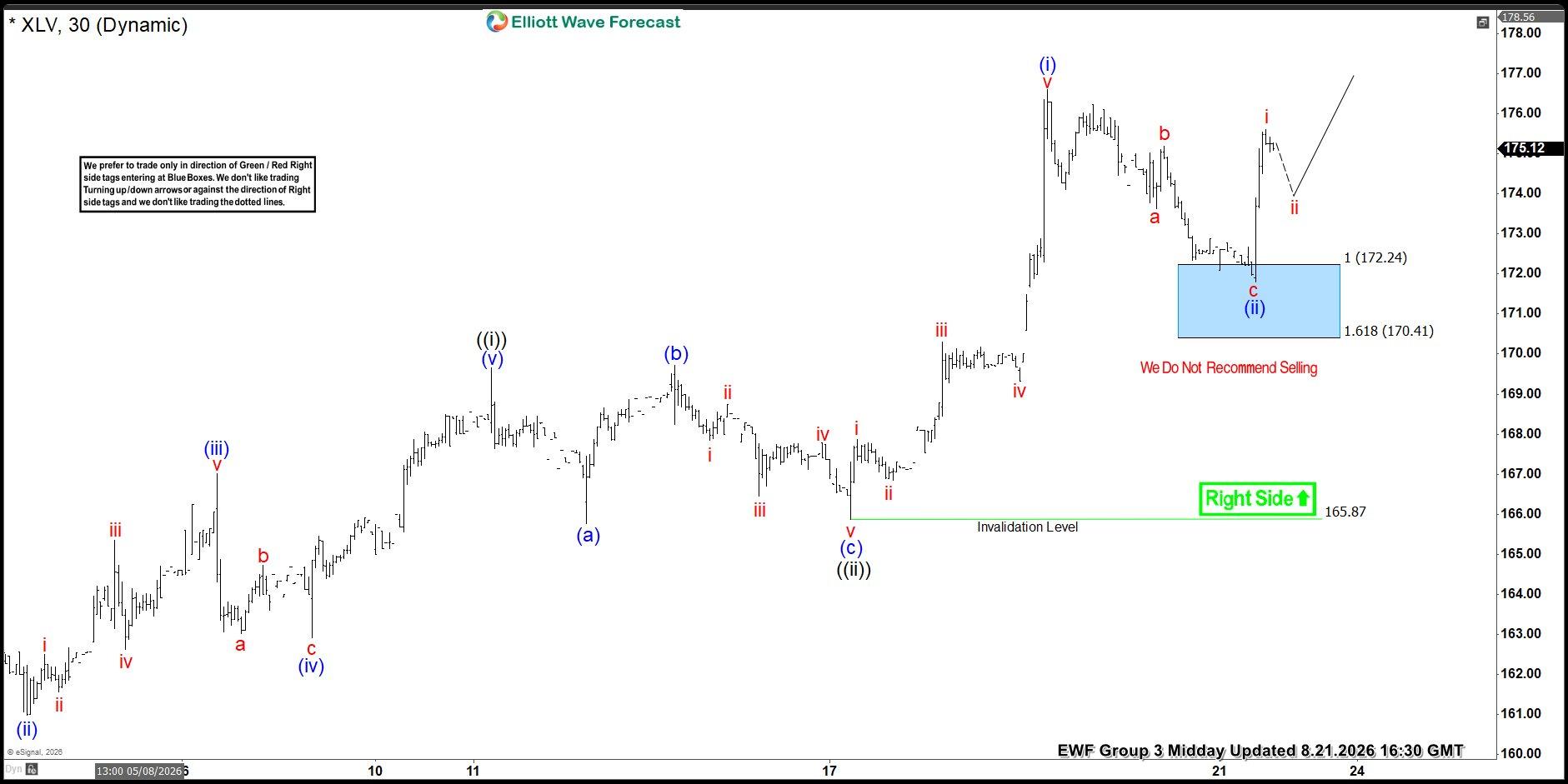
XLV Elliott Wave 4-Hour Chart 08.21.2026
As a result, long positions taken from this zone can now be considered risk-free, with the stop moved to breakeven. Our next target is for XLV to break to new highs. This would confirm that the next bullish leg is underway.
However, if the latest low breaks, XLV could enter a deeper correction. In that case, we would look for the pullback to create a new trading opportunity.



Comments
Log in or sign up to join the conversation.