

Oil prices screamed higher (partly in response to investors' rising skepticism about the escalating war of words between key oil exporters Saudi Arabia and Russia) bouncing after yesterday's carnage. Today's most notable headline was OXY cutting its dividend (by 86%), but that failed to worry bullish oil machines who bought with both hands and feet today.
(Click on image to enlarge)

Bloomberg's Liam Denning noted:
Oxy’s decision to stretch itself to beat Chevron Corp. in a bid battle for Anadarko Petroleum Corp. left it vulnerable in an industry not exactly famed for its stability. This is just damage control on a grand scale.
API
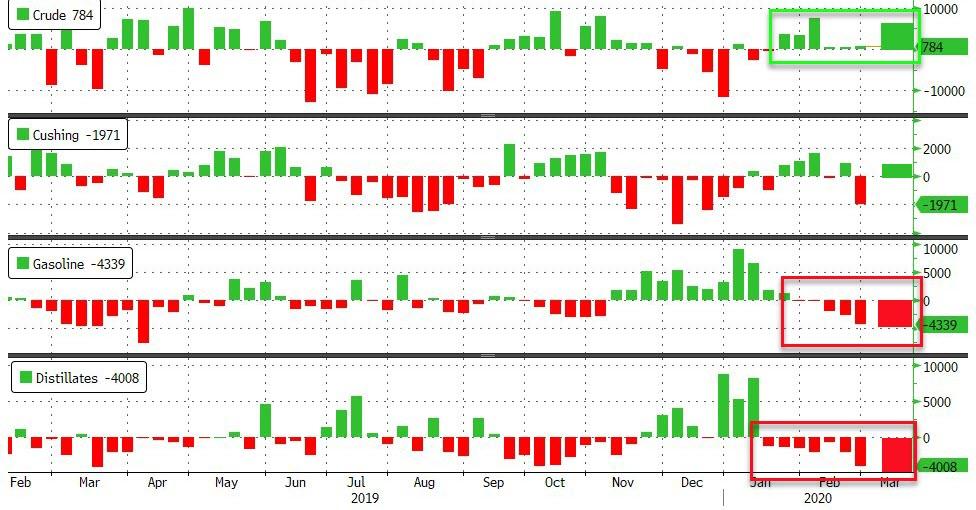
- Crude +6.407mm (+1.9mm exp)
- Cushing +364k
- Gasoline -3.091mm (-2.1mm exp)
- Distillates -4.679mm (-1.8mm exp)
API was expected to report a continued trend from last week - more builds for crude and draws for products - but the data was more extreme with a much bigger than expected crude build and much bigger than expected product draws...
(Click on image to enlarge)
Source: Bloomberg
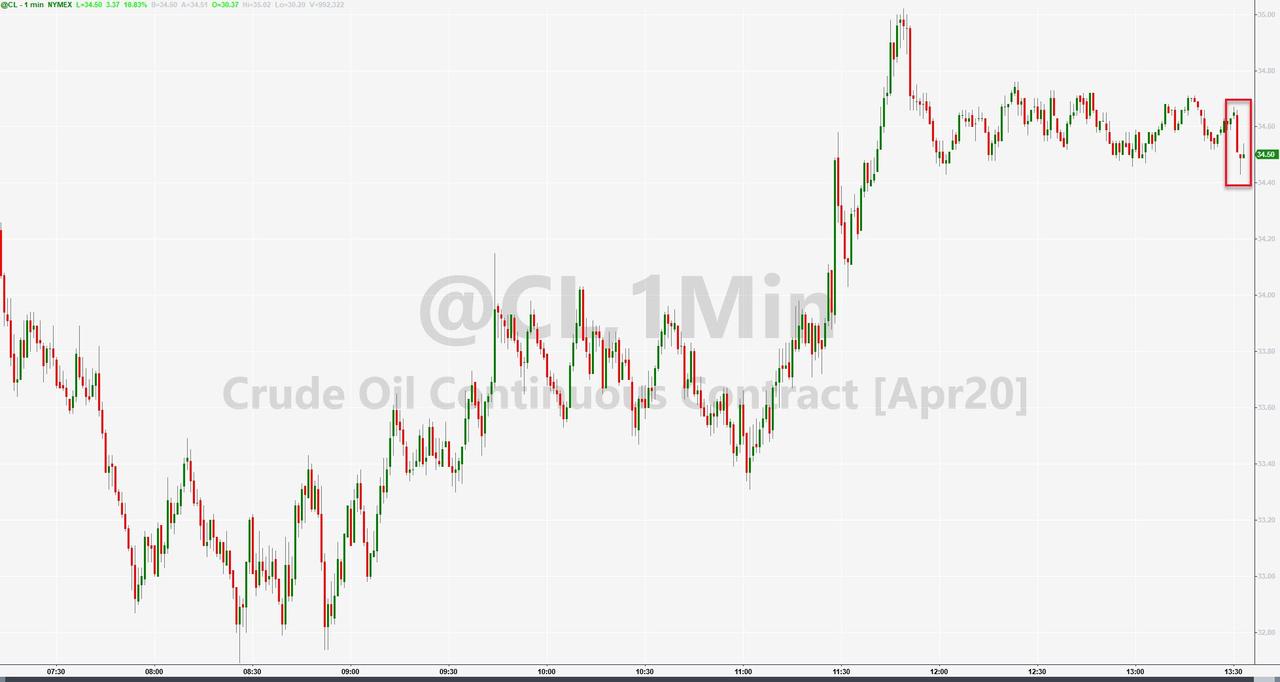
WTI hovered around $34.60 ahead of the print and dipped very modestly
(Click on image to enlarge)
Oil prices are likely to come back under pressure unless Moscow and Riyadh agree to another round of production cuts, according to Harry Tchilinguirian, head of commodity strategy at BNP Paribas.
"If the oil market has to contend with both a positive supply shock and a negative demand shock, then prices are going to be extremely weak," Mr. Tchilinguirian said.
Neither Riyadh nor Moscow stand to benefit from oil prices remaining at current levels or dropping lower, traders said, despite the production threats.
"All the Saudis are going to do is escalate to negotiate," said Edward Marshall, commodities trader at Global Risk Management. "The Saudis have downplayed the necessity of a meeting, but I don't think it's in anyone's interest to go lower, although it certainly can."
But in order for prices to move even lower and stay there, "we need to see storage tanks being filled at a greater level than we originally thought following the coronavirus outbreak," Mr. Marshall said.



Comments
Log in or sign up to join the conversation.