

After holding the economy in suspense for almost a year, the Federal Reserve raised interest rates a quarter of a percent after hovering near zero since 2008. The much anticipated increase was reassured by the recent Federal Open Market Committee minutes earlier this week. The decision to raise interest rates ultimately reflected the health of the U.S. economy which the Federal Reserve believes is growing adequately. As the economy continues to stabilize and grow, Fed Chairwoman Janet Yellen insists further hikes will follow. A lot of the timing and amounts of those future increases will depend on the U.S. employment situation, for which we get the December 2015 results tomorrow. Typically, falling unemployment rates and robust nonfarm payrolls and average weekly earnings signify a positive economic outlook.
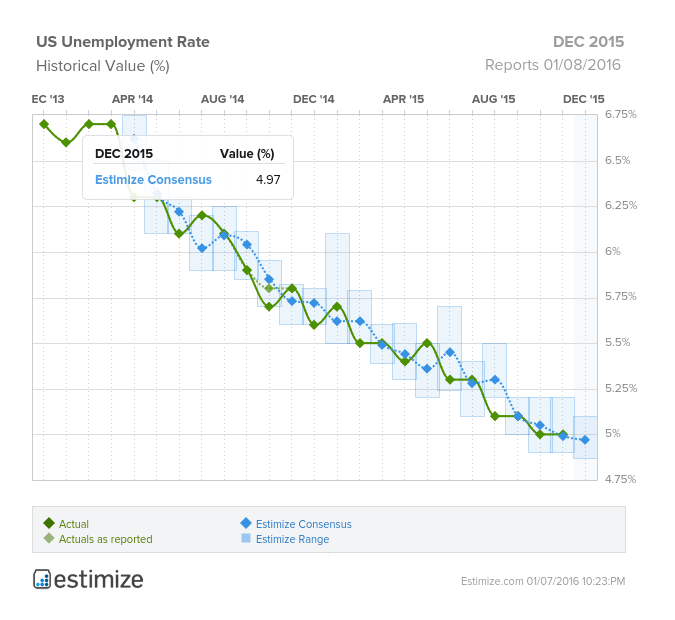
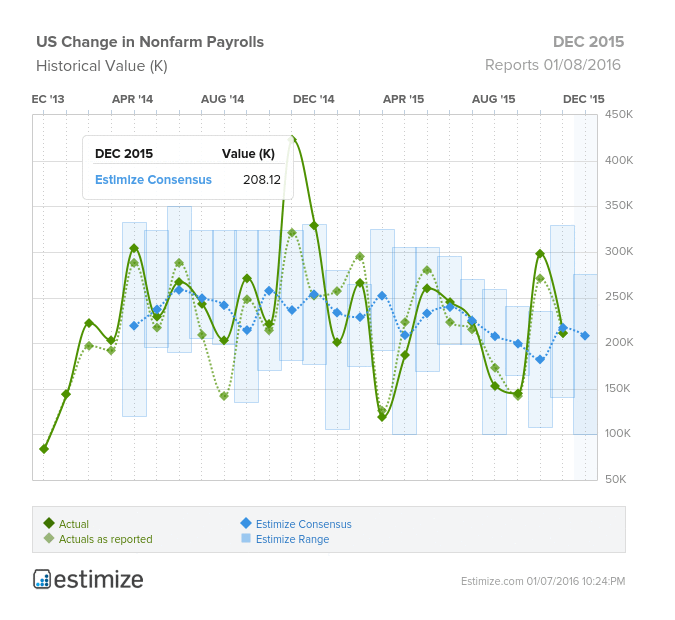
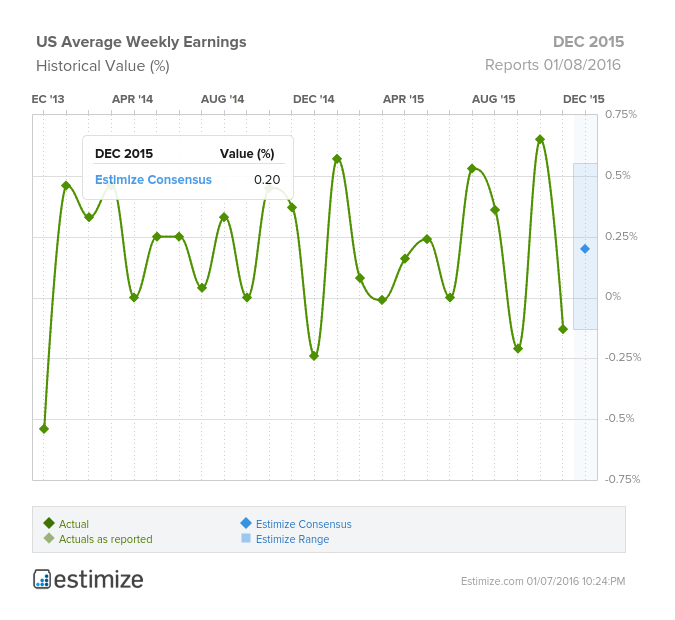
At the moment, the Estimize community believes employment data will remain relatively unchanged from November 2015 reports. This includes an unemployment expectation of 4.97%, a 208.12k increase in non-farm payrolls and a 0.20% increase in average weekly earnings. Most importantly, the unemployment rate and non-farm payrolls are expected to stay at the 5% and 200k level for the third month in a row, deemed as the benchmarks of a healthy U.S. economy.
In the days following the Fed’s December interest rate announcement, the Estimize community revised their expectations, pushing unemployment rates down and improving the outlook for nonfarm payroll and average weekly earnings, likely taking the Fed’s decision as a positive sign for the upcoming jobs numbers. In the long term, higher interest rates tend to negatively impact employment figures. When interest rates rise, economic activity typically stabilizes and consequently pushes employment down when employers adjust for falling demand.
A bigger concern coming out of the FOMC minutes were the expectations surrounding inflation. Since the recession, inflation in the United States has languished below 2%, however still outpacing average weekly earnings. This suggests, while average weekly earnings are growing, they are not growing fast enough to keep up with price increases and inflationary pressures. Despite inflation outpacing earnings, the Federal reserve targets 2% inflation as it is most consistent with price stability and maximum employment.
By economic logic and the Phillips Curve, when inflation rises, unemployment is expected to decrease. That being said, unemployment reaching 5% has already met the Federal Reserve’s expectations while inflation still trends lower, leaving the Fed in a precarious position. If the December employment data comes in stronger than expected then the possibility of the Fed tightening interest rates a second time in January increases.
How do you think employment will perform? There is still time to get your estimate in.
Photo Credit: George Rex

Comments
Log in or sign up to join the conversation.