
Yes, absolutely. Preventing a moving platform, elevator, lift table, or hoist from over-traveling and crashing into the ceiling or roof is one of the primary, safety-critical applications of a limit switch.
When correctly wired into the control circuit, a limit switch acts as an automatic mechanical stop that cuts power to the motor the exact moment the platform reaches its maximum safe upper limit.
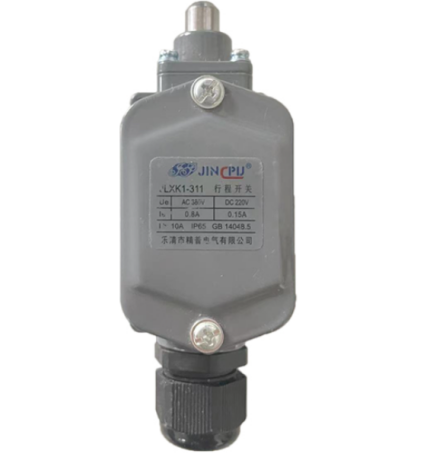
Limit Switch
How It Works
Physical Contact or Proximity: As the platform ascends, it eventually reaches the pre-set upper threshold. At this point, the platform either physically triggers the actuator arm (lever, roller, or plunger) of a mechanical limit switch or comes close enough to be sensed by an inductive or photoelectric limit switch.
Circuit Interruption: Triggering the switch opens the electrical circuit (normally closed contact) that feeds power to the motor's "up" direction.
Immediate Halt: The motor stops instantly, halting the platform before it can travel any further and impact the structural roof.
Crucial Best Practices for Reliability
While a single limit switch is helpful, relying on just one for a high-risk overhead application can be dangerous if the switch fails mechanically. To ensure foolproof protection:
Use a Normally Closed (NC) Circuit: Always wire the limit switch using its normally closed contacts. If a wire breaks, becomes loose, or the switch malfunctions internally, the circuit naturally defaults to an "open" (safe/stopped) state rather than failing "closed" (allowing the platform to crash).
Install a Backup "Overtravel" (Safety) Limit Switch: In critical lifts and industrial elevators, it is standard practice to install two upper limit switches:
Primary Limit Switch: Stops the platform during normal operation when it reaches maximum height.
Secondary (Safety/Emergency) Limit Switch: Positioned slightly higher. If the primary switch fails, this secondary switch triggers a hard emergency stop or cuts the main power breaker entirely.
Integrate a Mechanical Hard Stop: Limit switches are electrical controls. Always back them up with a physical mechanical buffer (like heavy-duty rubber bumpers or steel stops) as a last line of defense in case of a catastrophic power failure or brake slip.
Are you designing a lifting mechanism or troubleshooting a limit switch setup on an existing platform?
Comments
Log in or sign up to join the conversation.