

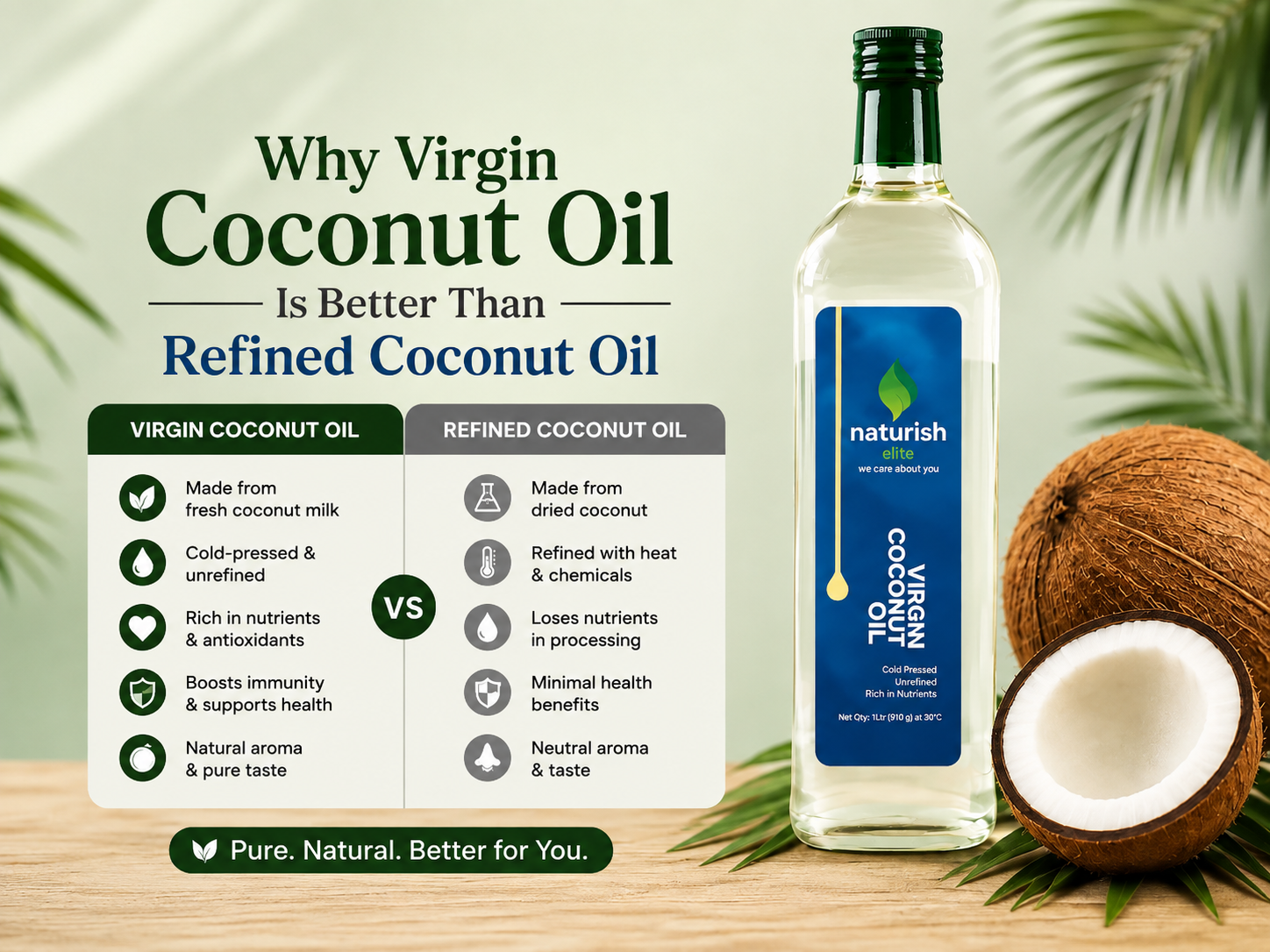
Coconut oil has long been a familiar ingredient in cooking, but not all coconut oils are produced in the same way. The difference between virgin and refined coconut oil largely comes down to the raw material, extraction process, level of processing, flavour, aroma, and the characteristics retained in the final product.
For consumers who prefer minimally processed ingredients, understanding these differences can make choosing an everyday cooking oil easier. Virgin Coconut Oil Is Better Than Refined Coconut Oil for those who value the natural characteristics of coconut, as virgin oil is generally made from fresh coconut and processed through comparatively gentle mechanical methods.
Refined coconut oil is commonly produced from dried coconut and undergoes additional processing to create a more neutral taste and appearance.
How Virgin and Refined Coconut Oil Are Made
The production method is one of the most important differences between these two types of coconut oil. Virgin coconut oil is generally extracted from fresh coconut meat using mechanical or physical methods.
Because the process involves comparatively limited processing, the resulting oil can retain more of the natural aroma and flavour associated with fresh coconut. The exact extraction method can vary between products, so checking the product information is important when selecting an oil.
Refined coconut oil is commonly produced using copra, which is dried coconut meat. It may go through additional stages such as purification, bleaching, and deodorisation.
These processes are designed to remove impurities and produce an oil with a lighter appearance and more neutral flavour. This can be useful for recipes where the cook does not want coconut flavour to influence the final dish.
What Makes Virgin Coconut Oil Different?
One of the main attractions of virgin coconut oil is its comparatively minimal processing. Fresh coconut naturally contains compounds that contribute to its characteristic flavour, aroma, and overall composition. When the oil is produced using suitable mechanical extraction methods, more of these natural characteristics can remain in the finished product.
Coconut oil is also known for containing medium-chain fatty acids, including lauric acid. However, coconut oil is high in saturated fat, so it should be consumed in appropriate quantities as part of an overall balanced diet. The nutritional profile of an individual oil can also vary depending on the coconut variety, freshness, extraction method, and storage conditions.
Why Cold Pressing Matters
Cold Pressed Virgin Coconut Oil is produced through mechanical extraction with limited exposure to high temperatures. This approach appeals to consumers who prefer oils that remain closer to their original form. Limited heat during extraction can help maintain the characteristic taste and aroma of fresh coconut while reducing the need for intensive refining.
For everyday cooking, cold pressed virgin coconut oil can be suitable for recipes where its natural coconut flavour complements the ingredients. It can work well for selected sautéing, baking, seasoning, and traditional food preparation. However, the appropriate cooking temperature should always be considered because different oils have different characteristics and applications.
Taste and Aroma Make a Difference
Flavour is another noticeable distinction between virgin and refined coconut oil. Virgin coconut oil generally has a mild coconut taste and recognisable aroma because it retains more of the original characteristics of fresh coconut. This can make it appealing in recipes where a subtle coconut note adds to the overall flavour.
Refined coconut oil generally has a more neutral taste because additional processing and deodorisation reduce much of the characteristic coconut aroma.
Therefore, neither option needs to be viewed as suitable for every recipe. The better choice depends on the cooking method, desired flavour, dietary preferences, and personal preference for minimally processed ingredients.
Why Choose Pure Virgin Coconut Oil?
Consumers looking for pure virgin coconut oil often prioritise simple ingredients, transparent processing, and natural characteristics. When selecting coconut oil, it is useful to examine the ingredient information and understand how the oil was extracted. Packaging also matters because exposure to excessive light, heat, air, and moisture can gradually affect natural oils.
Proper storage can help preserve the original characteristics of the oil. Keeping the container tightly closed and storing it in a cool, dry place away from direct sunlight is a practical way to maintain its quality.
Consumers should also check whether an oil is intended specifically for food use and ensure that it meets appropriate quality requirements for its intended application.
Choosing the Right Coconut Oil for Your Kitchen
Choosing between virgin and refined coconut oil should not be based only on the name printed on the bottle. Consider the type of food you prepare, the flavour you want, how the oil was produced, and how minimally processed you prefer your ingredients to be.
If you enjoy the natural aroma and flavour of coconut, virgin oil can be a suitable option for recipes where those characteristics are desirable. If you want a neutral-tasting oil that does not noticeably affect the flavour of food, refined coconut oil may be more appropriate for certain preparations.
Naturish Elite focuses on coconut oil with attention to natural characteristics and traditional processing practices. For households interested in minimally processed cooking ingredients, understanding the source, extraction method, packaging, and storage conditions can help them make a more informed choice.
Virgin Coconut Oil vs Refined Coconut Oil
The difference can be summarised simply. Virgin coconut oil generally starts with fresh coconut and undergoes comparatively gentle mechanical extraction. Refined coconut oil commonly starts with dried coconut and undergoes additional processing to create a more neutral product.
Virgin oil generally offers a more noticeable coconut aroma and flavour, while refined oil provides a milder sensory profile. For people who prefer minimally processed foods and enjoy the natural taste of coconut, virgin coconut oil can be a more appealing choice.
Ultimately, the right oil depends on individual cooking needs and dietary preferences. Coconut oil should also be consumed in moderation because it is high in saturated fat. Naturish Elite provides an option for consumers who want to incorporate traditionally processed coconut oil into their everyday cooking while paying attention to product quality and processing.
Frequently Asked Questions
1. What is the main difference between virgin and refined coconut oil?
Virgin coconut oil is generally made from fresh coconut using comparatively gentle mechanical extraction, while refined coconut oil is commonly produced from dried coconut and undergoes additional processing.
2. Is Cold Pressed Virgin Coconut Oil suitable for cooking?
Yes, it can be used for suitable cooking applications such as sautéing, baking, seasoning, and traditional recipes. Cooking temperature should be considered according to the specific application.
3. Why do people prefer pure virgin coconut oil?
Many consumers prefer it because of its comparatively minimal processing, natural coconut aroma, characteristic flavour, and closer connection to the original coconut.
4. How should virgin coconut oil be stored?
Keep it tightly sealed in a cool, dry place away from direct sunlight, excessive heat, moisture, and unnecessary exposure to air.
5. Is virgin coconut oil healthier than refined coconut oil?
Virgin coconut oil undergoes less processing and may retain more naturally occurring compounds, but it is still high in saturated fat. It should therefore be consumed in moderation as part of a balanced diet.
Comments
Log in or sign up to join the conversation.