
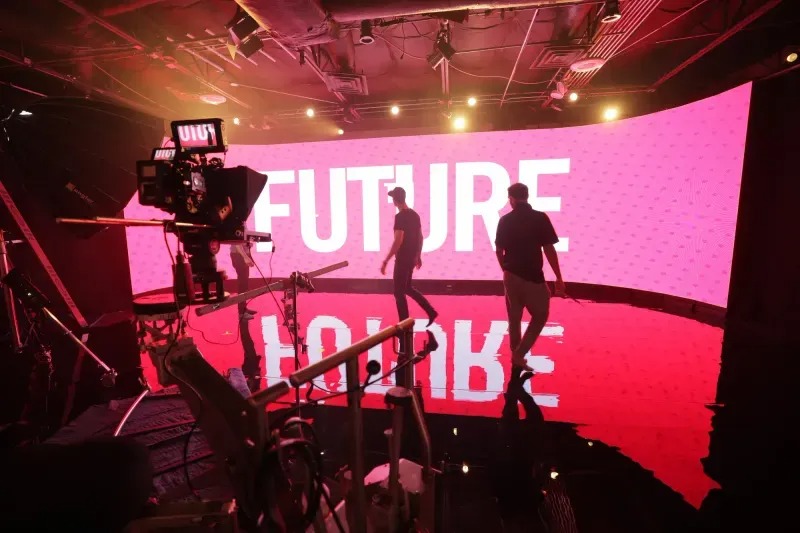
A few years ago, most people would have called virtual reality a novelty, something for gaming conventions rather than serious brand work. That's shifted quietly but steadily. Marketing teams now look at immersive formats as a real tool for connection, not a gimmick tacked onto a campaign for buzz. The question isn't whether this technology belongs in advertising, it's how to use it without losing the human element that made people care.
Why Screens Alone Aren't Enough Anymore
For decades, a commercial's job was simple, grab attention in fifteen or thirty seconds and hope it stuck. That still works for some formats, but audiences control what they watch more than ever, and skip past anything that feels like a pitch. Passive viewing is losing ground to experiences people actively choose.
This is part of why interactive formats have grown quickly. When someone puts on a headset or interacts with a mixed reality environment, they're not just watching a message, they're inside it. That changes the emotional weight of an experience in a way flat video sometimes can't match.
What Mixed Reality Actually Looks Like in Practice
The term gets thrown around loosely, so it helps to define what it involves.
Blending real footage or physical spaces with digital layers
Letting a viewer look around or move within a scene
Combining live actors or real locations with generated environments
Creating experiences that respond to a viewer's actions in real time
It's a spectrum, ranging from simple augmented overlays to fully immersive built environments.
Where This Fits Into Everyday Marketing
Not every brand needs a headset experience, and that's fine. Immersive tools show up in smaller ways too, like interactive trade show booths, virtual facility walkthroughs, or hybrid event content blending a live audience with a remote one. Teams working in mixed reality film production dallas companies hire aren't only building elaborate simulations, they're often solving a simpler problem, how to make a brand feel present rather than distant.
A product launch streamed flatly to a remote audience feels like watching from outside. The same launch built with layered digital elements can make a distant viewer feel like they're standing in the room.
The Risk of Leading With the Technology Instead of the Story
The biggest mistake brands make with new formats is treating the technology as the whole pitch. A flashy experience without a real story underneath wears off fast, viewers notice the effect before anything meaningful. Brands getting real traction use these tools to bring people closer to something true, a product's origin, a founder's story, a community the brand supports, rather than distracting from having nothing to say.
Good production still starts with the same basic questions, who is this for, what do we want them to feel, and what's true about the thing being represented. The tools change. Those questions don't.
Practical Considerations Before Jumping In
A few things are worth thinking through before committing budget to an immersive project.
Match the format to the audience, a trade show crowd and a social crowd differ
Plan for accessibility, not everyone can or wants to use a headset
Budget realistically, immersive timelines run longer than traditional video
Think about longevity, some formats age better as devices change
None of this is meant to discourage experimentation, just to avoid spending on something impressive in a demo that doesn't hold up with a real audience.
A Fort Worth Perspective on Where This Is Headed
Nametag Films, based in Fort Worth, has approached this shift the same way it approaches traditional commercial work, treating new formats as another way to tell a real story rather than a replacement for one. Texas has a strong production culture built on character driven storytelling, and that instinct carries over as the tools get more advanced. The technology is useful, but only when it serves something a viewer would care about with or without a headset.
How long does an immersive production typically take?
It varies, but timelines usually run longer than a standard commercial shoot, since more planning goes into interactivity and environment design before filming even starts.
Does immersive content replace traditional video?
Not usually. Most brands use it alongside traditional formats, matching the format to how and where the audience will actually experience it.
Final Words
Immersive technology won't replace good storytelling, and it was never meant to. It's another way to bring people closer to something real, provided the story underneath is worth stepping into. Brands that treat the format as a tool rather than the whole idea build experiences people remember long after the headset comes off.
Comments
Log in or sign up to join the conversation.