

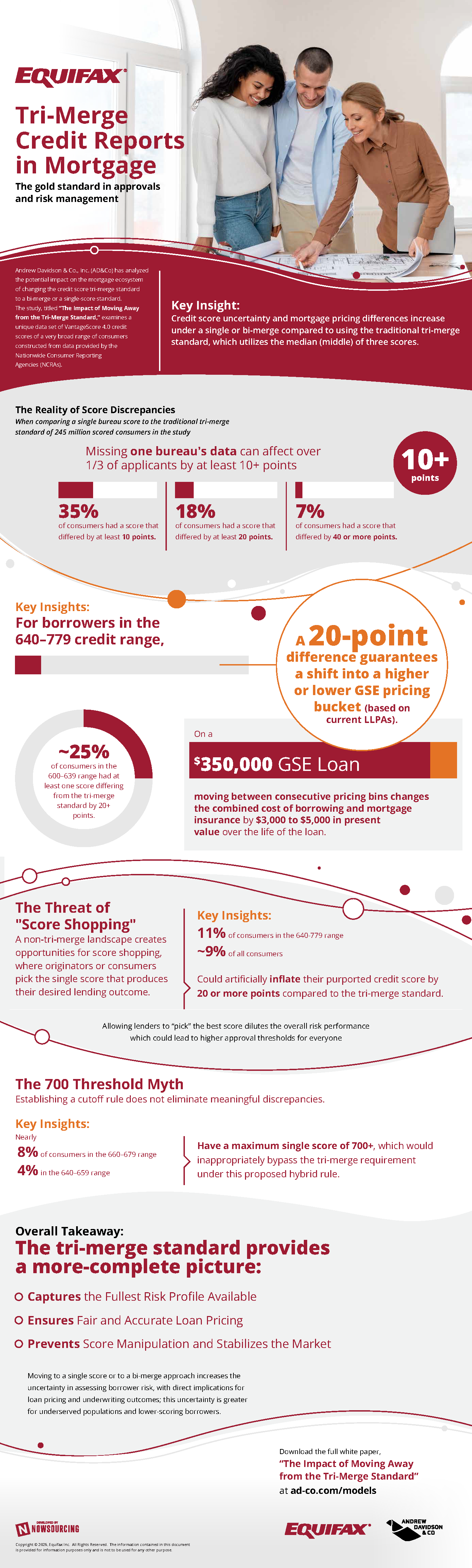
When it comes to pricing a loan, a wide variety of factors can be at play. Market conditions and economic forecasting are just a few factors that go into the macroeconomic side of pricing. However, loan pricing is also heavily dependent on the characteristics of the borrower. When it comes to obtaining a consumer’s information, it usually goes through Experian, TransUnion, and Equifax. When a lender orders credit reports on a person from all 3 of these credit bureaus, it is called a tri-merge report. After receiving all this information, lenders use the median score between the 3 options to base rates.
However, some companies have opted to use only 2 of these 3 bureaus, which is a bi-merge credit report. While this may seem like a small difference, it leads to much larger problems. With only 2 reports, there has been much more frequent credit score discrepancies when compared to the standard tri-merge report. When utilizing a bi-merge report, it also enables consumers to shop around for the best price. This works because the 2 bureaus one lender uses may differ from other lenders. Ultimately, to ensure that consumers are getting the fairest price possible and not gaming the system, relying on a tri-merge credit report is the way to go.


Comments
Log in or sign up to join the conversation.