Why The Market Punished Netflix (NFLX)

Netflix shares fell as soft guidance signaled a shift from growth toward a maturing cash-flow model.

The market usually gives a premium multiple to a growth story, but Netflix is starting to look more like a maturing cash machine. Shares fell on Friday after a slight second quarter revenue miss, softer third quarter guidance, and a decision to publish its viewership report less often. When you look at the massive stock buybacks and robust operating margins, the underlying business is clearly transitioning from aggressive subscriber expansion to steadier cash flow. The catch is whether investors will keep paying a growth price for that new reality.

Main Note

The High Cost of Maturing

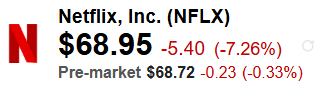
Netflix (NFLX) Quote

Verdict: Netflix is proving it can extract massive profits from its user base. But the market is abruptly repricing the stock because top line momentum is slowing and management is scaling back data transparency.

What happened

Netflix reported second quarter revenue of $12.56 billion, growing 13.4% year over year. Operating margins hit a robust 33.4%, and the company executed its largest quarterly stock buyback on record at $4.7 billion.

Despite a slight EPS beat, shares fell 7.3% on Friday. Second quarter revenue of $12.56 billion was just below the $12.58 billion consensus estimate. Third quarter revenue guidance of $12.86 billion points to 11.7% growth and came in below the roughly $13 billion consensus estimate, while the $0.82 EPS forecast was below the $0.84 estimate. The full year outlook was not cut. Netflix narrowed its revenue range to $51.0 billion to $51.4 billion and kept its 31.5% operating margin target unchanged. Management also announced that the What We Watched report will move from twice a year to once a year starting in 2027, although Netflix will continue publishing weekly Top 10 lists and title by title viewing data.

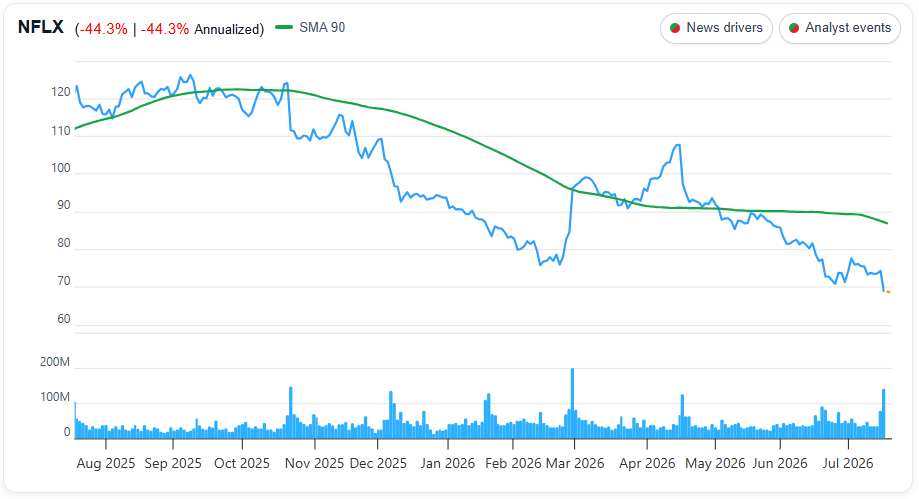
Netflix (NFLX) 1 Year Price Chart

Netflix (NFLX) 1 Year Price Chart

Why it matters

When a stock trades at a premium valuation, buyers demand steady growth and clean execution. Revenue growth slowed from 16.2% in the first quarter to 13.4% in the second quarter, and the third quarter forecast points to 11.7%. The decision to publish the What We Watched report only once a year starting in 2027 adds to the uncertainty, but the latest data do not show total viewing hours shrinking. They rose 2% year over year in the first half, although the lack of quarterly subscriber counts makes it harder to judge viewing per member. The real question is whether that modest engagement growth is strong enough to support future price increases, retention, and advertising growth.

What changed in the thesis

The core setup is shifting from pure subscriber growth to operating efficiency and capital returns. To stay long, you now have to believe that doubling advertising revenue to $3 billion this year and buying back billions in stock will be enough to support the valuation, even if organic top line growth settles into the low double digits.

What the market may be missing

The market might be overreacting to the transparency change while ignoring the size of Netflix’s profitability advantage. Netflix generated $4.19 billion in operating income this quarter. The comparison is not perfectly apples to apples, but Disney generated $582 million of operating income from Disney+ and Hulu in its latest quarter, while Comcast reported a $432 million adjusted EBITDA loss at Peacock. Netflix is still operating at a very different profit scale than the streaming businesses inside the legacy media companies.

Valuation and expectations

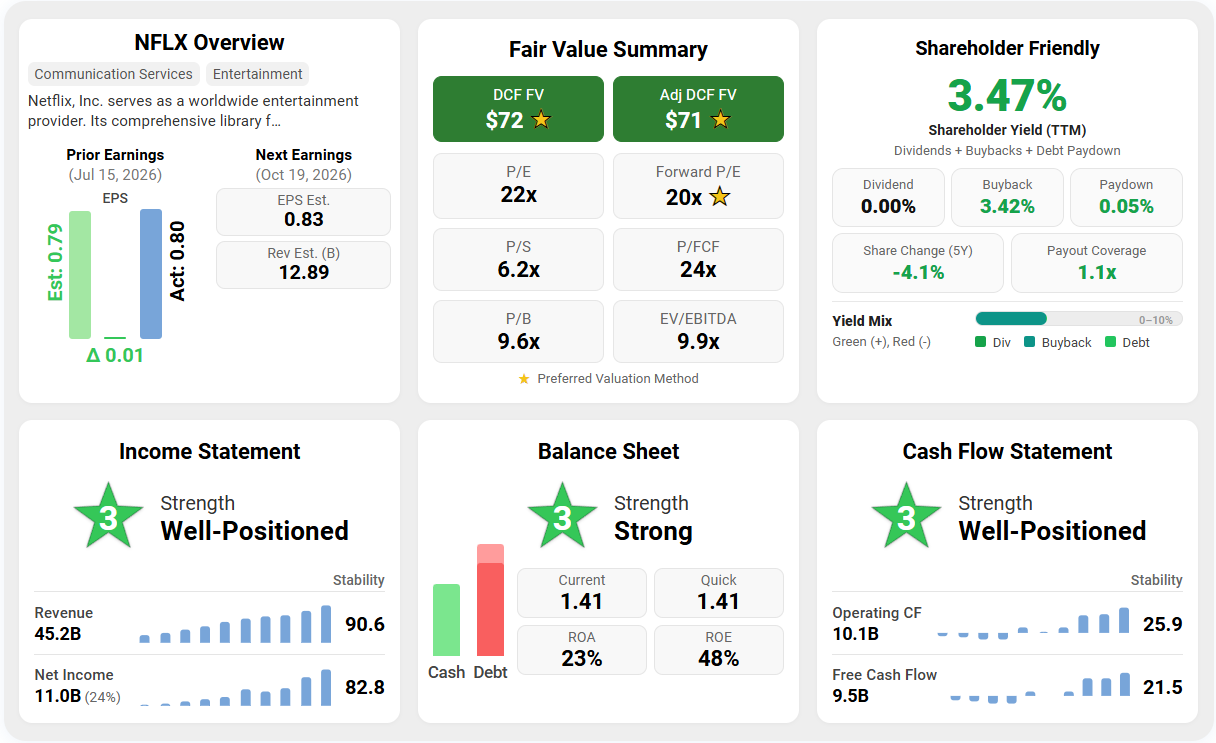
The stock trades near 20 times forward earnings. That is still a meaningful premium to legacy media companies, with Walt Disney around 14 times and Comcast around 7 times. If revenue growth settles into the low double digits, further multiple compression remains a risk unless management can sustain margin expansion, advertising growth, and strong per share earnings growth.

Netflix (NFLX) Summary Page

Netflix (NFLX) Summary Page

Bottom line

Netflix is fundamentally healthy and highly profitable. But a strong balance sheet and $1.53 billion in quarterly free cash flow do not automatically justify a growth stock multiple if the core business is maturing.

Pre Market Pulse

  • S&P 500 and Nasdaq futures are trading modestly higher early Monday.

  • WTI crude briefly climbed above $85 per barrel overnight before easing to around $82 as Iran signaled openness to further negotiations.

  • Netflix shares are around $69 in pre market trading, down slightly after closing at $68.95 on Friday and setting a new 52 week low of $65.08 intraday.

Why it matters this morning

An uncertain macro environment and elevated energy prices create a tough setup for a high multiple stock trying to find a floor. If broader market sentiment sours today, Netflix could face continued selling pressure as portfolio managers rotate out of expensive tech names.

Peer Read Through

Walt Disney (DIS)

A primary streaming competitor managing linear television declines. Shares fell 2.1% alongside Netflix on Friday, closing at $97.67. Disney+ and Hulu generated $582 million in operating income in Disney’s latest quarter.

Comcast (CMCSA)

The operator of Peacock posted $2.1 billion in first quarter revenue and a $432 million adjusted EBITDA loss. That quarter included heavy programming costs tied to the Olympics, Super Bowl, and NBA rights, but the loss still shows the profitability gap with Netflix.

Roku (ROKU)

A key distribution and advertising platform that agreed in June to be acquired by Fox (FOXA) for $160 per share in a cash and stock deal, subject to shareholder and regulatory approval. The transaction shows how valuable distribution, first party data, and advertising scale have become as the streaming market matures.

Group takeaway

The entire streaming sector is facing a maturity check. Netflix still generates far more profit than its peers, but Disney’s streaming business is now profitable while Peacock posted another loss in a sports heavy first quarter. That makes advertising, live events, pricing power, and distribution scale critical for everyone in the group.

What to Watch

  • Progress on the advertising tier to see if revenue remains on track to roughly double to about $3 billion this year.

  • Engagement and sign up trends around the expanded NFL slate, including a week one game in the third quarter and Thanksgiving Eve and Christmas games in the fourth quarter.

  • The impact of recent price increases in the United States, Mexico, and Spain on membership growth, retention, and revenue in the second half.

  • Third quarter operating margin results to see if the company can meet its 33.2% forecast and stay on track for the 31.5% full year target.

Bottom line

The ultimate test is whether the scaling advertising business can offset a natural deceleration in subscriber growth before estimate risk drags the multiple down further.

STOCKS IN THIS ARTICLE

Also Mentions:

Comments