

Kevin Warsh went ahead and did it.
The Fed restarted the rate hike cycle. That upends the entire macroeconomic structure, because they’re tinkering with the price of money itself.
Everything else falls downstream from that.
But what if rate hikes don’t actually hurt stocks?
Shocking right?
Every economist on television would vomit their insides out if they heard me say this.
So let me show you what the history actually says about hikes, where the money rotates next, and how I’m positioned going into it.
Why Hikes Don’t Automatically Kill Stocks
Traders keep repeating that rate hikes are bearish for stocks. History doesn’t back that up.
The argument goes that higher rates crush valuations, borrowing costs climb for companies, and bonds start looking better than equities. Each of those channels is real in time.
History still doesn’t treat every hiking cycle as a sell signal.
In most modern Fed tightening periods, the S&P 500 finished higher from the start of the cycle to the end of it. One study of multi-meeting hiking cycles since 1983 found the index rose in every single case.
It averaged about 10% during the hiking window. Then roughly 20% in the year after the final hike.
The reason is simple. The Fed raises rates when the economy is already strong.
That same strength supports earnings growth, and earnings growth offsets the hit from higher discount rates. Markets price expected hikes well in advance too.
You saw the reminder this past week. Traders got a refresher on the golden rule of Fed Day, which says the day after matters more than the day itself.
An anticipated move does far less damage than a surprise about the pace or the terminal rate. Cuts aren’t automatically bullish either, because cuts usually show up when the economy is already breaking down.
Now for the honest part.
Hiking cycles bring volatility and correction-level drawdowns. That’s especially true when the Fed moves fast.
The better rule isn’t that hikes kill stocks. Hikes without earnings growth, paired with rising recession risk, kill stocks.
Context matters more than the direction of the funds rate.
Where The Money Goes Next
This changes capital flows, both overseas and here at home.
I see this rate hike as the end of the international trade outperforming. European, Asian, and emerging market equities have beaten U.S. markets for nearly two years.
Now there’s a real incentive to park money in the U.S. again.
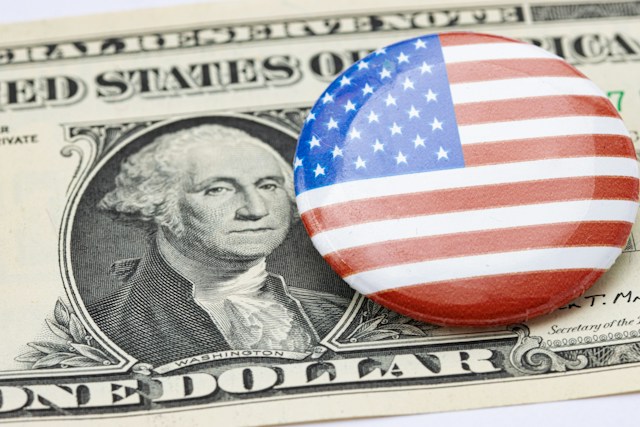
I’m looking for the Dollar to resume its longer-term uptrend. When the Dollar is strong, U.S. stocks tend to outperform their international counterparts.
That’s held up across cycles. I don’t see a reason for it to break here.
Traders who’ve spent two years chasing foreign indexes are about to learn how fast that leadership flips.
How I’m Positioned Into This
Rate hikes aren’t automatically bearish. They do tell us something about timing.
We’re out of the early stages of this cycle. At the least, we can consider ourselves in the third quarter of the game.
So, here’s where I stand. I want my equity exposure on the U.S. side of the ledger, not the international side, and I’m leaning on the Dollar to confirm that call.
Tech doesn’t need to lead for me to stay long. No growth sector needs to constantly outperform for this market to keep working.
That helps explain why energy and healthcare have been so resilient lately. Money rotates toward the parts of the market that handle a higher cost of capital just fine, and I’m happy to let those groups carry the tape.
I’m still buying pullbacks rather than selling them. A correction inside a hiking cycle is a normal event, not the start of something worse.
The trade that changes my mind is consumer staples or utilities taking over leadership. Those are the defensive tells that show up late in a cycle.
Right now, they’re down in the doldrums. Until those flips, I stay long and I stay patient.
Embrace the tape and tune out the noise.
There’s still a lot of upside left in this market. Bulls just don’t have the same amount of time they used to.

Comments
Log in or sign up to join the conversation.