
Caramel color looks like a simple ingredient on paper, a shade of brown added to a formulation for visual consistency. In practice, choosing the wrong type for a given product can lead to haze, sediment, color drift or outright instability once the product is on the shelf. One of the most overlooked reasons this happens is pH mismatch. Caramel color is not a single uniform ingredient. It comes in distinct classes, each carrying a different ionic charge and a different tolerance for acidic conditions, and picking the right one starts with understanding how your product's pH interacts with that charge.
Caramel Color Is Not One Ingredient, It Is a Family
Caramel color is produced by heat treating a sugar compound, typically high dextrose corn syrup, together with reactants such as ammonium compounds, sulphites, acids or alkalis. Depending on which reactants are used, the resulting caramel falls into one of four internationally recognised classes, each with its own E number, ionic charge and typical application. A detailed breakdown of these classes and their uses is available on the caramel color product page, but the short version is this: the reactants used during manufacture determine whether the finished caramel carries a negative charge, a positive charge, or behaves as effectively neutral, and that charge is what governs how it performs in a specific pH environment.
Class I Plain Caramel
Plain caramel, E150a, is made without ammonia or sulphite compounds. It carries a slight negative charge and is generally used in products with a near neutral pH, such as certain beverages, dairy based drinks, sauces and pharmaceutical formulations. Because it lacks the more targeted acid stability built into the other classes, it is not the first choice for strongly acidic, carbonated beverages.
Class II Sulphite Caramel
Sulphite caramel, E150b, is produced using sulphite compounds and also carries a negative charge. It is mainly used in spirits and liquors, where the alcohol content and moderate acidity of the product suit its stability profile. It is less commonly used in high volume soft drink formulations compared to Class III and Class IV.
Class III Ammonia Caramel
Ammonia caramel, E150c, is manufactured using ammonium compounds and carries a positive charge, which sets it apart from the other three classes. This positive charge makes it well suited to products such as beer, baked goods, bakery glazes and certain sauces, where it needs to remain compatible with other positively interacting or neutral ingredients rather than acidic, negatively charged systems.
Class IV Sulphite Ammonia Caramel
Sulphite ammonia caramel, E150d, is made using both ammonium and sulphite compounds and carries a negative charge, similar to Class I and Class II but engineered specifically for acid stability. This is the class most commonly used in cola and other strongly acidic carbonated soft drinks, precisely because its negative charge and structure allow it to remain stable and evenly dispersed at low pH without reacting with other charged components in the formulation.
Why the Charge and pH Relationship Actually Matters
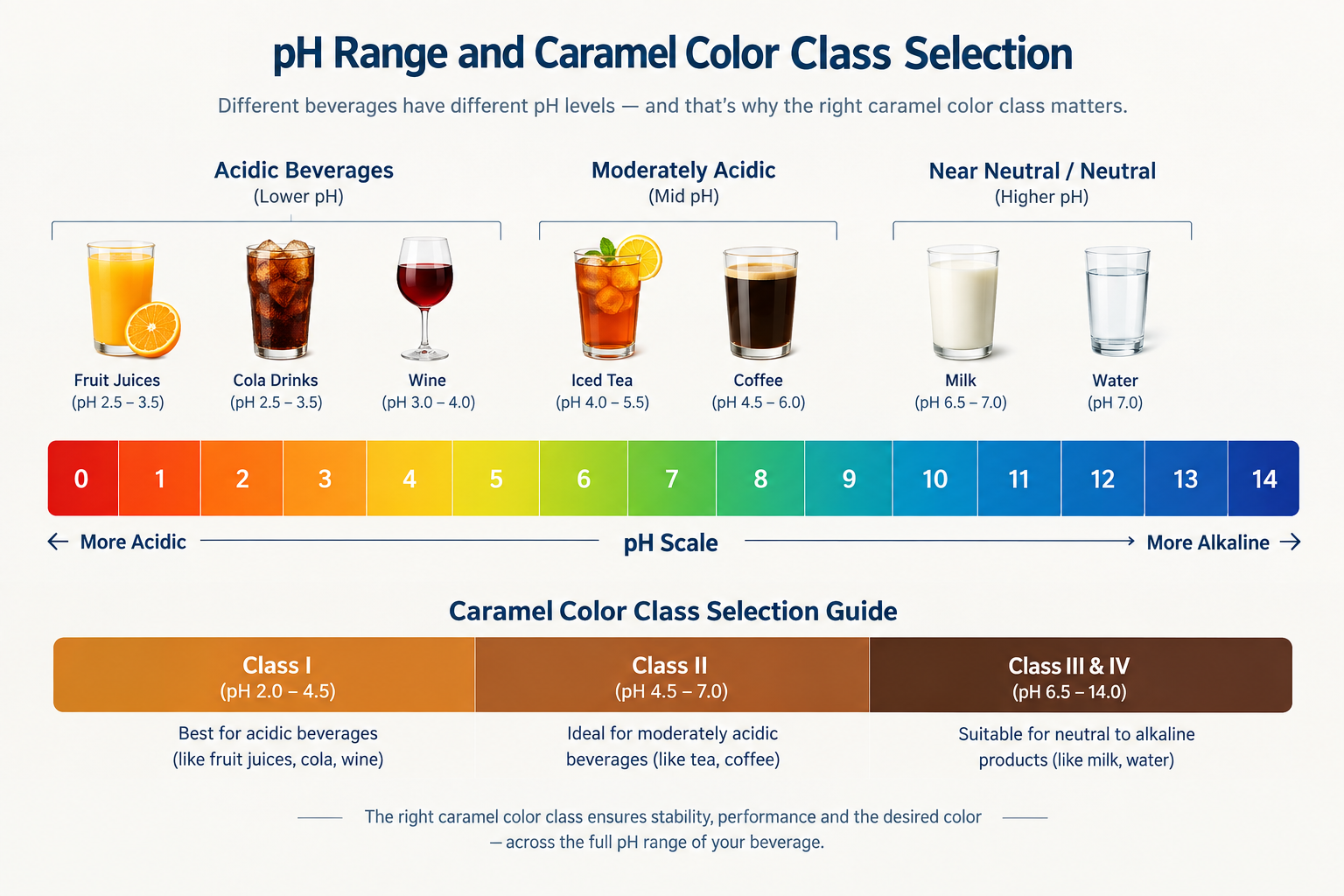
The practical issue formulators run into is charge interaction. A carbonated beverage sitting at a low pH, often in the range of 2.5 to 3.5, is a chemically active environment. If a caramel color with the wrong ionic charge is added to such a product, it can interact unpredictably with other charged ingredients such as preservatives, proteins or acidifying agents. The visible result can be haze formation, color precipitation, uneven color distribution, or a gradual shift in shade over the product's shelf life. This is why cola manufacturers standardise almost exclusively on Class IV caramel rather than experimenting across classes, and why dairy or near neutral pH beverages tend to perform better with Class I.
Matching Caramel Color to Your Product's pH
The practical approach for a formulator or quality team is to start from the finished product's pH rather than from the caramel color itself. A strongly acidic, carbonated product should be evaluated first against Class IV. A moderately acidic or alcoholic product often performs well with Class II. Neutral pH beverages, dairy products and sauces tend to align with Class I, and products where a positive charge is acceptable or preferred, such as certain baked goods and beers, are typically suited to Class III. Alongside pH, it is worth checking the caramel color's behaviour under the product's specific processing conditions, including pasteurisation temperature and any interaction with preservatives, since stability in isolation does not always predict stability in the finished formulation.
Working With an Experienced Manufacturer
Because the right caramel color choice depends on the specific chemistry of a formulation rather than a generic rule, working with a manufacturer that can advise on class selection, stability testing and regulatory compliance makes a meaningful difference. Megha International's full range of food color products, including all four caramel color classes, is listed on the products page, and more background on the company's manufacturing experience is available on the company profile page. Formulators working through a specific pH or stability challenge can also reach the technical team directly through the contact page to discuss sample testing before committing to a full production batch.
Conclusion
Selecting caramel color is not simply a matter of picking a shade of brown. The ionic charge built into each class, from the positively charged Class III to the acid stable, negatively charged Class IV, determines whether that color will remain stable, evenly dispersed and visually consistent inside a specific formulation. Since pH is the single biggest factor influencing how that charge behaves in the finished product, it should be the starting point of any caramel color selection process, well before cost or supplier convenience enter the decision.
Comments
Log in or sign up to join the conversation.