

Nvidia’s (NVDA) plans to invest a whopping $500 billion in neocloud partners mark a seismic shift in the artificial intelligence (AI) infrastructure market.
NVDA has teamed up with private equity giants and asset managers like Apollo, BlackRock, and Blackstone to mobilize 3rd party capital and turn compute hardware into an increasingly investable asset class.
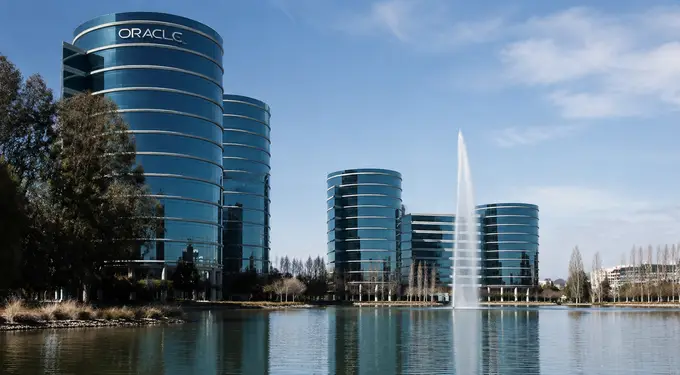
While this liquidity injection is wildly bullish for the likes of Nebius (NBIS) – allowing it to rapidly scale gigawatt-capacity AI data centers – it poses a threat to established legacy firms like Oracle (ORCL)
And the announcement arrived at a time when Oracle shares have already fallen out of favour with investors, currently down some 40% versus their year-to-date high.
Why is Nvidia’s announcement bearish for Oracle stock
Historically, legacy tech leaders like Oracle Corp have relied on massive corporate balance sheets and superior credit access to outspend smaller rivals on high-performance Nvidia GPUs.
However, by establishing a $500 billion pool of “off-balance-sheet” Wall Street debt for data center hardware, Nvidia is effectively neutralizing ORCL’s balance-sheet moat.
Specialized neocloud names such as Nebius can now bypass traditional capital constraints, securing long-term institutional backing to construct huge AI clusters without taking on crippling corporate debt.
As these nimble, hyper-focused AI clouds gain cheap access to “top-tier” hardware, they can price compute capacity rather aggressively, directly undercutting Oracle’s cloud infrastructure margins and stealing enterprise market share.
This could hurt ORCL stock in the long run.
NVDA funding plan raises credit default risk for ORCL
Nvidia’s push to treat chips as collateral exposes heavy corporate spenders to heightened financial risk.
Oracle has aggressively expanded its cloud infrastructure through substantial capital expenditures, leading bond markets to express growing unease over execution and repayment.
Credit default swap (CDS) spreads for ORCL have widened to about 200 basis points, significantly higher than the broader investment-grade technology average of 53 basis points, reflecting market skepticism around debt-financed AI infrastructure buildouts.
As Nvidia enables 3rd party funds to flood the market with cheap compute supply, Oracle stock faces the double threat of slowing cloud revenue growth alongside elevated interest expenses on its mounting debt obligations.
How to play ORCL shares at current levels
Ultimately, Nvidia Corp’s $500 billion funding plan prioritizes semiconductor volume over cloud provider profitability.
By ensuring that financial partners fund the hardware pipeline, the titan guarantees steady buyers for its next-generation chips regardless of whether enterprise software monetization keeps pace.
For ORCL shares, this creates a “longer-term” structural margin squeeze – hardware depreciation remains steep, chip generations cycle quickly, and an abundance of Wall Street-backed neocloud capacity limits pricing power.
Unless Oracle Corp can differentiate its enterprise software layer significantly, Nvidia’s ambitious capital push leaves it exposed to valuation compression in an increasingly crowded cloud marketplace.
That said, Wall Street currently rates Oracle at Strong Buy with a bullish mean price target of $241.


Comments
Log in or sign up to join the conversation.