

Picture this: an aircraft is down, the clock is running, and the part you need has a manufacturer number that no longer shows up anywhere. It's a scenario that plays out constantly in aviation maintenance and defense procurement — and it's exactly the kind of problem the National Stock Number system was built to solve.
If you've ever wondered why so many suppliers and government contracts revolve around NSNs instead of manufacturer catalogs, here's the short version: it's about speed, accuracy, and not getting stuck when a part number changes hands.
The Problem With Sourcing by Part Number Alone
Manufacturer part numbers seem straightforward until they aren't. Products get revised. Companies merge or shut down. A part number that worked fine on last year's order might return nothing today. When that happens mid-repair, it turns a routine parts order into a research project.
This is the exact gap an NSN catalog is designed to close. Because every stock number is tied to a standardized classification system rather than a single manufacturer's internal naming convention, it stays consistent even when everything else around the part changes.
How the NSN System Actually Works
Each National Stock Number breaks down into two pieces:
The Federal Supply Classification (FSC), which tells you what category the item falls under
The National Item Identification Number (NIIN), which narrows it down to the specific item
Put together, these 13 digits give buyers a reliable way to confirm they're looking at the correct aviation parts — not a similar-sounding substitute, not an outdated revision, but the actual item that fits the application.
Running a Faster NSN Search
A good NSN search doesn't require guesswork. Whether you're starting with a stock number, an old part number, or just a description of what you need, the process should get you to a confirmed match quickly. That typically means being able to see:
Item name and classification
Manufacturer and CAGE code
Current availability
Compatible alternates, when the original isn't in stock
The faster that information surfaces, the less time your team spends waiting on a part instead of using it.
Quick FAQ: NSN Search and Lookup
Q: What's the difference between an NSN search and an NSN lookup? In practice, the terms are often used interchangeably. Both refer to the process of finding part details using a stock number, part number, or description within an NSN catalog.
Q: Can I search by manufacturer part number if I don't have the NSN? Yes — a well-built catalog should allow lookup from either direction, since not every buyer starts with the stock number in hand.
Q: Why do some parts show multiple manufacturers under one NSN? Because NSNs are tied to a standardized item description rather than a single company, multiple approved manufacturers can produce parts that qualify under the same stock number.
Q: Does a listed part always mean it's in stock? Not necessarily — always confirm current availability before finalizing an order, especially on time-sensitive maintenance work.
Why Inventory Depth Still Matters Most
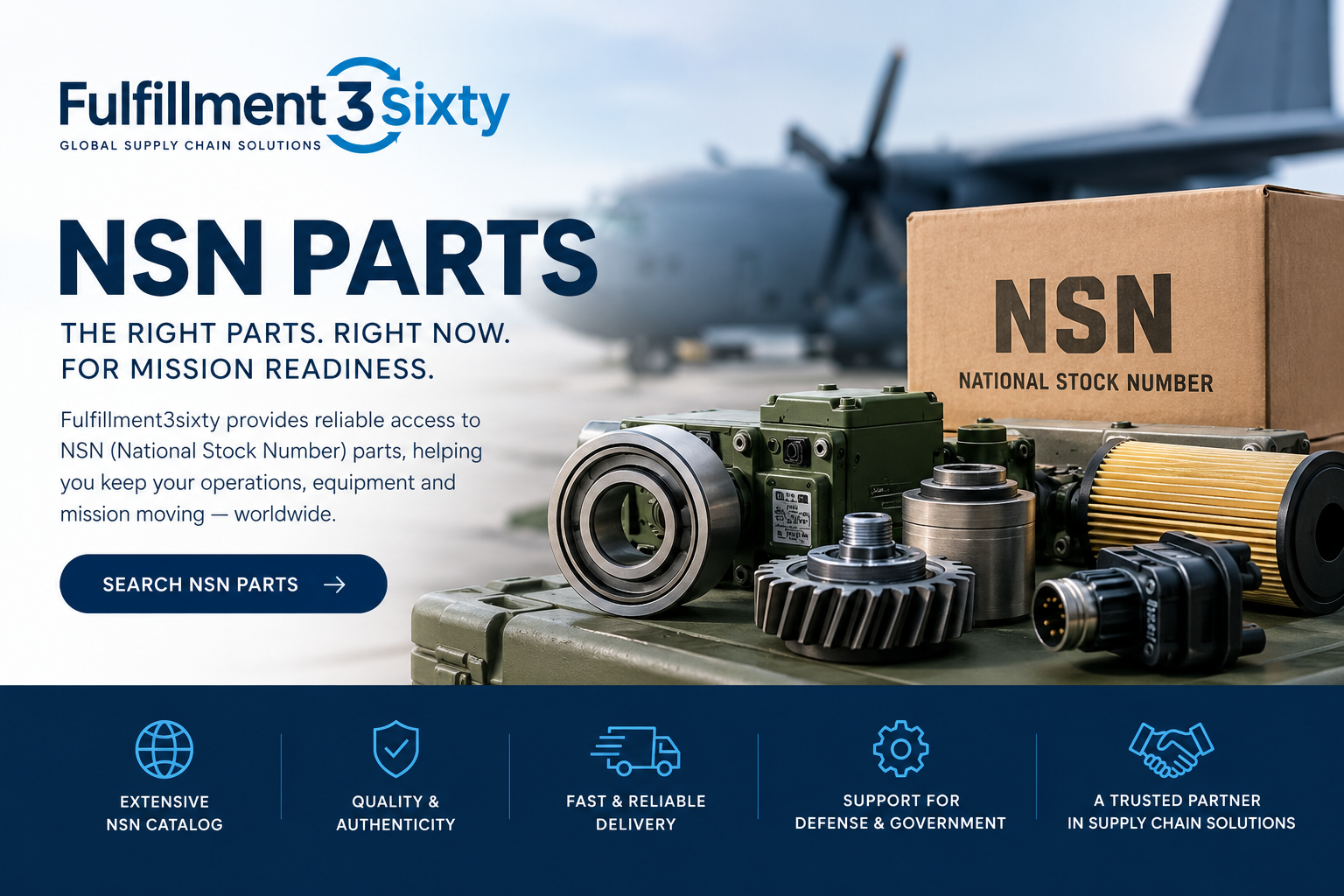
A search tool is only as useful as what it's searching. This is where suppliers differentiate themselves. Fulfillment 3Sixty for example, maintains an inventory of millions of parts searchable by both part number and NSN, covering everything from aircraft fire control components to electronic connectors — backed by same-day dispatch and export compliance standards built for aerospace and defense buyers.
That combination matters because a search result is only valuable if it leads to a part that's actually available to ship.
Final Takeaway
When downtime is expensive and deadlines don't move, the way you source aviation parts matters as much as the parts themselves. Leaning on a dependable NSN catalog, running a focused NSN search, and knowing how to work an NSN lookup efficiently can turn a stressful sourcing scramble into a quick, confident order — exactly when it counts most.
Comments
Log in or sign up to join the conversation.