

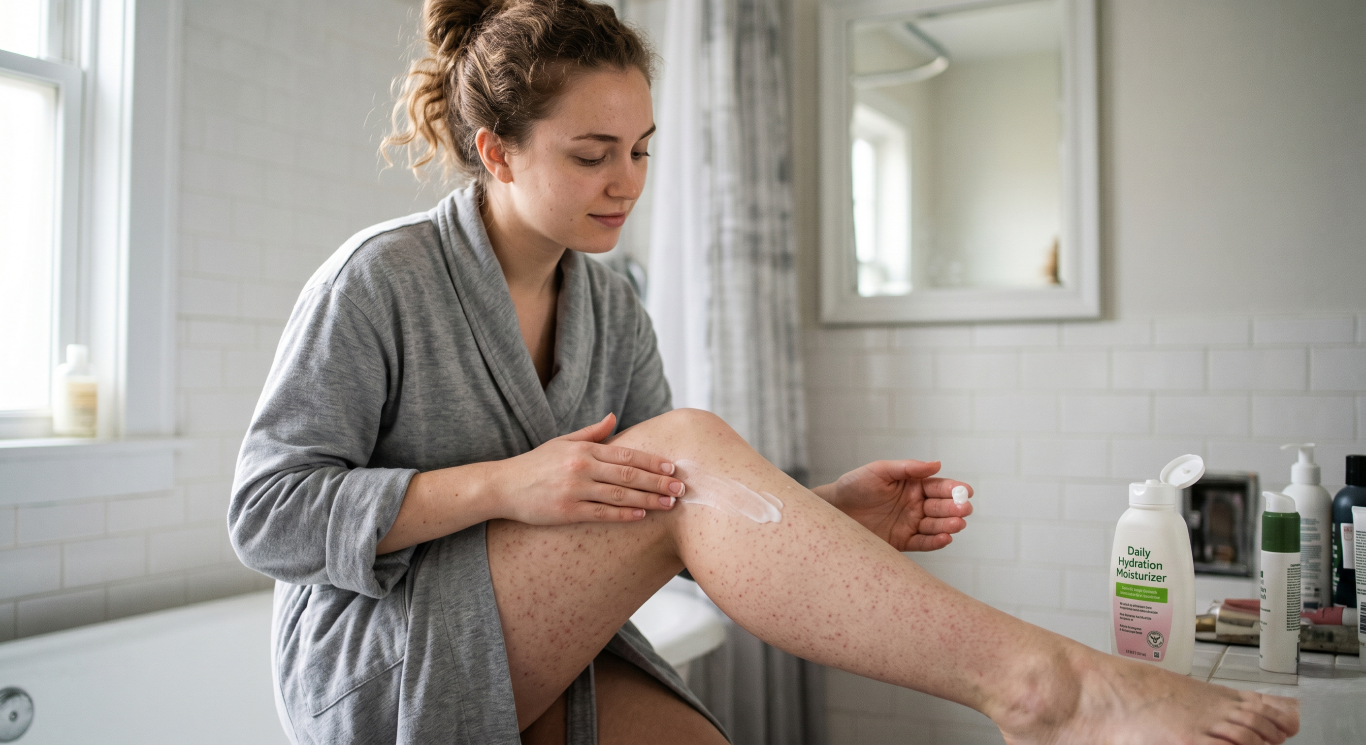
If you’ve been struggling with strawberry skin, chances are you’ve already tried moisturizing.
Maybe you bought:
a rich body lotion
a keratosis pilaris moisturizer
or even the best lotion for keratosis pilaris
And at first, your skin probably felt softer.
But the bumps?
The dark dots?
The rough texture?
👉 They stayed.
This leads to one of the biggest frustrations people have with strawberry skin treatment:
“Why does my skin still look bumpy even though I moisturize every day?”
The answer is simple:
Moisturizing helps strawberry skin — but it does not fully treat it.
That’s because strawberry skin is not just a dryness problem.
It’s usually a combination of:
clogged follicles
keratin buildup
dead skin accumulation
irritation
and barrier dysfunction
So while hydration is important, it’s only one piece of the puzzle.
In this guide, we’ll break down:
Why moisturizer alone doesn’t work
What actually causes strawberry skin
The role of exfoliation in keratosis pilaris treatment
The most effective science-backed routine
And how TryStrawberry fits into a more complete treatment approach
Key Takeaways
Moisturizers help hydrate the skin but do not remove follicular buildup
Most cases of strawberry skin involve keratin and clogged pores
Exfoliation is necessary for a smoother texture
Over-exfoliating can worsen irritation
The best results come from combining:
exfoliation
hydration
barrier repair
Multi-acid approaches are often more effective than moisturizer alone
What Is Strawberry Skin?
Strawberry skin refers to skin that appears:
dotted
rough
bumpy
uneven
It commonly affects:
legs (strawberry legs)
arms
thighs
buttocks
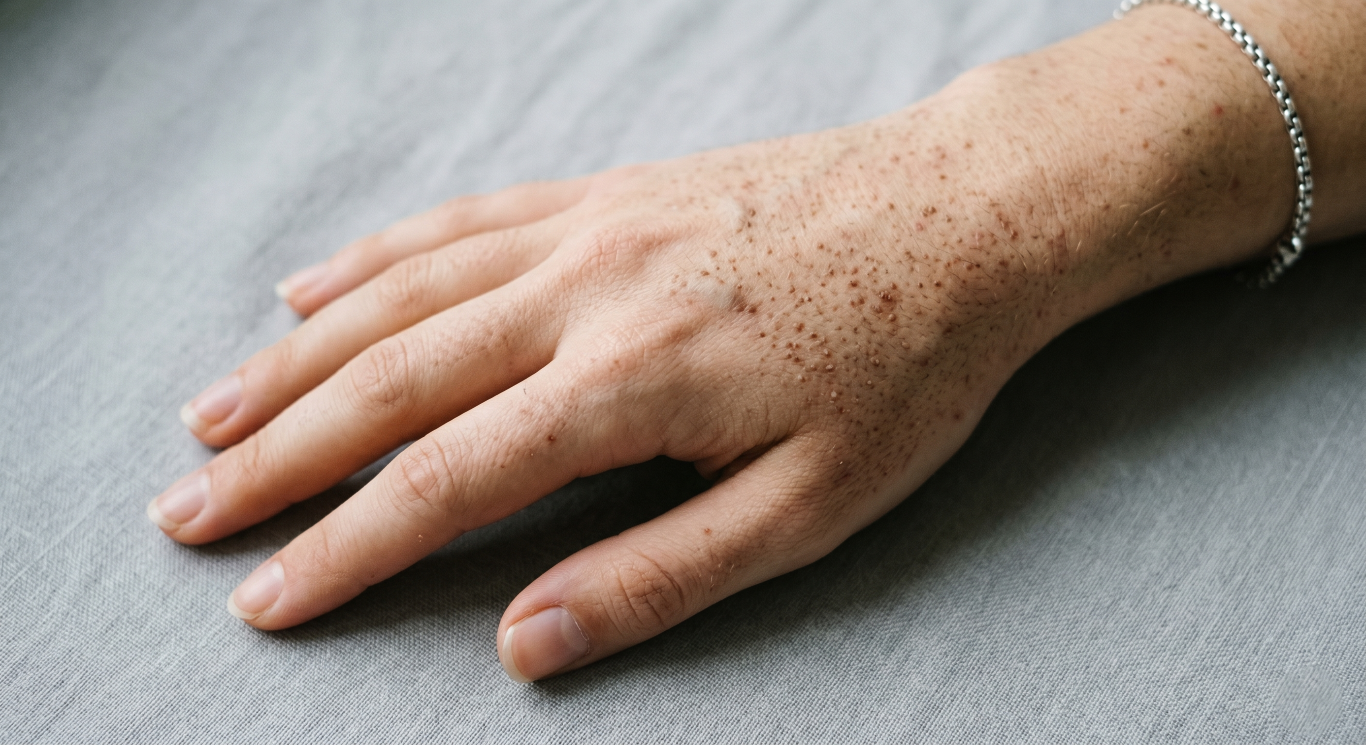
The dark dots resemble the seeds on a strawberry, which is how the condition got its name.
What Causes Strawberry Skin?
This is where most people misunderstand the condition.
Strawberry skin is not simply “dry skin.”
It’s usually caused by a combination of:
clogged hair follicles
oxidized oil inside pores
dead skin buildup
ingrown hairs
keratin accumulation
shaving irritation
Many people also have:
👉 Keratosis Pilaris (KP)
A condition caused by excess keratin blocking follicles, leading to:
bumpy skin on arms
chicken skin on legs
rough patches
Because follicular buildup is involved, hydration alone cannot completely fix the problem.
Why Moisturizing Feels Like It’s Working (At First)
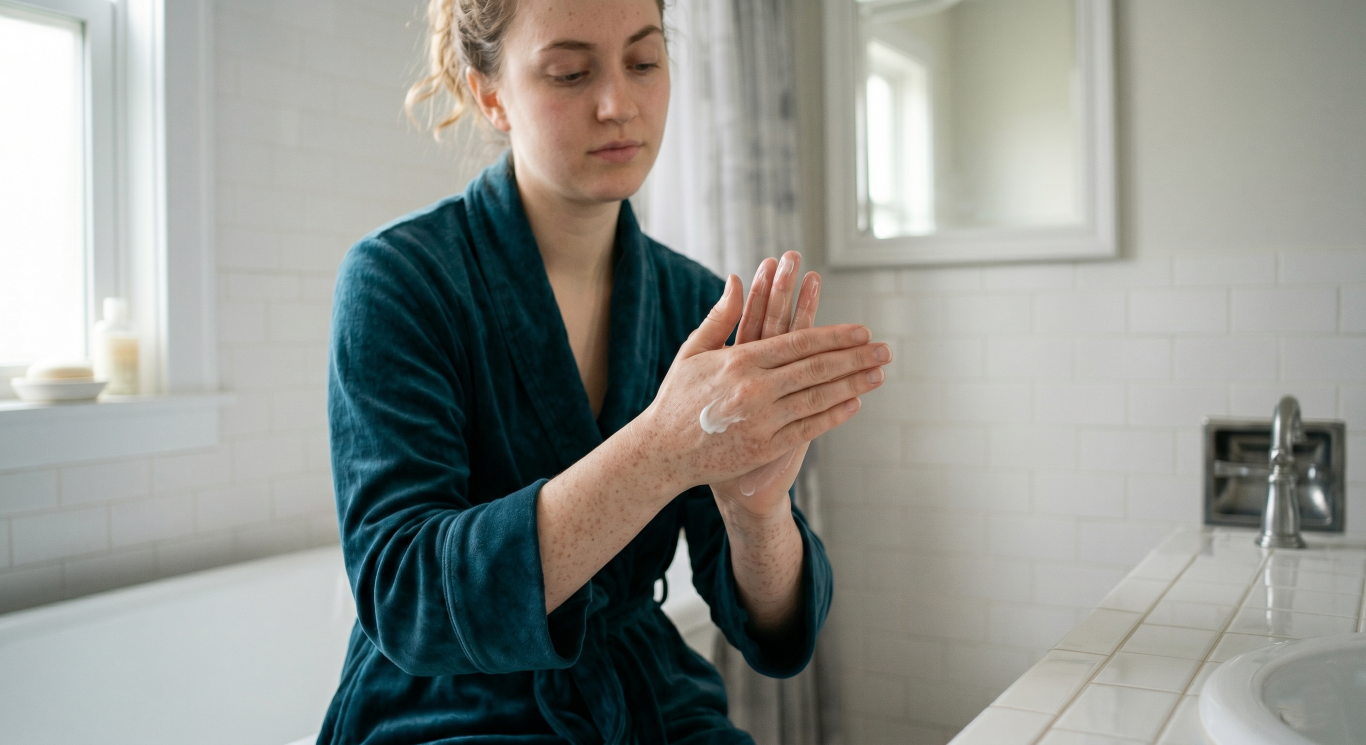
Moisturizers absolutely help.
A good:
keratosis pilaris lotion
keratosis pilaris cream
or moisturizer for KP
can:
soften roughness
improve dryness
temporarily smooth the skin surface
That’s why your skin may feel better immediately after applying lotion.
But here’s the problem:
👉 Moisturizer sits on the surface.
It does not:
deeply exfoliate follicles
dissolve buildup
clear clogged pores
remove keratin plugs
So while hydration improves comfort, it doesn’t fully address the root causes of strawberry skin treatment.
The Real Problem: Follicular Buildup
This is the missing piece most people overlook.
In many cases of:
keratosis pilaris
strawberry legs
chicken skin treatment concerns
The issue starts inside the follicle.
What Happens?
Dead skin accumulates
Keratin blocks follicles
Oil and debris become trapped
Dark dots and bumps appear
This is why simply applying moisturizer often leads to:
softer skin
but no real visual transformation
Why Exfoliation Matters
To improve strawberry skin, you need to address:
buildup
texture
follicular congestion
That’s where exfoliation becomes essential.
Chemical Exfoliation vs Physical Scrubs
Many people immediately reach for harsh scrubs.
Unfortunately:
❌ aggressive scrubbing often worsens irritation
Modern dermatology tends to favor:
👉 chemical exfoliation
Because it:
works more evenly
penetrates follicles
causes less physical irritation when used correctly
Which Exfoliating Ingredients Actually Help?
Salicylic Acid (BHA)
Best for:
clogged follicles
dark dots
ingrown hairs
How It Works
Salicylic acid penetrates pores and dissolves oil and buildup.
This helps reduce:
visible dots
congestion
roughness
Lactic Acid (AHA)
Best for:
rough texture
bumpy skin on arms
chicken skin on arms
How It Works
Lactic acid exfoliates the skin surface while also hydrating.
This makes it popular in:
best cream for keratosis pilaris
Glycolic Acid
Best for:
uneven texture
stubborn roughness
It helps improve:
skin turnover
overall smoothness
Why Moisturizer + Exfoliation Works Better Together
Here’s where most routines fail:
People focus on:
ONLY exfoliation
orONLY moisturizing
But healthy skin requires balance.
What Skin Actually Needs
Exfoliation
To remove buildup.
Hydration
To soften and support the skin.
Barrier Repair
To reduce irritation and sensitivity.
When these work together:
👉 skin texture improves much faster.
The Skin Barrier Matters More Than You Think
Your skin barrier is what keeps moisture in and irritation out.
When it becomes damaged:
redness increases
texture worsens
skin becomes reactive
This is why over-exfoliating often backfires.
The goal is not:
❌ maximum exfoliation
The goal is:
✅ controlled exfoliation + strong barrier support
Why Many KP Moisturizers Disappoint
A lot of products are marketed as:
best lotion for keratosis pilaris
best cream for keratosis pilaris
mainly focus on hydration.
But hydration alone:
won’t unclog follicles
won’t dissolve keratin buildup
won’t reduce dark dots effectively
This is why many people feel:
“My skin feels softer, but it still looks the same.”
A More Effective Approach to Strawberry Skin & KP
Modern skincare has shifted toward multi-active routines that combine:
exfoliation
hydration
barrier support
This approach is much more aligned with how dermatologists typically manage:
keratosis pilaris treatment
kp treatment
A Smarter, Multi-Active Approach to Treating Strawberry Skin & KP
This is where TryStrawberry fits into a more advanced treatment strategy.
Instead of relying only on a standard keratosis pilaris moisturizer, TryStrawberry focuses on addressing multiple contributing factors behind:
strawberry skin
keratosis pilaris
chicken skin on legs
bumpy skin on arms
Its Advanced Triple-Acid Complex for Keratosis Pilaris is formulated to combine multiple exfoliating acids into one system designed to:
help clear follicular buildup
improve rough texture
support smoother skin over time
Rather than depending solely on hydration, this kind of multi-acid approach reflects what many modern skincare routines now prioritize for effective:
KP skin treatment
strawberry legs treatment
best treatment for keratosis pilaris
👉 Explore more: Strawberry skin treatment
What an Effective Routine Looks Like
Step 1: Gentle Cleansing
Avoid stripping cleansers that dry out the skin.
Step 2: Controlled Exfoliation
Use exfoliating acids:
2–4 times weekly
not aggressively every day
Step 3: Hydrate Daily
A strong:
keratosis pilaris lotion
keratosis pilaris moisturiser
helps reduce irritation and improve comfort.
Step 4: Stay Consistent
Consistency matters more than intensity.
How Long Does It Take to See Results?
Weeks 1–2
softer skin
less dryness
Weeks 4–8
smoother texture
fewer bumps
Weeks 8–12
major visible improvement
Common Mistakes That Keep Strawberry Skin From Improving
Only Moisturizing
Hydration without exfoliation leads to limited results.
Over-Exfoliating
Too many acids damage the barrier.
Using Harsh Scrubs
Physical irritation can worsen inflammation.
Expecting Overnight Results
Skin turnover takes time.
FAQs
Can moisturizer alone fix strawberry skin?
Usually no. Moisturizer helps dryness but does not remove follicular buildup or keratin plugs.
What is the best treatment for keratosis pilaris?
The most effective approach combines:
exfoliation
hydration
barrier support
Why does my KP look better after moisturizing but return later?
Moisturizer softens the skin temporarily, but the underlying buildup remains.
Do exfoliating acids help strawberry skin?
Yes. Ingredients like salicylic acid and lactic acid help reduce buildup and smooth texture.
What causes chicken skin on arms?
It’s usually caused by keratin buildup inside follicles (keratosis pilaris).
What is the best KP treatment?
The best routines combine:
exfoliating acids
hydration
long-term consistency
Final Thoughts
Moisturizing is important.
But it’s not enough on its own.
Because strawberry skin is not just a hydration issue —
it’s a texture and follicular buildup issue.
That means real improvement requires:
exfoliation
hydration
barrier support
consistency
The goal isn’t to use the strongest products possible.
👉 It’s to create a balanced routine that addresses all the underlying causes together.
And that’s what ultimately leads to smoother, clearer skin over time.
Comments
Log in or sign up to join the conversation.