


Marvell (MRVL) gapped open at 320 and then went quiet. The run that everyone watched explode stalled the moment it got there.
It would be easy to say the buyers simply ran out of steam. The real reason was sitting in the option chain, locked in before the bell.
There was no open interest above 320. The calls that powered the squeeze had nothing left to climb toward, so 320 became a ceiling instead of a launch pad.
I caught it on the Console, and I want to show you how the same structure that lifted Marvell also capped it.
Stick with me and you will see why the gap died right where it did, what today’s balanced tape is telling me, and how to spot a ceiling like this before you chase the next one.
The Run That Built The Ladder
Marvell did not climb in a straight line. It climbed strike to strike, and the option chain laid the rungs.
The day before the gap, institutions loaded calls at 225, 230, and 260. The Console flagged them by size and showed the fills landing at the ask. That marks buyers paying up.
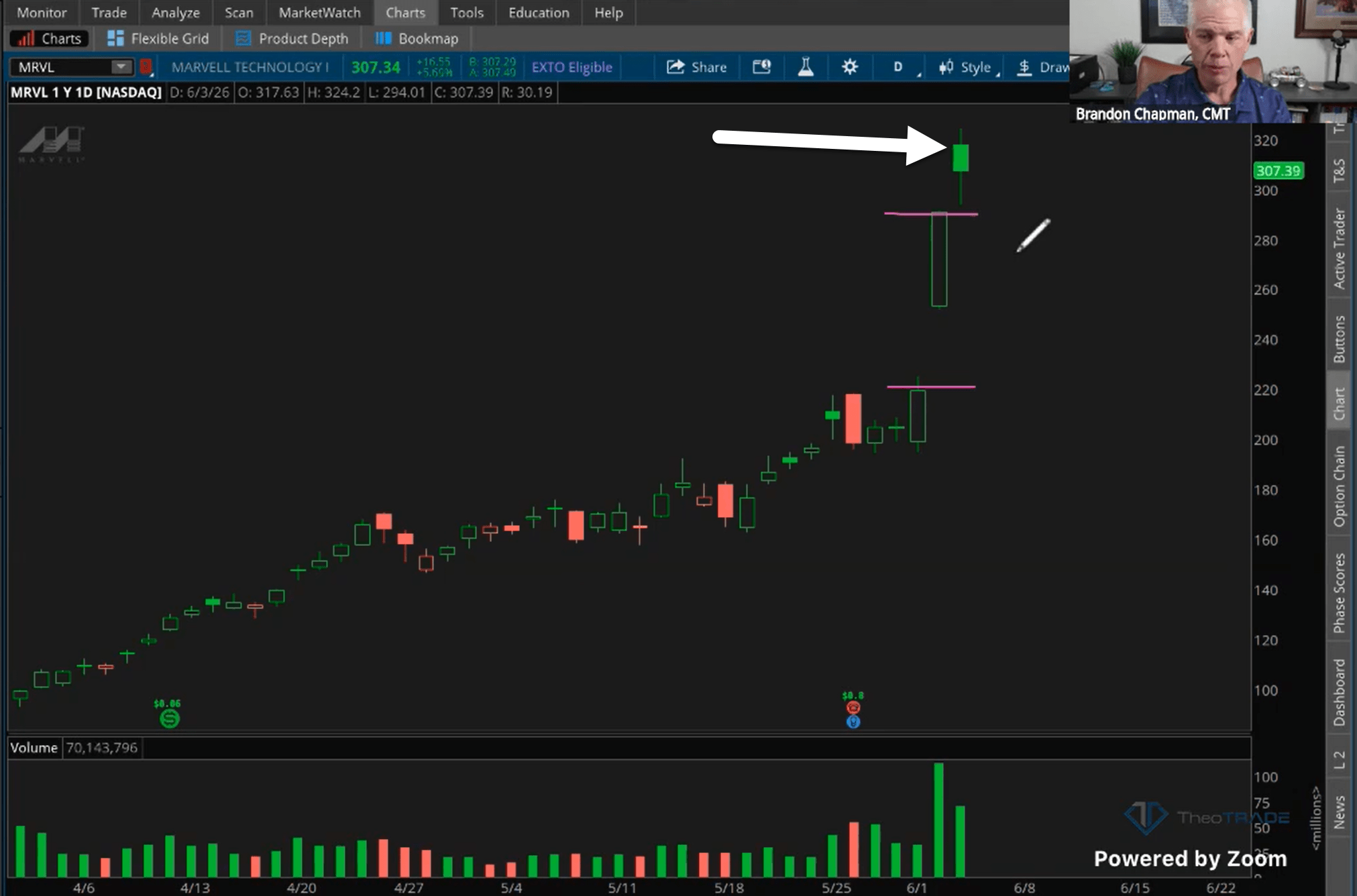
Overnight news lit the move. Price ran through 225, then 230, reached 260 and broke it.
Each strike it cleared forced more dealer buying. The structure then stacked higher, at 300 and 320.
The mechanics behind the climb are simple. Buyers take the calls, dealers sell them, and a short call leaves the dealer short delta and short gamma.
To stay neutral the dealer buys stock. As price pushes into each strike, the hedging accelerates and feeds the move higher. That is the gamma squeeze that carried Marvell up the ladder.
The Ceiling Nobody Could See
Here is where the same structure flips. Yesterday the heaviest call buying sat at 320. Roughly 40,000 contracts traded there, and about 10,000 stuck as new open interest.
The 300 strike carried size too, near 20,000 contracts. Both rungs pulled price toward 320 like a magnet.
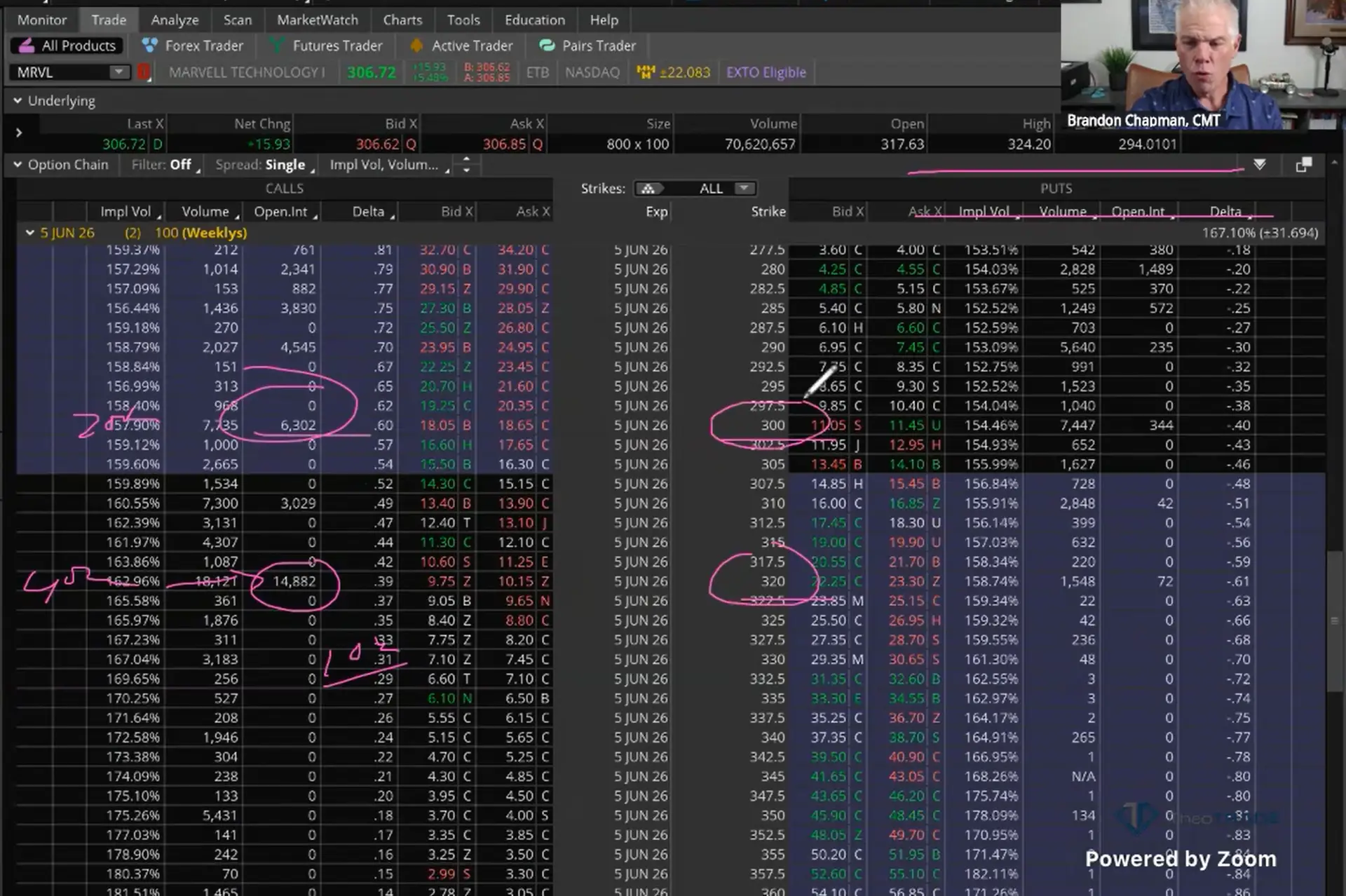
Then the chain went empty. There was no open interest above 320 on the 18 June expiration. There was none on the July chain either.
A high-call strike with nothing above it stops being a launch pad. It becomes the top rung.
The hedging that lifts price into a strike has nowhere to push once price arrives there.
That is why Marvell gapped open at 320 today and basically stayed there. The structure carried it exactly as far as the strikes allowed, and not a tick further.
What Today’s Tape Is Telling Me
The fuel is gone for now. Today’s volume ran about 2.6 times the average, but the trade is far more balanced than yesterday.
The 320 calls for this week show about 18,000 contracts. The Console tripped its trigger at 14,800, so size is there.
The clean, one-sided call buying that drove the gap has not shown up. The read yesterday was simple. Play it to 320, then step aside.
Without fresh buying stacked above 320, there is no new magnet overhead. Price gets pinned at the top rung instead of chasing a higher one.
How To Read A Ceiling Like This
Treat this as a framework, not a signal to fade blindly. The read is about where the open interest runs out.
Setup: Marvell call structure topping at 320, no open interest above on June or July
Magnet: 320 acts as both the target and the cap
Confirmation: today’s tape balanced, today’s 320 volume light against yesterday
Trigger to flip bullish again: fresh, ask-side call buying stacking above 320
Edge: the ceiling is visible in the chain before the chart shows the stall
A new rung above 320 would change the read. Until that prints, the squeeze fuel is spent and the magnet works as resistance.
What The Console Reads That The Chart Misses
A chart shows Marvell gapping to 320 and flattening. It gives no reason for the stall.
The chain explains it. The Console reads the fill side and the volume-to-open-interest on each print, and it showed the buying topping out at 320 with nothing behind it.
By the time the candle flattened at the open, the ceiling had already been sitting in the open interest for a full session.
That is the difference between trading the structure and reacting to the chart.



Comments
Log in or sign up to join the conversation.