

In today's competitive manufacturing industry, achieving accurate and efficient hole-making is essential for maintaining product quality and reducing production costs. From automotive and aerospace components to heavy engineering parts, precision drilling plays a critical role in every machining process. Manufacturers continuously look for tooling solutions that deliver high productivity, excellent surface finish, and longer tool life without increasing operational expenses.
One of the most trusted solutions for modern machining is the U-drill. Designed with replaceable inserts and advanced cutting geometry, this drilling tool has become a preferred choice in CNC machining centers worldwide. Unlike conventional drills, it offers faster machining, improved chip evacuation, and consistent hole quality even in demanding applications.
Understanding the U Drill
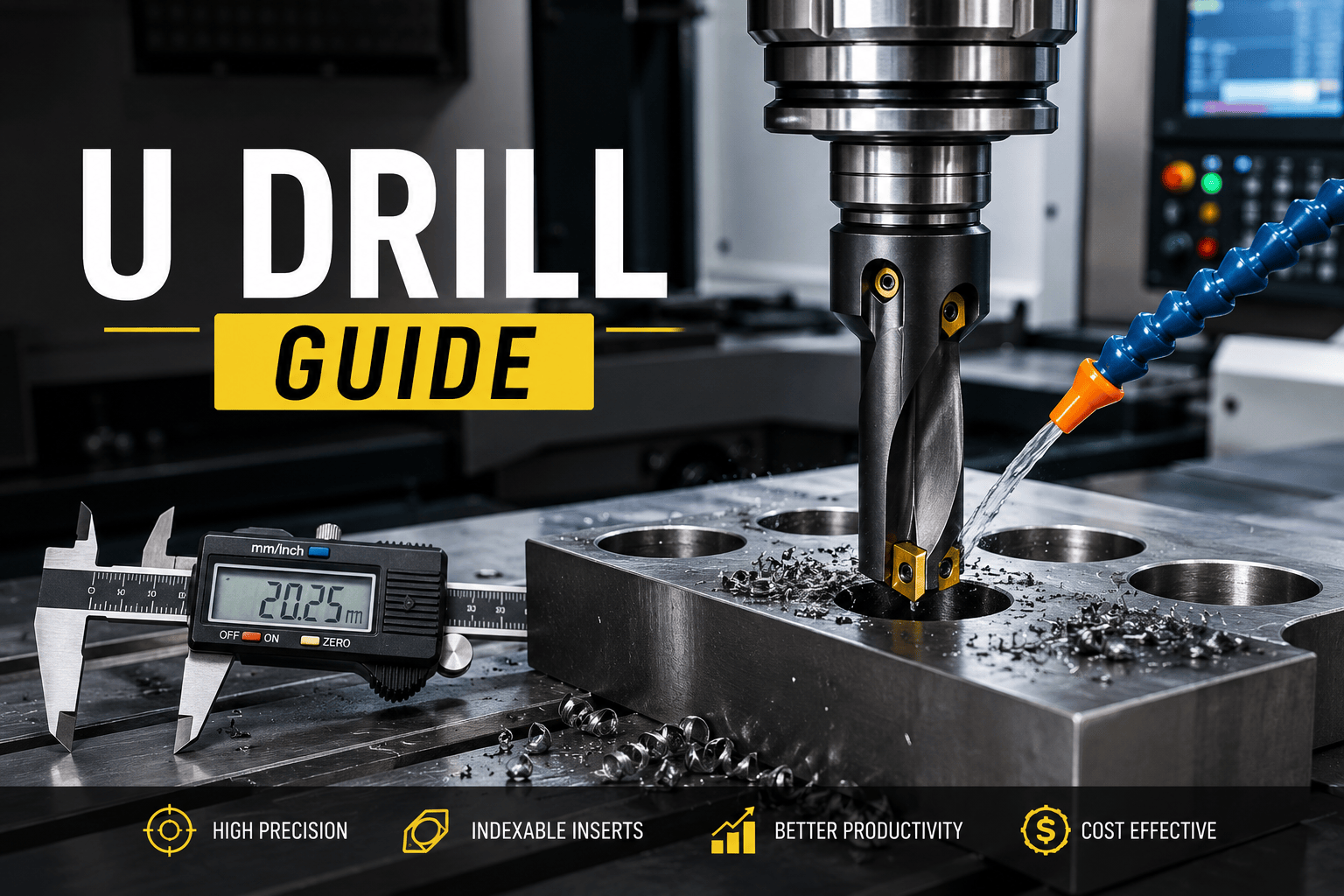
A u drill is an indexable drilling tool designed to create precise holes with high feed rates. Instead of using a solid cutting edge, it utilizes replaceable carbide inserts that can be changed when worn, eliminating the need to replace the complete tool.
This design significantly lowers tooling costs while improving machining efficiency. It is commonly used on CNC machining centers for drilling steel, stainless steel, cast iron, aluminum, and various alloys.
Its popularity continues to grow because manufacturers can achieve faster production cycles while maintaining dimensional accuracy.
Why Precision Hole Making Matters
Hole quality directly affects the performance of finished components. Poorly drilled holes may lead to:
Misalignment during assembly
Reduced product lifespan
Poor thread quality
Increased machining costs
Higher rejection rates
Industries producing precision parts cannot afford these problems. Choosing the right drilling tool ensures accurate hole diameter, improved concentricity, and excellent surface finish.
Key Reasons Manufacturers Prefer These Drilling Tools
1. Higher Productivity
Manufacturers always aim to reduce machining time without sacrificing quality.
Compared to conventional drilling methods, these tools allow significantly higher feed rates. Faster drilling means shorter cycle times, allowing more components to be produced in the same amount of time.
This directly improves overall shop productivity.
2. Replaceable u drill insert reduces tooling costs.
One of the biggest advantages is the replaceable u drill insert system.
Instead of replacing the entire drill after wear, operators simply change the inserts.
Benefits include:
Lower tooling expenses
Reduced machine downtime
Faster insert replacement
Consistent cutting performance
This feature is especially valuable in high-volume manufacturing environments.
3. Excellent Hole Accuracy
Modern CNC machining requires tight dimensional tolerances.
These drilling tools provide:
Better hole straightness
Accurate diameter control
Improved concentricity
Consistent repeatability
As a result, manufacturers spend less time on secondary finishing operations like boring or reaming.
4. Better Chip Evacuation
Chip control is one of the biggest challenges in deep-hole drilling.
Efficient flute design and internal coolant channels help remove chips quickly, preventing:
Tool breakage
Heat buildup
Poor surface finish
Machine stoppages
Improved chip evacuation also extends insert life.
5. Longer Tool Life
Advanced carbide inserts are engineered to withstand high cutting temperatures.
Proper cutting parameters, coolant application, and correct insert selection help maximize tool life, reducing production costs over time.
Choosing the Right u drill size
Selecting the proper u drill size depends on several machining factors, including:
Hole diameter
Hole depth
Workpiece material
Machine spindle power
Required tolerance
Cutting speed
Using an incorrectly sized drill can reduce accuracy and increase insert wear.
Manufacturers should always match the drilling tool with the machining application's specifications.
Importance of a u drill size chart
A u drill size chart helps machinists quickly identify the correct drill diameter for specific applications.
Typically, the chart includes:
Drill diameter
Insert compatibility
Recommended cutting speed
Feed rate
Maximum drilling depth
Machine compatibility
Using these charts minimizes setup errors and ensures optimum machining performance.
Experienced CNC programmers often refer to these charts before finalizing machining parameters.
Factors That Affect Hole Quality
Even the best drilling tool cannot perform efficiently without proper machining conditions.
Several factors influence final hole quality:
Machine Rigidity
Stable machines produce better dimensional accuracy and reduce vibration.
Proper Coolant Supply
Adequate coolant helps reduce heat while improving chip evacuation.
Correct Insert Selection
Different insert grades are available for:
Steel
Stainless steel
Cast iron
Aluminum
High-temperature alloys
Selecting the proper insert improves both productivity and tool life.
Cutting Parameters
Incorrect spindle speed or feed rate can lead to:
Chatter
Poor surface finish
Premature insert wear
Oversized holes
Experienced machinists always optimize machining parameters according to material specifications.
Applications Across Different Industries
Precision hole making is essential in almost every manufacturing sector. Modern drilling solutions are widely used because they provide consistent results while reducing machining time.
Automotive Industry
Automotive manufacturers produce thousands of components every day, including engine blocks, transmission housings, brake components, and suspension parts. Accurate drilling ensures that every component fits perfectly during assembly while maintaining strict quality standards.
Aerospace Industry
Aircraft components require extremely tight tolerances and high-quality surface finishes. Since aerospace materials are often difficult to machine, reliable drilling tools help manufacturers maintain precision while minimizing material waste.
Oil and Gas Industry
Heavy-duty valves, flanges, and drilling equipment require accurate holes that can withstand high pressure and harsh operating environments. Reliable drilling solutions help improve productivity without compromising safety.
Mold and Die Manufacturing
Mold makers depend on precision machining for cooling channels, locating holes, and assembly features. High-quality drilling improves dimensional accuracy and reduces finishing operations.
General Engineering
From agricultural machinery to industrial equipment, precision hole making is essential for producing durable and reliable components.
Understanding u drill price
When purchasing industrial cutting tools, many buyers initially compare only the u drill price. However, focusing solely on the purchase price can be misleading.
A high-quality drilling tool often provides:
Longer insert life
Better machining stability
Reduced machine downtime
Lower cost per component
Higher production efficiency
Instead of selecting the cheapest option, manufacturers should calculate the overall machining cost, including insert replacement frequency, machine utilization, and productivity gains.
In many cases, investing in premium tooling results in significant long-term savings.
Importance of Quality CNC Tools
Modern machining depends heavily on reliable CNC tools that can maintain consistent performance throughout production.
A high-quality tooling setup offers several advantages:
Improved machining accuracy
Reduced vibration
Better surface finish
Increased productivity
Lower maintenance costs
Combining advanced drilling tools with quality holders, inserts, and machining practices helps manufacturers achieve repeatable results even during high-volume production.
Measuring Accuracy with a Digital Caliper Vernier
After drilling operations, inspection becomes equally important.
A digital caliper vernier is one of the most commonly used measuring instruments in machine shops. It allows operators to verify:
Hole diameter
Component dimensions
Depth measurements
Outside dimensions
Internal dimensions
Using accurate measuring equipment ensures that drilled holes meet design specifications before moving to the next machining process.
Regular inspection also helps identify tool wear before it affects production quality.
Best Practices for Better Drilling Performance
Manufacturers can maximize machining efficiency by following a few simple practices.
Use the Correct Inserts
Always select insert grades based on the material being machined.
Maintain Proper Coolant Flow
Coolant reduces heat generation and improves chip evacuation.
Monitor Tool Wear
Replacing worn inserts before failure prevents poor hole quality and protects expensive machine components.
Secure the Workpiece
Proper clamping minimizes vibration and improves drilling accuracy.
Optimize Cutting Parameters
Following the manufacturer's recommended cutting speed and feed rate helps achieve the best balance between productivity and tool life.
Perform Regular Inspection
Inspect holes frequently during production to ensure consistent dimensional accuracy.
Future of Precision Hole Making
Manufacturing technology continues to evolve with automation, smart machining, and Industry 4.0 practices.
Future drilling systems are expected to include:
AI-assisted tool monitoring
Predictive maintenance
Advanced insert coatings
Improved coolant technologies
Higher-speed machining capabilities
These innovations will further increase productivity while reducing operating costs for manufacturers worldwide.
Conclusion
Precision hole making remains one of the most important machining operations in modern manufacturing. Choosing the right drilling solution not only improves dimensional accuracy but also enhances productivity, reduces tooling costs, and extends machine uptime. Factors such as proper insert selection, correct tool sizing, optimized machining parameters, and regular inspection all contribute to better overall performance. By investing in reliable tooling and following best machining practices, manufacturers can consistently produce high-quality components while staying competitive in today's demanding industrial environment.
About Jaibros
Jaibros is a trusted supplier of premium industrial cutting tools and machining solutions for modern manufacturing industries. The company offers a wide range of carbide inserts, tool holders, drilling tools, milling cutters, measuring instruments, and other precision machining products designed to improve productivity, accuracy, and tool life. With a commitment to quality and customer satisfaction, Jaibros helps manufacturers achieve reliable performance across a variety of CNC machining applications.
Comments
Log in or sign up to join the conversation.