

Learn why CBN is widely used in precision engineering for machining hard materials, maintaining tight tolerances, and increasing productivity.
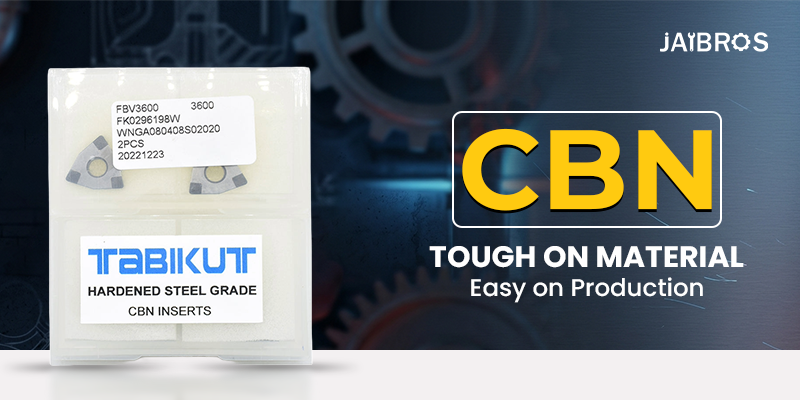
The Role of CBN Cutting Tools in Precision Engineering
Precision engineering plays an important part in contemporary production. High-performance goods can be obtained through the use of precise manufacturing processes in the aerospace, automotive, medical equipment, and energy sectors. At times, even slight variations in the dimensions of the goods could impact their performance. There is a need for efficient machining techniques in light of the high expectations in the industry.
Specialized cutting technologies used in precision engineering make it possible to process hard metals while ensuring high accuracy and productivity. Some of the most reliable cutting technologies include cbn cutting tools which are known for their precision and long tool life. These tools can be successfully used when processing hard metals.
Understanding Precision Engineering
Precision engineering focuses on designing and manufacturing components with extremely tight tolerances. The goal is to produce parts that match exact specifications while maintaining consistency across multiple production cycles.
Some key requirements of precision engineering include:
High dimensional accuracy
Excellent surface finish
Consistent quality
Reduced production errors
Minimal material waste
Better operational efficiency
Many industries manufacture components from hardened steels, cast iron, and heat-resistant alloys. These materials are challenging to machine and require advanced tooling solutions that can maintain performance under demanding conditions.
What Makes CBN Technology Special?
Cubic Boron Nitride (CBN) is among the hardest materials that can be used for cutting metals. This material is second only to diamonds in terms of hardness, and it is very suitable for cutting tough steels.
Properties of cbn cutting tool material provide a lot of advantages to manufacturers since they are able to maintain high accuracy and productivity. Contrary to other cutting materials, CBN will not become dull after being subjected to high temperatures.
Key advantages include:
Excellent wear resistance
High thermal stability
Strong edge retention
Better machining consistency
Reduced cutting forces
Longer service life
These characteristics make CBN technology suitable for applications where accuracy and reliability are critical.
How CBN Cutting Tools Support Precision Engineering
Precision engineering requires tools that can consistently produce accurate results. Modern manufacturers rely on cbn cutting tools because they help improve quality and efficiency in several ways.
Improved Dimensional Accuracy
One of the biggest challenges in machining is maintaining accurate dimensions throughout a production run. Tool wear often causes variations that can lead to rejected components.
CBN tools resist wear more effectively than many traditional cutting materials. This allows manufacturers to maintain tighter tolerances and achieve greater consistency across multiple parts.
Superior Surface Finish
The quality of surface is very essential for critical applications. A poor quality of surface may impact performance, durability, and accuracy of fitting together.
With the help of CBN machining technology, one can achieve the desired smoothness which leads to good quality surfaces. In most instances, there is no need for further polishing.
Better Process Stability
Machining hardened materials generates significant heat and stress. Many cutting tools struggle under these conditions, leading to inconsistent results.
CBN tools maintain stability even during demanding machining operations. This reliability helps manufacturers improve productivity while reducing the risk of tool failure.
Reduced Downtime
Frequent tool changes can interrupt production and increase operating costs.
Because CBN tools offer longer tool life, manufacturers can reduce machine downtime and maintain higher production efficiency. This is particularly valuable in high-volume manufacturing environments.
Industrial Applications of CBN Technology
The role of CBN extends across many industries where precision is essential.
Automotive Industry
Automotive manufacturers use CBN technology to machine:
Gear shafts
Brake components
Transmission parts
Bearing surfaces
Engine components
These parts require high accuracy to ensure proper vehicle performance and reliability.
Aerospace Industry
Aerospace manufacturing demands exceptional precision because component failure is not an option.
Common aerospace applications include:
Landing gear components
Turbine parts
Structural assemblies
Precision bearings
The ability to machine hardened materials accurately makes CBN a preferred choice in this sector.
Medical Device Manufacturing
Medical equipment manufacturers often require complex components with extremely tight tolerances.
Examples include:
Surgical instruments
Orthopedic implants
Precision medical devices
Specialized mechanical assemblies
Accurate machining helps ensure patient safety and product reliability.
Industrial Equipment Production
Industrial machinery contains many wear-resistant components that must perform reliably under heavy loads.
Examples include:
Rollers
Hydraulic parts
Bearings
Machine assemblies
Using cbn cutting tools helps manufacturers achieve consistent quality while improving production efficiency.
Advantages in High-Speed Machining
Modern manufacturing often requires high-speed machining to increase productivity and reduce production costs.
Higher cutting speeds generate more heat and place greater stress on tooling systems. Many conventional cutting materials experience rapid wear under these conditions.
CBN technology performs exceptionally well at elevated speeds because of its superior heat resistance and hardness.
Benefits include:
Faster production cycles
Improved productivity
Better surface quality
Reduced machining costs
Greater operational efficiency
These advantages make CBN a valuable solution for modern manufacturing facilities.
The Importance of Insert Design
The cutting process will depend not just on the type of material used, but also on the configuration of the insert. Newer insert configurations help in controlling chips, minimizing vibrations, and ensuring better stability during the machining process.
One of the options that can be considered here would be solid CBN inserts because of their resilience and high ability to withstand challenging operations.
Proper insert selection helps manufacturers optimize tool life while improving machining accuracy.
Integration with Modern Manufacturing Systems
Manufacturing facilities are increasingly adopting automation and digital production technologies.
A modern cnc tool setup requires cutting solutions that can operate consistently over long machining cycles. CBN technology supports automated manufacturing by delivering predictable performance and reducing unexpected interruptions.
Benefits include:
Improved production reliability
Reduced machine downtime
Better process control
Enhanced productivity
Consistent product quality
These advantages align well with the goals of Industry 4.0 and smart manufacturing initiatives.
Future of CBN Technology
As industries continue to demand higher accuracy and productivity, the importance of advanced cutting technologies will continue to grow.
Future developments may include:
Improved insert geometries
Enhanced wear resistance
Better thermal management
Increased automation compatibility
Higher machining efficiency
Manufacturers are expected to expand the use of cbn cutting tools as they seek greater precision and cost-effective production methods.
Conclusion
Precision engineering requires machining processes that are capable of offering high levels of accuracy, repeatability, and efficiency. One technological development that has proved important in current manufacturing activities includes CBN, which offers solutions for machining hard materials with good dimensional and surface integrity.
CBN solutions are proving instrumental in the manufacture of components in various industries from automotive and aerospace to healthcare and industrial sectors. With increasing advancements in technology, their significance in precision engineering is likely to increase further. Organizations such as Jaibros have played a role in assisting manufacturers through offering quality tooling solutions.
FAQs
1. What are CBN cutting tools used for?
They are mainly used for machining hardened steels, cast iron, and other difficult-to-machine materials with high precision.
2. Why is CBN preferred for precision engineering?
CBN offers excellent hardness, wear resistance, and thermal stability, helping manufacturers achieve accurate and consistent machining results.
3. Which industries use CBN technology?
Automotive, aerospace, medical device manufacturing, energy, and industrial equipment sectors commonly use CBN technology.
4. Do CBN tools improve productivity?
Yes, they provide longer tool life, reduce downtime, and support higher cutting speeds, which improves overall productivity.
5. What is the main benefit of using CBN for hardened materials?
The main benefit is the ability to machine hard materials accurately while maintaining tool life and surface quality.
Comments
Log in or sign up to join the conversation.