
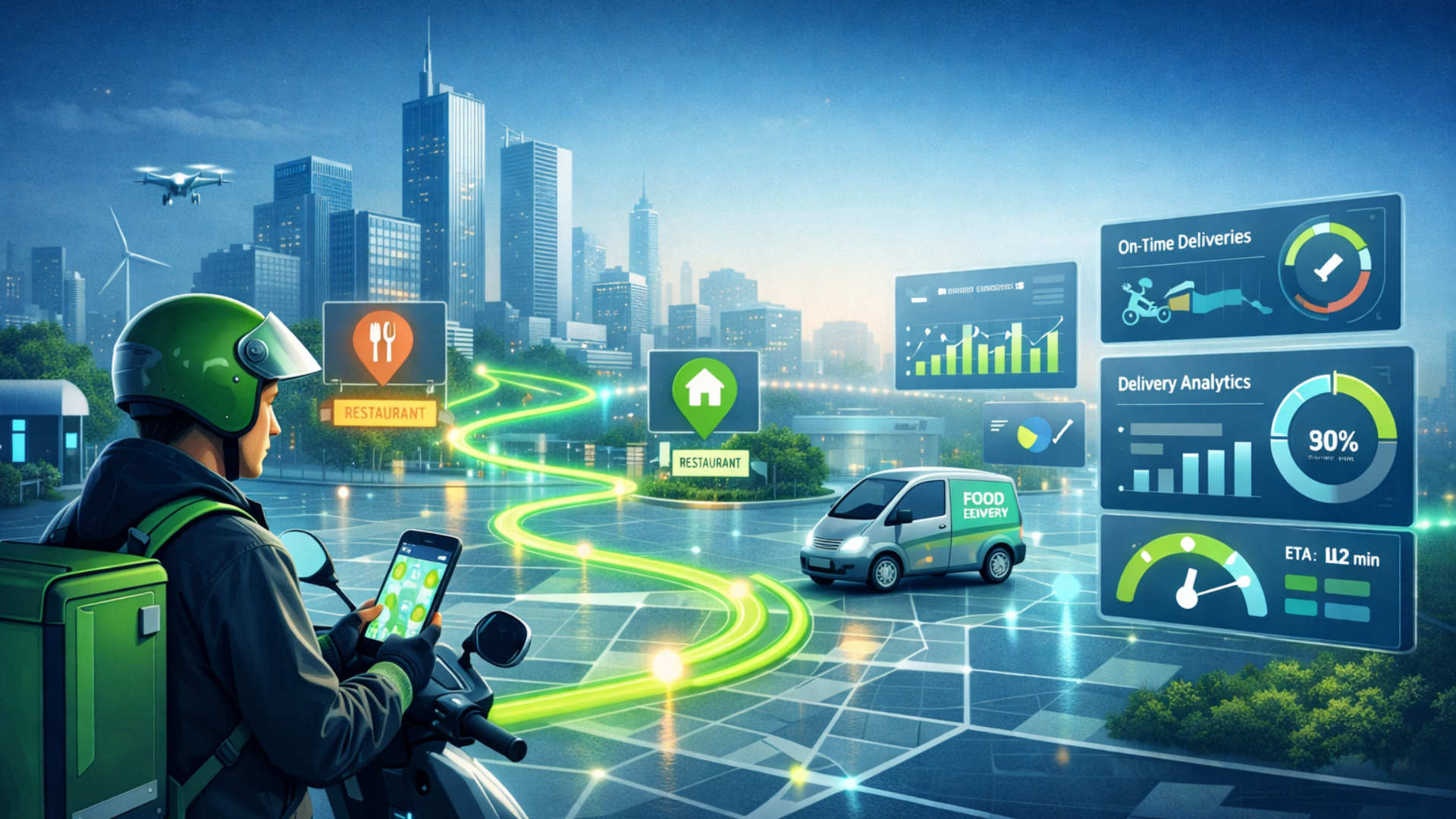
Your customer finishes a long workday, opens a food delivery app, and places an order expecting hot, fresh food to arrive within minutes. The countdown begins immediately, not just for the customer, but for your entire delivery operation. One delayed rider, one wrong route, or one traffic bottleneck can turn excitement into frustration and a five-star experience into a negative review.
As someone running or managing a food delivery operation, you already know that success today is no longer defined only by menu quality or pricing. Delivery speed, accuracy, and consistency have become the real differentiators. Customers rarely see your kitchen operations, but they always experience your delivery performance.
This is where Last Mile Delivery Solutions play a transformative role. The final journey from restaurant to customer doorstep determines whether your brand earns loyalty or loses trust. In a market driven by instant gratification, optimizing this last mile is no longer optional, it is the backbone of operational success.
Understanding the Last Mile Challenge in Food Logistics
When you look closely at your delivery workflow, you’ll notice that the most complex part isn’t preparing food, it’s delivering it efficiently. Food logistics comes with challenges that traditional delivery industries rarely face.
Unlike parcels, food has a ticking clock. Temperature, freshness, and presentation directly impact customer satisfaction. A delay of even ten minutes can compromise quality, especially during peak hours when traffic congestion, weather conditions, and order surges collide.
You also have to manage multiple moving variables at once, driver availability, route planning, order batching, and delivery zones. Manual dispatching or outdated routing methods often lead to longer travel times and higher operational costs. As demand grows, inefficiencies multiply quickly.
The real challenge lies in balancing speed with cost efficiency. Faster delivery often increases fuel expenses and workforce pressure, while cost-cutting can slow operations. Without optimized systems, maintaining consistency becomes nearly impossible.
Changing Consumer Expectations in 2026
Your customers in 2026 think differently than they did just a few years ago. Same-day delivery is no longer impressive; instant delivery is expected. Customers want precise arrival times, live tracking updates, and seamless communication throughout the delivery journey.
Today’s digitally connected consumers expect transparency. They want to know where their order is, who is delivering it, and exactly when it will arrive. Any uncertainty creates anxiety and often leads them to switch to competitors offering faster, smarter experiences.
For modern Food Delivery Businesses, convenience has evolved into personalization. Customers expect optimized delivery slots, contactless drop-offs, and accurate ETAs powered by real-time intelligence. Speed alone isn’t enough anymore; reliability and predictability define satisfaction.
Why Optimization Matters More Than Ever
Orders are flooding your platform, customers are tracking deliveries in real time, and one delayed order suddenly turns into negative ratings, refund requests, and lost loyalty. You quickly realize that success in food delivery isn’t just about great meals, it’s about how efficiently those meals reach the customer’s doorstep.
In 2026, delivery speed has become your biggest competitive advantage. Customers no longer compare restaurants only by menu or pricing; they judge your brand based on delivery accuracy and timing. If your operations rely on manual dispatching or inefficient routing, even a small delay can multiply across hundreds of orders.
Optimization allows you to streamline delivery workflows, assign orders intelligently, and reduce unnecessary travel time. When routes are optimized, drivers complete more deliveries within shorter timeframes, helping you maintain service consistency even during demand spikes.
Technologies Powering Modern Last Mile Delivery
To stay competitive, you need technology that works smarter than traditional delivery systems. Modern logistics platforms now rely heavily on automation and intelligent decision-making tools.
AI-powered route optimization analyzes traffic patterns, delivery locations, and real-time variables to recommend the fastest delivery paths. This ensures that your drivers spend less time navigating congestion and more time completing orders.
Real-time GPS tracking gives both you and your customers complete visibility into delivery progress. Accurate ETAs reduce uncertainty and build trust, while automated dispatch systems instantly assign orders to the most suitable delivery partner.
Predictive analytics further enhances efficiency by forecasting demand patterns. Instead of scrambling during peak hours, you can proactively position drivers in high-demand zones. Cloud-based delivery management platforms also integrate seamlessly with ordering apps, allowing centralized control over operations.
Cost Optimization & Profitability Gains
When delivery operations are optimized, profitability naturally improves. Every unnecessary kilometer driven increases fuel expenses, labor costs, and operational inefficiencies.
By optimizing routes and delivery batching, you reduce fuel consumption while maximizing driver productivity. Your delivery fleet completes more orders without increasing workforce size, directly improving margins.
Optimization also minimizes failed or delayed deliveries, which often result in refunds and customer churn. With smarter allocation and accurate ETAs, you lower operational risks while enhancing service reliability.
Sustainability & Green Delivery Trends
Customers increasingly prefer brands that reduce environmental impact while maintaining fast service. When you optimize delivery routes, you naturally reduce fuel consumption, delivery distance, and carbon emissions. Smart batching of nearby orders allows fewer trips while maintaining delivery speed.
You also gain opportunities to integrate electric delivery vehicles, eco-friendly packaging logistics, and energy-efficient dispatch systems. Optimized delivery networks help you operate responsibly without sacrificing profitability.
Future Trends Shaping Food Delivery Logistics
AI-driven demand forecasting now helps you predict order surges before they happen. Instead of reacting to peak hours, you position delivery resources proactively. Autonomous delivery pilots, drone experiments, and hyperlocal fulfillment hubs are gradually transforming urban delivery models.
Real-time analytics also allows you to adjust routes dynamically based on traffic, weather, or order priority. This level of intelligence ensures faster delivery while minimizing operational disruptions.
How Technology Partners Enable Delivery Success
Managing delivery efficiency manually becomes nearly impossible as your operations expand. This is where technology partnerships play a critical role.
When you work with experienced solution providers like SSTech System, you gain access to scalable platforms that connect ordering systems, dispatch operations, and delivery tracking into one intelligent ecosystem.
Technology-driven platforms help you automate rider allocation, monitor delivery performance, analyze operational data, and continuously improve efficiency. Instead of guessing what works, you make data-backed decisions that enhance speed and customer satisfaction.
Conclusion:
In today’s on-demand economy, customers rarely remember how fast your kitchen prepared the meal. They remember how quickly it reached their doorstep.
Delivery speed, accuracy, and transparency now define customer experience. Businesses that invest in optimization gain lower operational costs, higher retention rates, and stronger brand loyalty.
Comments
Log in or sign up to join the conversation.