

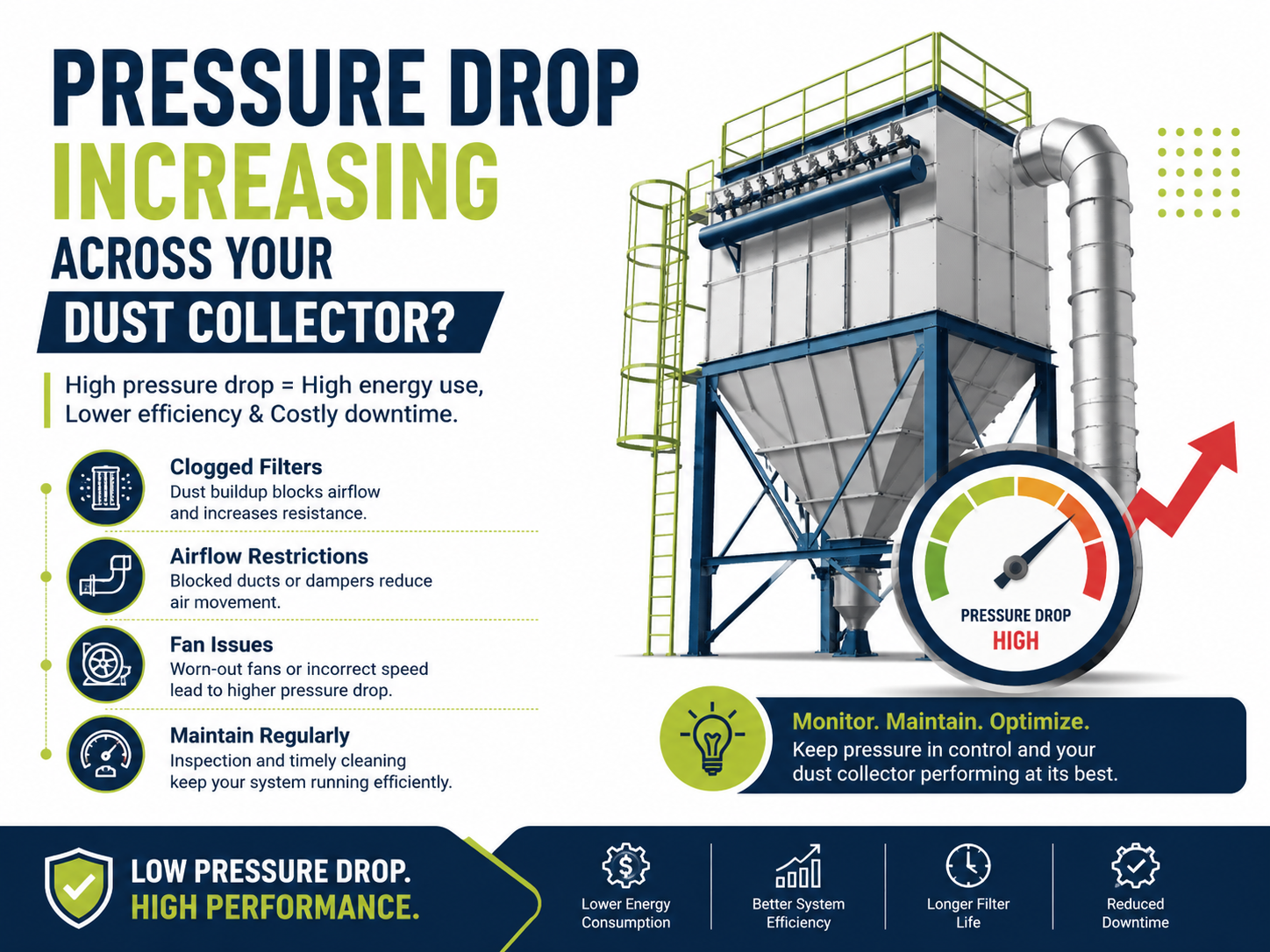
An increasing pressure drop is one of the most common warning signs in an industrial dust collection system, you know it. When airflow becomes restricted, the collector has to work harder just to maintain performance. Working alongside an experienced industrial dust collector manufacturer can make it easier to figure out if the issue traces back to clogged filters, excessive dust loading, poor airflow or maybe an incorrectly sized setup that was put in place too tight.
For plant managers rising pressure drop should never be ignored. It can lower collection efficiency, raise energy consumption and add unnecessary stress on fans and filters. A reliable industrial dust collector manufacturer can support the diagnosis of the real cause and then recommend the appropriate corrective action before the situation starts interfering with production.
What Does Pressure Drop Mean in a Dust Collector?
Pressure drop is basically the difference in air pressure between the side that has the dirty air, and the side that receives clean air inside a dust collector. It shows how much resistance the air meets while moving through the whole filtration system. A moderate pressure drop is usual, but a steady rise often means the airflow is getting limited or there is an emerging upkeep trouble.
Common Causes of Increasing Pressure Drop
One of the most frequent triggers is heavy dust buildup on the filter media. When the dust layer grows past what the filter is meant to handle in normal use, the airstream has a harder time passing through. Poor filter cleaning, damaged pulse valves, too little compressed air, or cleaning cycles that are not set correctly can easily make the situation worse.
Other possible causes include:
Filter clogging: Fine or sticky dust can block filter pores.
High dust loading: Excessive particulates entering the collector can overload the filters.
Poor airflow: Incorrect duct sizing or blockages can restrict air movement.
Moisture: Wet or hygroscopic dust may stick to filter surfaces.
Damaged components: Faulty bags, cartridges, valves, or seals can affect performance.
How Filter Condition Affects Pressure Drop
The filter condition affects collector performance directly. When filters become laden with particulate matter, resistance goes up and the fan has to produce more pressure to keep the needed airflow. If the cleaning is not effective, the pressure drop can keep climbing until the system runs beyond the range it is supposed to stay in.
Check the Cleaning System
For pulse-jet collectors, take a look at the compressed-air pressure, pulse valves, solenoids, and how often the cleaning happens. If the cleaning mechanism is not working right it may leave dust embedded into the filter media. Periodic reviews and replacing worn parts in a timely manner can help keep the airflow steady and increase filter service life.
How to Reduce High Pressure Drop
The correct answer really depends on the root cause. Begin with the differential pressure readings and compare them to the collector’s usual operating span, if it does not match then. Next take a careful look at filters, cleaning hardware, ductwork, dampers, fans, and the dust discharge parts.
A workable maintenance path can include things like,
Inspect and clean the filters following the equipment maker’s instructions.
Verify compressed air pressure and check pulse-cleaning effectiveness.
Search for blocked ducts, closed dampers, or airflow restrictions that are sneaking in.
Examine bags or cartridges for any wear, tears, or excessive loading.
Confirm whether the collector is still a fit for the present dust volume.
Also, selecting a seasoned industrial dust collection equipment manufacturer can be helpful, especially when the existing setup has to be modified, when more filtration capacity is needed, or when airflow management has to improve.
Conclusion
Rising pressure drop is an important indicator that your dust collector may not be working very efficiently. When filters get clogged, or the cleaning cycle is less than adequate, you can also see problems from excessive dust loading, moisture, airflow restrictions, and even poor system sizing.
If you ignore those signs, you might end up with higher energy costs, weaker filtration performance, and a shorter equipment lifespan. Before Buying Industrial Dust Collectors, it helps to examine your dust type, airflow needs, usable filter area, maintenance routines, and actual operating conditions. For a dependable approach, talk with a professional dust collection specialist who can design, evaluate, or modernize your setup so industrial air filtration stays efficient and dependable. Reach out to an experienced manufacturer today and describe your dust collection requirements.
Comments
Log in or sign up to join the conversation.