

Summer is supposed to be the season of shorts, dresses, swimsuits, and showing off smooth, glowing skin.
But for many people, it's the exact opposite.
The moment temperatures rise, they begin noticing:
more visible dark dots on their legs
rough, bumpy skin
irritated hair follicles
increased redness
stubborn strawberry skin
If you've ever wondered:
"Why does my strawberry skin always seem worse in summer?"
You're definitely not alone.
While many people expect warmer weather to improve their skin, summer actually introduces several factors that can make strawberry legs, keratosis pilaris (KP), and rough skin much more noticeable.
The good news?
Understanding why it happens makes it much easier to prevent.
In this guide, we'll explain:
Why strawberry skin often becomes worse during summer
The role of heat, sweat, shaving, and sun exposure
Why KP can flare during warm weather
How to build a summer skincare routine
The best ingredients for smoother-looking skin
Quick Answer
Strawberry skin often appears worse during summer because increased shaving, sweating, sun exposure, friction, and dehydration can make clogged hair follicles and keratin buildup more noticeable. While summer doesn't directly cause strawberry skin, it can exaggerate its appearance without the right skincare routine.
Summer doesn't cause strawberry skin—but it often makes it more visible.
Frequent shaving increases follicular irritation.
Sweat, sunscreen, and oil can contribute to clogged follicles.
Sun exposure may darken post-inflammatory pigmentation.
Hydration and gentle exfoliation become even more important during warmer months.
A consistent routine helps keep strawberry skin under control all year.
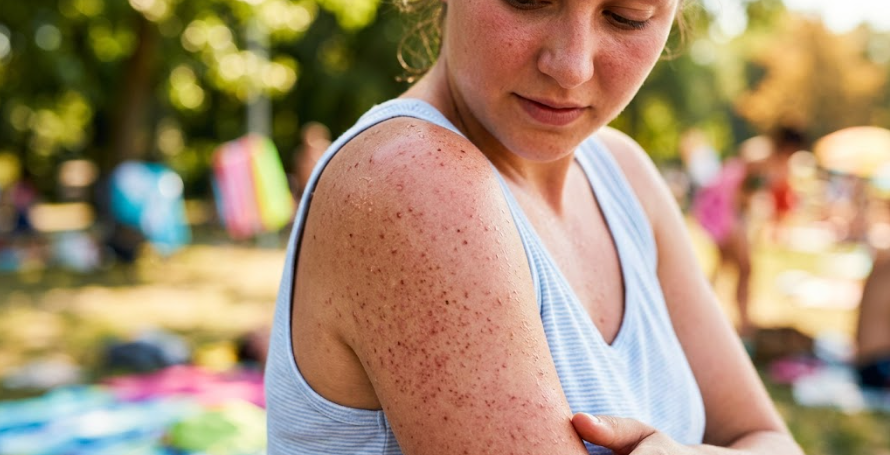
Why Does Strawberry Skin Look Worse in Summer?
Many people assume summer is healthier for the skin.
In reality, several seasonal factors combine to make follicular texture more obvious.
Let's look at the biggest reasons.
1. You Shave More Often
This is probably the biggest reason.
During winter, many people shave less frequently.
Once summer arrives:
shorts come out
dresses become common
beach trips begin
Suddenly, shaving becomes much more frequent.
Unfortunately, frequent shaving can increase:
follicular irritation
razor bumps
ingrown hairs
visible follicles
These changes make strawberry legs appear much worse.
2. Sweat Can Contribute to Follicular Buildup
Sweating itself isn't harmful.
However, when sweat mixes with:
sunscreen
body oils
dead skin
it can contribute to buildup around hair follicles.
If skin isn't cleansed properly afterward, follicles may become more noticeable.
3. Heat Increases Skin Irritation
High temperatures can make sensitive skin more reactive.
Heat may increase:
redness
itching
inflammation
People with keratosis pilaris often notice that irritated follicles become more visible during hot weather.
4. Sun Exposure Makes Dark Dots More Noticeable
One of the biggest reasons strawberry skin appears worse in summer isn't actually the bumps.
It's the pigmentation.
After shaving or irritation, some follicles develop:
post-inflammatory hyperpigmentation
darker pigmentation
brown spots
Sun exposure can make these marks appear darker over time.
This creates the illusion that strawberry skin is getting worse—even if the bumps haven't changed.
5. Dry Skin Still Happens in Summer
Many people associate dry skin with winter.
However, summer can also dehydrate the skin because of:
air conditioning
chlorine
salt water
long hot showers
UV exposure
Dry skin exaggerates:
rough texture
visible follicles
keratin buildup
making strawberry skin appear more noticeable.
6. More Friction During Summer
Summer clothing can increase friction around the thighs and legs.
Examples include:
tight shorts
athletic leggings
cycling clothing
swimsuits
Repeated friction may irritate follicles and worsen:
redness
bumps
visible pores
7. More Outdoor Activities
Summer usually means:
hiking
running
cycling
swimming
vacations
While these activities are healthy, they also increase:
sweat
friction
repeated shaving
skin irritation
All of these can contribute to rougher-looking skin.
How Keratosis Pilaris Behaves During Summer
Many people believe KP always improves during warm weather.
The truth is more complicated.
Some individuals notice improvement because:
humidity softens the skin
sunlight temporarily masks redness
Others experience worsening because of:
increased irritation
frequent shaving
dehydration
sweating
Every person's skin responds differently.
Why Summer Shaving Can Trigger Strawberry Legs
Hair removal is one of the biggest contributors to strawberry legs.
Poor shaving habits can lead to:
clogged follicles
ingrown hairs
irritation
dark follicular dots
Summer increases shaving frequency, which naturally increases these risks.
The Role of Ingrown Hairs
Many cases of strawberry legs worsen due to ingrown hairs.
When hairs become trapped beneath the skin:
inflammation develops
follicles darken
bumps appear
After healing, pigmentation may remain.
This makes the legs appear even more dotted.
Is Summer the Best Time to Treat Strawberry Skin?
Surprisingly…
Yes.
Although symptoms often become more noticeable, summer is also a great opportunity to establish healthier skincare habits.
Because people expose more skin during summer, they're often more motivated to:
exfoliate consistently
moisturize daily
improve shaving habits
wear sunscreen
These habits benefit the skin throughout the year.
The Best Summer Skincare Routine for Strawberry Skin
A good summer routine doesn't need to be complicated. The key is consistency and choosing products that address both hydration and follicular buildup.
Step 1: Cleanse Away Sweat and Sunscreen
After spending time outdoors, cleanse your skin with a gentle body wash to remove:
sweat
excess oil
sunscreen residue
dirt
environmental pollutants
Avoid harsh soaps that strip the skin, as they can weaken the skin barrier and increase dryness.
Step 2: Exfoliate Gently 2–3 Times Per Week
Summer is not the time for aggressive scrubbing.
Instead, use gentle chemical exfoliants that help dissolve dead skin cells without causing unnecessary irritation.
Look for ingredients like:
Salicylic Acid (BHA)
Lactic Acid (AHA)
Glycolic Acid (AHA)
These ingredients help:
unclog hair follicles
reduce keratin buildup
smooth rough texture
improve the appearance of strawberry legs
Gentle, consistent exfoliation is far more effective than scrubbing with abrasive body brushes or coarse scrubs.
Step 3: Moisturize Every Day
One common misconception is that moisturizer isn't necessary during hot weather.
In reality, sun exposure, swimming, and air conditioning can all dehydrate your skin.
Daily moisturizing helps:
strengthen the skin barrier
reduce roughness
improve skin softness
minimize irritation after shaving
Look for moisturizers containing:
ceramides
glycerin
hyaluronic acid
urea
Hydrated skin also tolerates exfoliating ingredients better.
Step 4: Improve Your Shaving Routine
Since shaving is one of the biggest contributors to strawberry skin, small changes can make a noticeable difference.
Before shaving:
Take a warm shower for several minutes.
Apply a moisturizing shaving cream or gel.
During shaving:
Use a clean, sharp razor.
Shave in the direction of hair growth if you're prone to irritation.
Avoid pressing the razor too hard.
After shaving:
Rinse with cool water.
Apply a fragrance-free moisturizer.
Avoid tight clothing immediately afterward.
These habits can help reduce irritation, razor bumps, and ingrown hairs.
Step 5: Never Skip Sunscreen
Many people focus on preventing sunburn but overlook another benefit of sunscreen.
Daily SPF helps reduce the risk of post-inflammatory hyperpigmentation becoming darker after shaving or irritation.
If your strawberry skin includes dark dots or discoloration, sunscreen can help prevent those spots from becoming more noticeable.
Choose a broad-spectrum sunscreen with SPF 30 or higher whenever your skin is exposed.
The Best Ingredients for Strawberry Skin During Summer
Salicylic Acid
Salicylic acid is particularly useful in summer because it penetrates inside hair follicles.
It helps:
loosen debris
dissolve excess oil
reduce clogged follicles
minimize visible dark dots
Lactic Acid
Lactic acid gently exfoliates while also attracting moisture to the skin.
It's an excellent option for people dealing with both dryness and keratosis pilaris.
Glycolic Acid
Glycolic acid encourages healthy skin turnover and helps improve uneven texture over time.
Regular use can contribute to smoother-looking skin and fewer rough patches.
Urea
Urea is commonly found in products marketed as a keratosis pilaris moisturizer or keratosis pilaris cream.
It helps soften rough skin and improve hydration, making it a valuable addition to a summer skincare routine.
Summer Habits That Can Make Strawberry Skin Worse
Even with a good skincare routine, certain habits may continue to trigger flare-ups.
Try to avoid:
Over-scrubbing your skin
Shaving with dull razors
Skipping moisturizer
Wearing sweaty workout clothes for extended periods
Picking at bumps or ingrown hairs
Spending long periods in the sun without sunscreen
Small adjustments can make a noticeable difference over time.
A Smarter, Multi-Active Approach to Treating Strawberry Skin & KP
Summer skincare works best when it addresses more than just dryness.
Most cases of strawberry skin involve a combination of:
keratin buildup
clogged follicles
uneven skin turnover
rough texture
dehydration
That's why many modern routines combine gentle exfoliation with daily hydration instead of relying on moisturizer alone.
TryStrawberry's Advanced Triple-Acid Complex for Keratosis Pilaris is formulated with a blend of exfoliating acids that help target several of these concerns simultaneously.
When used consistently as part of a complete routine, it can help:
improve rough, bumpy skin
reduce the appearance of strawberry legs
support smoother skin texture
promote healthier-looking skin over time
Pairing targeted exfoliation with a nourishing moisturizer and proper sun protection offers a more comprehensive approach to strawberry skin treatment, keratosis pilaris treatment, and long-term skin maintenance.
Don't Let Summer Make Strawberry Skin Worse
Heat, shaving, sweat, and sun exposure can make strawberry skin more noticeable, but the right skincare routine can help keep it under control.
Get TryStrawberry's Advanced Triple-Acid Complex, specially formulated to gently exfoliate, smooth rough texture, and improve the appearance of strawberry skin and keratosis pilaris over time.
Reveal smoother, healthier-looking skin all summer long.
Myth vs. Fact
Myth: Summer causes strawberry skin.
Fact: Summer doesn't create strawberry skin, but heat, shaving, sweat, and sun exposure can make it appear more noticeable.
Myth: Sweating is bad for your skin.
Fact: Sweat itself isn't harmful, but when combined with oil, sunscreen, and dead skin cells, it can contribute to clogged follicles if not cleansed away.
Myth: The harder you scrub, the smoother your skin will be.
Fact: Aggressive scrubbing can damage the skin barrier and worsen irritation. Gentle chemical exfoliation is generally a better option.
Myth: You don't need moisturizer in summer.
Fact: Summer activities, UV exposure, chlorine, and air conditioning can all dry out the skin, making daily moisturization just as important as in winter.
Frequently Asked Questions
Why does my strawberry skin get worse in summer?
Increased shaving, sweat, sun exposure, friction, and dehydration can all make clogged follicles and dark dots more visible.
Does sweating cause strawberry skin?
Not directly. However, sweat mixed with sunscreen, oil, and dead skin can contribute to follicular buildup if the skin isn't cleansed regularly.
Can sunscreen make strawberry skin worse?
Most sunscreens do not cause strawberry skin. In fact, wearing sunscreen can help prevent dark spots from becoming more noticeable after irritation.
Should I exfoliate more often in summer?
Gentle exfoliation two to three times per week is usually sufficient. Over-exfoliating can damage the skin barrier.
Is keratosis pilaris worse during hot weather?
Some people notice flare-ups during summer due to increased irritation and shaving, while others experience improvement because of higher humidity. Individual responses vary.
Can strawberry skin improve during summer?
Yes. With consistent exfoliation, moisturization, proper shaving techniques, and daily sunscreen use, many people see smoother, healthier-looking skin throughout the season.
Final Thoughts
If your strawberry skin seems more noticeable every summer, you're not imagining it. Seasonal habits like more frequent shaving, increased sweating, sun exposure, and friction can all highlight rough texture, clogged follicles, and dark dots.
The good news is that summer also provides the perfect opportunity to adopt a routine that addresses these underlying causes. By combining gentle exfoliation, daily moisturization, smart shaving practices, and sun protection, you can help keep strawberry legs and keratosis pilaris under better control.
Rather than hiding your skin during the warmer months, focus on consistency. Healthy skincare habits practiced throughout the season can lead to smoother, more even-looking skin that you'll feel confident showing year-round.
Comments
Log in or sign up to join the conversation.