
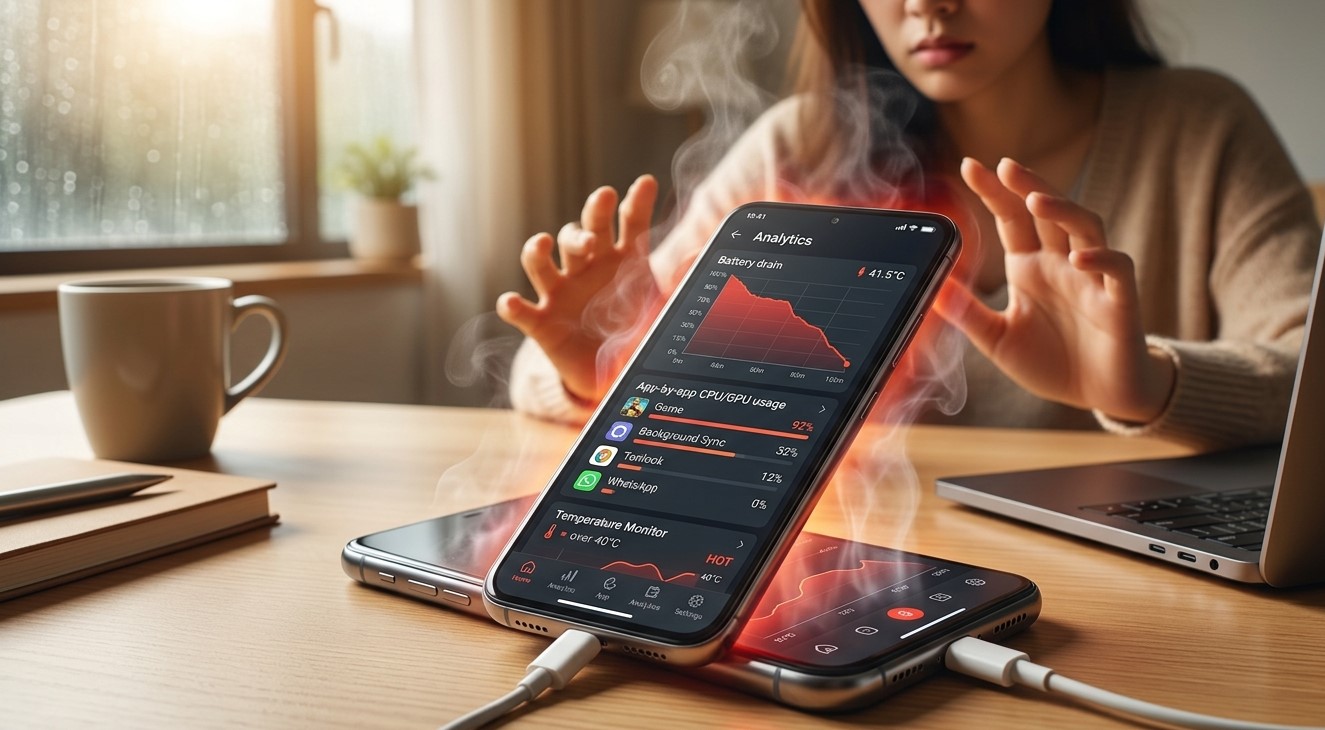
A smartphone may become slightly warm during charging, gaming, video recording, or other demanding activities, but noticeable heat during simple everyday use can be concerning. If your phone becomes hot while browsing, texting, making calls, or using basic apps, there may be an underlying reason that needs attention. For people searching for phone repair regina sk, samsung phone repair regina sk, or cell phone repair regina sk, understanding the common causes of smartphone overheating can help determine whether the issue is related to software, battery usage, charging, environmental conditions, or hardware. NanoTech can help identify persistent smartphone problems and determine when professional repair or diagnostics may be appropriate.
Occasional warmth does not necessarily mean your phone is damaged. Smartphones naturally generate heat while processing information and charging. However, persistent or excessive heat—especially when combined with rapid battery drain, slow performance, unexpected shutdowns, or charging problems—should not be ignored. Samsung's current support guidance also distinguishes normal warmth from excessive heating and recommends stopping use and allowing the device to cool when it becomes uncomfortably hot.
Table of Contents
Why Does My Phone Get Hot During Normal Use?
Is It Normal for a Smartphone to Feel Warm?
Common Causes of Smartphone Overheating
How Background Apps Can Make Your Phone Hot
Can a Weak Signal Cause Overheating?
Why Charging Can Make Your Phone Warm
Could Your Phone Battery Be Causing the Heat?
How Software Problems Can Lead to Overheating
Can a Phone Case Cause Overheating?
How Hot Weather Affects Your Smartphone
What Should You Do If Your Phone Gets Too Hot?
When Is Phone Overheating a Sign of Hardware Damage?
How Professional Diagnostics Can Identify the Problem
How to Prevent Your Smartphone from Overheating
Frequently Asked Questions
Conclusion and Call to Action
Why Does My Phone Get Hot During Normal Use?
Your smartphone contains several components that generate heat while operating. The processor, battery, display, wireless radios, and other internal components all consume energy.
When the phone performs demanding tasks, more power is used and more heat may be produced.
However, if your phone becomes unusually hot while performing basic tasks, several possibilities should be considered.
Common causes include:
Too many applications running in the background
High screen brightness
Weak cellular signal
GPS or location services running continuously
Mobile hotspot usage
Software bugs
Outdated applications
Battery deterioration
Fast or wireless charging
Damaged charging accessories
Direct sunlight or high temperatures
Internal hardware problems
Samsung specifically identifies intensive applications, multitasking, large downloads, background activity, weak signals, charging, and hot environments as situations that can increase device temperature.
Is It Normal for a Smartphone to Feel Warm?
A phone feeling slightly warm does not automatically indicate a problem.
For example, temporary warmth can occur when you are:
Charging the phone
Using navigation
Playing demanding games
Recording high-resolution video
Streaming video
Downloading large files
Restoring a backup
Installing system updates
Using a mobile hotspot
Synchronizing large amounts of data
The important difference is between normal warmth and excessive or persistent heat.
If the phone becomes uncomfortable to hold, displays an overheating warning, slows down significantly, stops charging, or shuts down automatically, allow it to cool before continuing to use it. Modern devices may automatically limit certain functions when temperatures become too high.
Common Causes of Smartphone Overheating
1. Too Many Apps Running in the Background
Applications may continue performing tasks even when you are not actively using them.
Social media apps, cloud services, email applications, navigation tools, and other services may periodically synchronize information or use location and network resources.
If numerous applications are active simultaneously, the processor and battery may have to work harder.
Review your battery usage and close or restrict unnecessary background activity where appropriate.
2. High Screen Brightness
Your display can be one of the significant sources of power consumption, particularly at maximum brightness.
If your screen brightness remains high throughout the day, your phone may consume more energy and generate additional heat.
Try reducing brightness or enabling automatic brightness when appropriate.
3. Mobile Hotspot Usage
Turning your phone into a mobile hotspot requires the device to maintain network communication while also sharing that connection with other devices.
Extended hotspot use can increase battery consumption and temperature.
If you are not actively sharing your connection, turn off the hotspot.
4. GPS and Location Services
Navigation and location-based applications can continuously use GPS and other positioning technologies.
Using navigation while simultaneously streaming video, recording video, or performing other demanding tasks can create additional workload.
If location services are not needed, consider disabling them for applications that do not require continuous access.
How Background Apps Can Make Your Phone Hot
A common reason for unexpected heating is excessive background activity.
An application that repeatedly refreshes information, uploads files, synchronizes data, or uses location services can consume resources even when you are not actively looking at it.
If your phone starts becoming warm shortly after opening a particular application, pay attention to that pattern.
You can review battery usage to identify applications consuming unusually large amounts of power.
If one application consistently stands out, update it or investigate whether removing it changes the phone's temperature.
Can a Weak Signal Cause Overheating?
Yes, network conditions can affect phone temperature.
When cellular reception is poor, a smartphone may work harder to maintain communication with the network. This can increase power consumption.
You may notice increased warmth in locations such as:
Underground areas
Remote locations
Buildings with poor reception
Areas with weak cellular coverage
Locations where the phone frequently switches between network connections
Samsung lists weak or unavailable signals as one condition that can contribute to increased device temperature.
If your phone only becomes unusually warm in locations with poor reception, the network environment may be contributing to the problem.
Why Charging Can Make Your Phone Warm
It is common for a smartphone to become somewhat warm while charging.
Fast charging and wireless charging can generate additional heat because the battery is receiving energy at a relatively high rate.
However, excessive heat during charging deserves attention.
Potential causes include:
Damaged charging cables
Incompatible chargers
Poor-quality accessories
Debris or contamination in the charging port
Using the phone heavily while charging
Charging in a hot environment
Wireless charging with unsuitable objects between the phone and charger
Samsung recommends disconnecting a device that becomes excessively hot while charging and allowing it to cool before charging again. It also recommends using compatible charging accessories and inspecting damaged cables or charging connections.
Could Your Phone Battery Be Causing the Heat?
The battery is another important component to consider.
As smartphone batteries age, their capacity and performance can change. A deteriorating battery may sometimes be associated with:
Faster battery drain
Unexpected shutdowns
Unusual warmth
Charging problems
Reduced battery life
Performance issues
If your phone becomes hot even when performing basic tasks and the battery is also draining unusually quickly, battery condition should be investigated.
Do not assume that replacing the battery is automatically the answer. A proper diagnostic can determine whether the battery is actually contributing to the overheating.
How Software Problems Can Lead to Overheating
Software can also influence how hard your phone's processor works.
A poorly optimized application, background process, failed update, or software conflict can cause unusually high resource usage.
For example, if an application repeatedly crashes and restarts in the background, it may continue consuming processor and battery resources.
Keeping your operating system and applications updated can help address known software problems. Samsung currently recommends keeping device software and related apps updated when troubleshooting heating issues.
If the phone started overheating immediately after installing a particular application or update, note the timing. This information can be useful when troubleshooting.
Can a Phone Case Cause Overheating?
A phone case does not automatically cause overheating, but some cases may make it harder for heat to dissipate, particularly during charging or intensive use.
If your phone becomes unusually warm, temporarily remove the case and observe whether the temperature changes.
Samsung also recommends removing cases or covers when a device needs to cool down.
Avoid placing the phone under pillows, blankets, heavy clothing, or other materials that restrict airflow.
How Hot Weather Affects Your Smartphone
Environmental temperature can have a major impact on smartphone temperature.
Leaving a phone:
In direct sunlight
Inside a parked vehicle
Near a heater
On a hot surface
In an enclosed space with poor ventilation
can cause it to become significantly warmer.
Using a demanding application while the phone is already exposed to high temperatures can increase the problem.
Whenever possible, keep the device away from direct sunlight and allow it to operate in a cooler environment.
What Should You Do If Your Phone Gets Too Hot?
If your smartphone becomes unusually hot, take simple steps to reduce the workload.
Step 1: Stop Using the Phone
Pause demanding activities and allow the device to cool naturally.
Step 2: Disconnect the Charger
If the phone is charging and becomes excessively hot, disconnect it from the charger.
Step 3: Close Demanding Applications
Close games, video editors, navigation, streaming applications, and other intensive processes.
Step 4: Remove the Case
Temporarily remove the case if it appears to be trapping heat.
Step 5: Move Away From Heat
Take the device out of direct sunlight or other hot environments.
Step 6: Reduce Unnecessary Connectivity
Turn off features such as Bluetooth, GPS, Wi-Fi, or mobile hotspot when they are not needed.
Step 7: Allow the Device to Cool
Do not immediately return to intensive use after the phone begins to cool. Give it enough time to return to a comfortable temperature.
Samsung advises stopping use when a device becomes uncomfortably hot and allowing it to cool before resuming normal use.
When Is Phone Overheating a Sign of Hardware Damage?
Occasional warmth is usually different from persistent overheating.
You should consider professional diagnosis if your phone repeatedly overheats during light everyday activities or if overheating is accompanied by other problems.
Watch for signs such as:
Phone becoming extremely hot without heavy use
Rapid battery drain
Unexpected shutdowns
Repeated freezing or restarting
Charging problems
Unusual battery behavior
A damaged charging port
Damage after dropping the phone
Previous liquid exposure
Overheating that continues after basic troubleshooting
These symptoms can indicate a battery, charging system, internal component, or other hardware issue.
How Professional Diagnostics Can Identify the Problem
Overheating can have multiple causes, which makes guessing the solution difficult.
A professional technician can examine the device and investigate areas such as:
Battery condition
Charging system
Charging port
Software behavior
Background applications
Temperature patterns
Physical damage
Liquid exposure
Internal hardware components
For customers searching for cell phone repair regina sk, professional diagnostics can help determine whether the phone requires a simple adjustment or more extensive repair.
For Samsung users looking for samsung phone repair regina sk, a technician can also investigate Samsung-specific software and hardware symptoms.
How to Prevent Your Smartphone from Overheating
Preventive care can help reduce unnecessary heat.
Keep Software Updated
Install official operating system and application updates when available.
Avoid Excessive Background Activity
Close or restrict applications that consume unnecessary resources.
Use Compatible Charging Accessories
Use reliable, compatible chargers and cables, and replace damaged charging accessories.
Avoid Direct Sunlight
Do not leave your smartphone exposed to direct sunlight for long periods.
Keep the Charging Port Clean
Dust, debris, or foreign material in the charging connection can contribute to charging problems and potentially increased heat.
Reduce Screen Brightness
Lower brightness when maximum brightness is unnecessary.
Give Your Phone Breaks
Extended gaming, video recording, navigation, and other intensive activities can produce additional heat. Allowing the device to cool between demanding tasks can help.
Frequently Asked Questions
Is it normal for my phone to get warm during use?
Some warmth is normal, particularly during charging, gaming, video recording, navigation, or other demanding activities. Persistent or uncomfortable heat during light use deserves further investigation.
Why does my phone get hot when I am not using it?
Background applications, synchronization, poor network reception, location services, software problems, or other processes may be consuming power while the screen is off.
Can a phone overheating damage the battery?
Repeated excessive heat can be harmful to battery longevity. Smartphones include thermal protection features, but persistent overheating should still be investigated rather than ignored.
Why does my phone get hot while charging?
Charging naturally produces some heat, particularly during fast or wireless charging. Excessive heat can be related to the charger, cable, charging port, environment, or simultaneous heavy phone use.
Should I put my hot phone in a refrigerator?
No. Avoid extreme cooling methods such as putting a hot smartphone in a refrigerator or freezer. Sudden temperature changes can create additional problems. Instead, disconnect it from charging, stop using it, move it away from heat, and allow it to cool naturally.
Can a bad charger cause my phone to overheat?
A damaged, incompatible, or defective charger or cable can contribute to excessive heat during charging. Samsung specifically advises using compatible charging accessories and replacing damaged cables.
When should I take my phone for professional repair?
If your phone repeatedly becomes extremely hot during normal use, shuts down, drains its battery unusually quickly, has charging problems, or continues overheating after basic troubleshooting, professional inspection is recommended.
Conclusion
A smartphone becoming slightly warm during demanding activities is not necessarily a problem. Charging, gaming, navigation, video recording, background synchronization, and other intensive tasks can naturally increase temperature. However, persistent overheating during normal use should not be dismissed.
Start by checking background applications, software updates, screen brightness, network conditions, charging accessories, and the environment in which you use the phone. If the device remains unusually hot despite these steps—or if overheating occurs alongside battery drain, charging problems, freezing, or unexpected shutdowns it may be time for professional diagnosis.
If you are searching for phone repair regina sk, samsung phone repair regina sk, or cell phone repair regina sk, NanoTech can help identify potential causes of persistent smartphone overheating and determine the appropriate repair or diagnostic solution.
Comments
Log in or sign up to join the conversation.