

It is much more difficult to operate a vessel than to operate equipment in a factory or commercial building. Ships often have to operate for weeks in remote waters without immediate technical support. Under such conditions timely detection of faults is essential, since any delay in the identification of equipment problems can lead to severe operational, financial and safety consequences.
A modern ship alarm monitoring system continuously monitors the condition of critical machinery on board, allowing engineers to detect abnormal conditions as they occur. The crew can take preventive action while the issue is still manageable rather than react after the equipment fails.

Here are the main reasons alarm monitoring systems have become a standard part of modern marine automation.
-> Early Detection of Equipment Problems
Most mechanical problems develop gradually. Often, rising temperatures, falling pressure, increased vibration or uneven fluid levels are warning indications before a pump fails or an engine overheats.
An engine alarm monitoring system continuously checks these operational parameters and alerts the engineers anytime abnormal conditions are detected.
This early notice helps maintenance workers to research the issue to locate the root cause and make repairs before a little fault becomes a catastrophic mechanical breakdown.
-> Enhancing Crew Safety
Safety is of the utmost importance on all vessels, and alarm monitoring systems are essential to the protection of crew members and onboard assets.
Properly installed, a marine alarm monitoring system can provide instant notification of conditions such as:
Overheat engine
Low oil pressure
Fire or smoke detector
Because alarms are immediate , engineers are able to respond more quickly to emergencies , which reduces the chance of accidents and limits potential damage .
-> Minimizing Unplanned Downtime
Unexpected machinery breakdown is one of the most costly problems in vessel operation. Emergency repairs may lead to delay to journeys, disruption of cargo schedules, increased fuel consumption and financial losses.
Continuous monitoring allows the engineers to see the deterioration of equipment before it affects the operation. Maintenance can then be scheduled around service timetables reducing unplanned downtime and improving fleet availability.
For shipping companies that have a large fleet of vessels, even a small reduction in unplanned downtime can result in significant long-term savings.
-> Supporting Compliance with Maritime Regulations
Contemporary ships must adhere to international safety standards set by classification societies and maritime agencies.
An effective alarm monitoring system helps compliance by:
Recording alarm events for later review
Keeping historical operating data
Supporting preventive maintenance documentation
Supporting inspections and audits
These records make operations more transparent and also help to show that onboard safety systems are working as intended.
-> Improving Operational Efficiency
Alarm monitoring systems have an effect directly on operational performance.
If engineers are equipped with the correct information, they can be more preventive than reactive by improving how equipment works before just reacting to failures.
This gives,
Less fuel consumption
Better engine efficiency
Better use of resources
Extra machine life
Over time these changes will lower operating costs and improve the overall reliability of the vessel.
How Does a Marine Alarm Monitoring System Work?
Modern marine alarm monitoring systems are advanced, using advanced automation technologies, but their purpose is simple—to monitor all critical equipment on board, detect abnormal conditions and alert the crew before a small problem turns into a serious failure.
Instead of using routine checks, the system uses regularly, gathering real-time data from hundreds of sensors placed all over the vessel. This continuous monitoring allows engineers to identify potential problems before they arise , reducing downtime , improving safety and better maintenance planning .
The function of a typical alarm monitoring system follows in four stages.
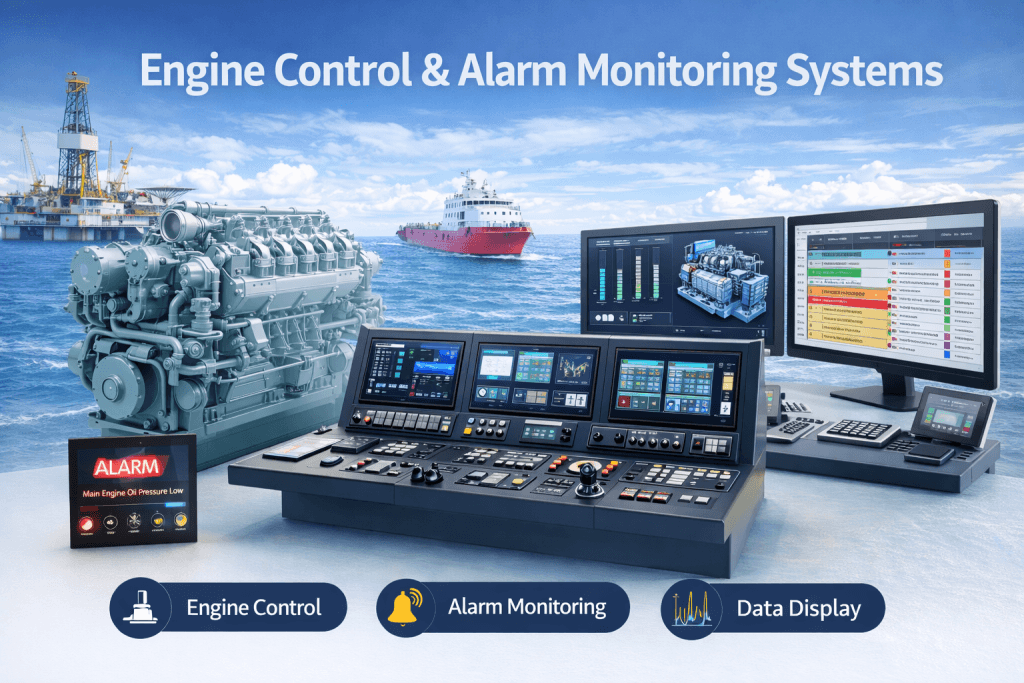
Step 1: Continuous Data Collection
The process begins with sensors strategically installed throughout the vessel. These sensors continuously monitor the operating condition of engines, generators, pumps, tanks, electrical systems, and other critical equipment.
Depending on the vessel's configuration, the system may collect data such as:
Main engine temperature
Lubricating oil pressure
Fuel oil pressure
Cooling water temperature
Exhaust gas temperature
Hydraulic pressure
Generator load
Every reading is transmitted to the central controller within seconds, ensuring engineers always have access to the latest operational information.
Step 2: Intelligent Data Processing
The controller collects the sensor data. Then the reading is compared with the operating limits set at the time of start-up of the system.
For example, the controller immediately recognizes conditions such as:
Engine temperature exceeding its safe operating limit
Lubricating oil pressure dropping below the minimum threshold
Cooling water temperature rising above acceptable values
Fuel tank level reaching a critical minimum
Generator voltage fluctuating outside normal limits
It’s not just collecting information, but the controller is constantly monitoring the data it receives to see if equipment is working safely or if some kind of correction is needed.
Modern systems scan thousands of sensor signals per second and immediately identify abnormal conditions
Step 3: Alarm Generation and Prioritization
When the system identifies an abnormal operating condition, it immediately generates an alarm.
However, not all alarms carry the same level of urgency. Modern ship alarm monitoring systems prioritize alarms based on their severity, allowing engineers to respond more efficiently.
Typical notification methods include:
Audible alarms
Flashing warning indicators
Color-coded alarm messages
Graphical notifications on the Human Machine Interface (HMI)
Alarm prioritization helps prevent alarm fatigue, a situation where excessive or low-priority alarms cause operators to overlook critical warnings.
For example:
Alarm Priority | Example |
Information | Routine system notification |
Warning | Low fuel level |
Alarm | High engine temperature |
Critical Alarm | Engine lubricating oil pressure failure |
This structured approach ensures the crew can quickly identify which alarms require immediate action.
Step 4: Operator Response and Corrective Action
When alarm is received, trained engineers assess the situation using the information showed on the monitoring system.
Depending on the nature of the alarm, corrective actions may include:
Reducing engine load
Activating standby equipment
Switching to backup pumps
Isolating faulty machinery
Scheduling immediate maintenance
Performing equipment inspections
Initiating emergency shutdown procedures when necessary
Because alarms are detected at an early stage, engineers can often resolve problems before they lead to equipment failure, improving both vessel safety and operational reliability.
How to Choose the Right Alarm Monitoring System for Your Vessel
Choosing the appropriate alarm monitoring system is a long term investment with direct impact on the vessel’s safety, operational efficiency and maintenance cost. For ship owners and operators, it will be important to look past price and how well the system will fit into their existing operational needs and support their future growth.
When comparing solutions, consider the following factors:
Compatibility with Existing Ship Automation Systems
The alarm monitoring system shall be integrated with existing engine control, power management, navigation and fire detection systems to reduce operational complexity and allow centralised monitoring.
Scalability for Future Expansion
The monitoring system should be expandable to add sensors and communication modules without having to replace the entire system as ships are upgraded or new equipment is added to the ship.
User-Friendly Interface
The Human Machine Interface is clear and intuitive, so engineers can easily interpret alarms and analyse the status of the system to respond effectively in emergencies.
Remote Monitoring Capabilities
Many modern systems also provide secure remote access, enabling fleet managers and technical teams to monitor vessel performance, review alarm history and support diagnostics from the shore.
Cybersecurity Features
As marine automation systems become more connected, cybersecurity measures like secure communication, user authentication, and regular software updates are crucial to protect operational technology from unauthorised access.
Technical Support and Spare Parts Availability
Good after sales support, software updates, documentation and readily available spare parts will help a lot in reducing the downtime and facilitate the long term maintenance.
Conclusion .
When comparing systems, don’t just compare the number of alarms that each system can monitor. A good system also needs to offer accurate diagnostics, intuitive alarm management, historical trend analysis and integration with the vessel’s overall automation infrastructure. Such features help in decision making, reduce maintenance costs and increase long term operational reliability.
Comments
Log in or sign up to join the conversation.