

Business growth brings opportunity, but it also increases operational complexity.
Many organizations begin with accounting software that successfully manages financial transactions during the early stages of growth. As the business expands, however, new requirements emerge inventory becomes more complex, customer expectations rise, reporting demands increase and teams need better access to reliable business information.
At this stage, the discussion often shifts from "Which accounting software should we use?" to "How can we create a more connected business?"
The Cost of Disconnected Operations
When finance, sales, purchasing, inventory and customer management operate through separate systems, businesses often face hidden inefficiencies.
Examples include:
Duplicate data entry
Delayed reporting
Inconsistent information
Manual reconciliation
Limited visibility across departments
Individually, these issues may seem manageable. Collectively, they can slow decision-making and reduce operational efficiency.
Why Businesses Are Investing in ERP?
Modern ERP platforms are designed to integrate core business functions into a single environment.
Instead of maintaining multiple disconnected applications, organizations gain access to a shared source of information that supports collaboration, improves reporting and streamlines everyday processes.
This shift is less about replacing existing software and more about building operational resilience for future growth.
Planning Before Technology
One of the most common misconceptions surrounding ERP projects is that implementation begins with software installation.
In reality, successful ERP initiatives begin much earlier. Businesses that define clear objectives, review existing processes, organize business data and prepare employees before implementation often experience smoother transitions and stronger long-term outcomes.
Technology is only one element of digital transformation. Strategy, governance, and user adoption are equally important.
As organizations continue investing in automation and digital transformation, ERP systems are becoming a critical part of long-term business strategy.
Whether the objective is improving operational visibility, reducing manual work or supporting expansion into new markets, careful planning remains the foundation of every successful implementation.
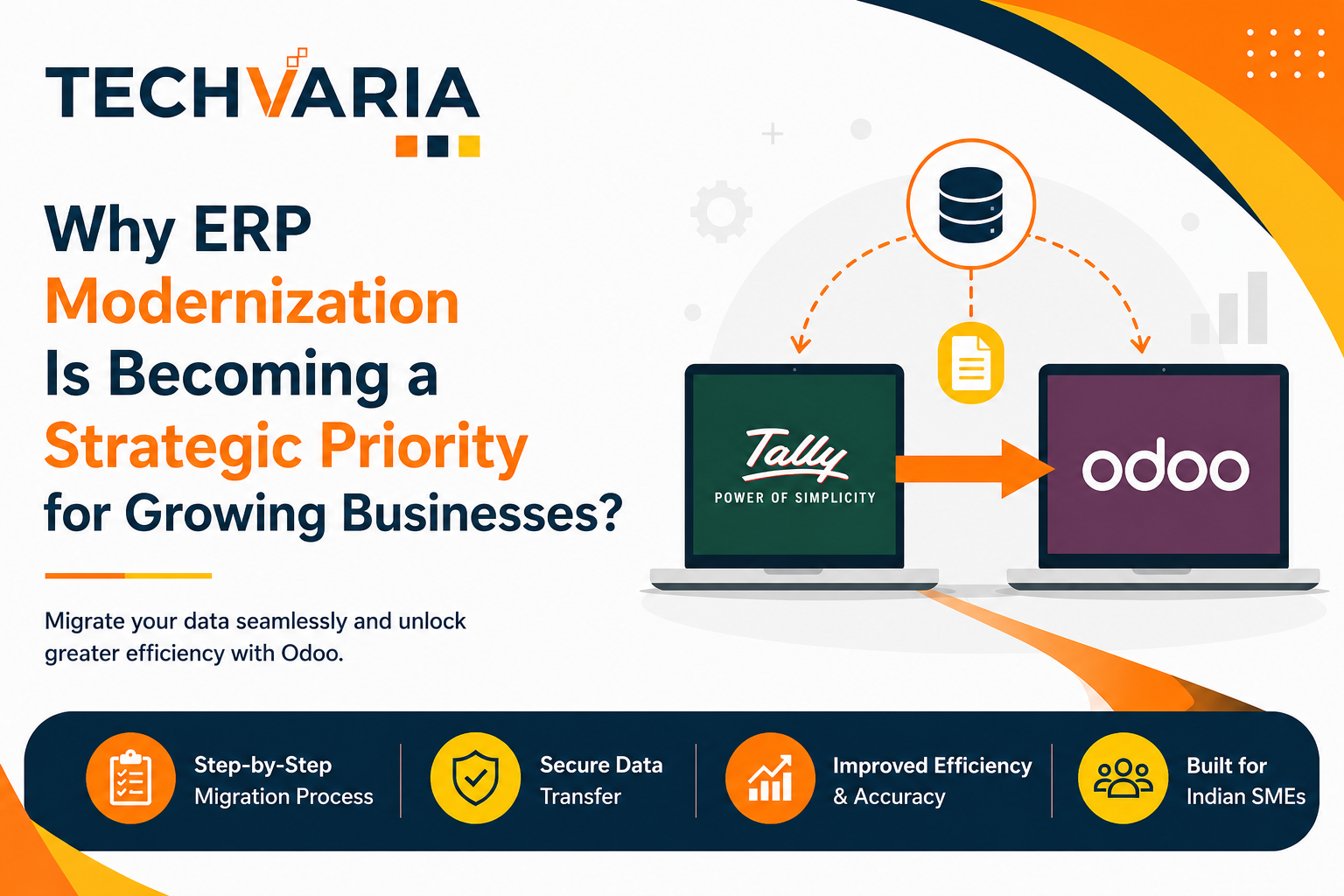
For organizations evaluating a move from Tally to Odoo, understanding the migration process before making technology decisions can provide valuable context for planning and execution.
Complete step-by-step guide: Tally to Odoo Migration for Indian SMEs
Comments
Log in or sign up to join the conversation.