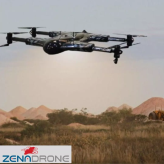

Agriculture has always been an industry defined by uncertainty. Weather fluctuations, pest outbreaks, soil variability, and resource constraints can all significantly impact yields and profitability. As farming operations continue to scale and global food demand rises, the margin for error becomes increasingly narrow.
Today, many agricultural producers are turning to advanced technologies to improve visibility across their operations. Among these innovations, drone-based monitoring and aerial intelligence are emerging as valuable tools that help farmers make more informed decisions while reducing operational risks.
The shift toward data-driven agriculture is not simply about adopting new technology. It reflects a broader need for accurate, timely field intelligence that allows producers to identify problems early, optimize resources, and build greater resilience against environmental and economic challenges.
The Challenge of Managing Large-Scale Farming Operations
Modern farming often involves managing thousands of acres spread across multiple locations. Traditional field scouting methods remain important, but they can be labor-intensive, time-consuming, and limited in scope.
A field that appears healthy from the ground may contain developing issues that are difficult to detect until significant damage has occurred. Nutrient deficiencies, irrigation failures, pest infestations, and disease outbreaks frequently begin in isolated areas before spreading across larger sections of a farm.
For agricultural managers, the challenge is not merely collecting information but obtaining accurate data quickly enough to take corrective action.
This is where aerial monitoring technologies are creating meaningful advantages. By providing comprehensive views of large agricultural areas, drones help bridge the gap between observation and action.
How Drones Are Transforming Agricultural Monitoring
The agricultural drone market has expanded rapidly over the past decade, driven by improvements in sensor technology, flight capabilities, and data analytics.
Equipped with high-resolution cameras, multispectral sensors, thermal imaging systems, and GPS-guided navigation, modern drones can gather detailed information about crop conditions in a fraction of the time required for manual inspections. These aerial systems enable farmers to monitor:
Crop health and vigor
Plant stress indicators
Irrigation effectiveness
Drainage performance
Pest and disease activity
Soil variability
Emergence rates and stand counts
The ability to capture data across entire fields creates a more complete picture of operational conditions. Rather than relying solely on spot checks, decision-makers gain access to broad and highly detailed insights that can support more effective management strategies.
Turning Data Into Better Decisions
Collecting aerial imagery is only one part of the equation. The real value lies in transforming that information into actionable intelligence.
Advanced analytics platforms can process drone-generated data to identify anomalies and highlight areas requiring immediate attention. Vegetation indices, thermal patterns, and spatial analysis help reveal issues that may not be visible during routine inspections.
For example, areas experiencing water stress often exhibit subtle changes in plant health before symptoms become obvious to the naked eye. Early detection enables producers to investigate irrigation systems, adjust watering schedules, or address underlying infrastructure problems before crop losses escalate.
Similarly, drone imagery can identify drainage-related concerns that may affect productivity. Understanding what is waterlogging in agriculture and detecting its early signs can be critical for preventing root damage, nutrient loss, and yield reductions caused by excess moisture accumulation.
By identifying problems earlier, agricultural operators can often reduce remediation costs while preserving crop performance.
Environmental Risks and Their Economic Consequences
Environmental challenges represent one of the most significant threats to agricultural profitability. Climate variability is increasing the frequency of extreme weather events, including droughts, flooding, heat stress, and severe storms. The financial consequences can be substantial.
According to numerous agricultural studies, yield losses associated with unmanaged water stress, disease outbreaks, and poor drainage can significantly impact both short-term revenue and long-term land productivity. In large-scale operations, even relatively small reductions in yield percentages can translate into considerable financial losses.
Drone-based monitoring helps address these risks by providing regular assessments that allow operators to track changing conditions throughout the growing season.
Instead of reacting after visible damage occurs, farmers can implement proactive management strategies based on real-time field observations. This shift from reactive to predictive decision-making represents one of the most important developments in modern agricultural management.
Resource Optimization in an Era of Rising Costs
Agricultural producers are also facing increasing pressure from rising input costs. Fertilizers, fuel, labor, water, and crop protection products continue to represent major operational expenses.
As a result, efficiency has become a central priority across the industry.
Data-driven monitoring supports precision agriculture practices that help allocate resources more effectively. Rather than applying inputs uniformly across entire fields, farmers can target specific areas where intervention is needed. This targeted approach can improve:
Water use efficiency
Fertilizer application accuracy
Crop protection effectiveness
Labor productivity
Equipment utilization
The result is often improved operational efficiency alongside more sustainable resource management practices.
For investors and industry stakeholders, these efficiency gains highlight why agricultural technology continues to attract attention as a long-term growth sector.
Building Resilience Through Continuous Field Intelligence
One of the most valuable aspects of drone-based monitoring is its ability to provide ongoing visibility throughout the growing season.
Agricultural conditions can change rapidly. A field that appears healthy one week may develop stress indicators the next. Continuous monitoring allows producers to establish baseline conditions, track trends over time, and evaluate the effectiveness of management decisions.
Historical data also becomes increasingly valuable as operations build long-term records of field performance. These datasets can support future planning efforts, improve forecasting accuracy, and contribute to more resilient farming strategies.
As machine learning and artificial intelligence capabilities continue to advance, the ability to generate predictive insights from agricultural datasets is expected to become even more sophisticated.
Future systems may help forecast disease outbreaks, estimate yield potential, identify emerging environmental threats, and recommend interventions with increasing levels of precision.
The Future of Smart Agriculture
The future of agriculture will depend heavily on the ability to make better decisions using better information. As farms grow larger and environmental pressures become more complex, accurate field intelligence is evolving from a competitive advantage into a fundamental operational requirement.
Drone technology is playing an increasingly important role in this transformation by providing scalable, cost-effective visibility across agricultural operations. When combined with advanced analytics and precision management practices, aerial intelligence helps farmers identify challenges earlier, allocate resources more efficiently, and reduce the impact of environmental risks.
While no technology can eliminate the inherent uncertainties of farming, the growing adoption of drone-based monitoring reflects a broader shift toward proactive, data-driven agriculture. For producers, investors, and industry leaders alike, the continued evolution of aerial intelligence systems may prove to be one of the most significant developments shaping the future of smart agriculture.
Comments
Log in or sign up to join the conversation.