

AMD beat Wall Street on revenue and earnings, raised guidance, and watched its stock drop anyway. That about sums up where the bar is right now for AI chip stocks.
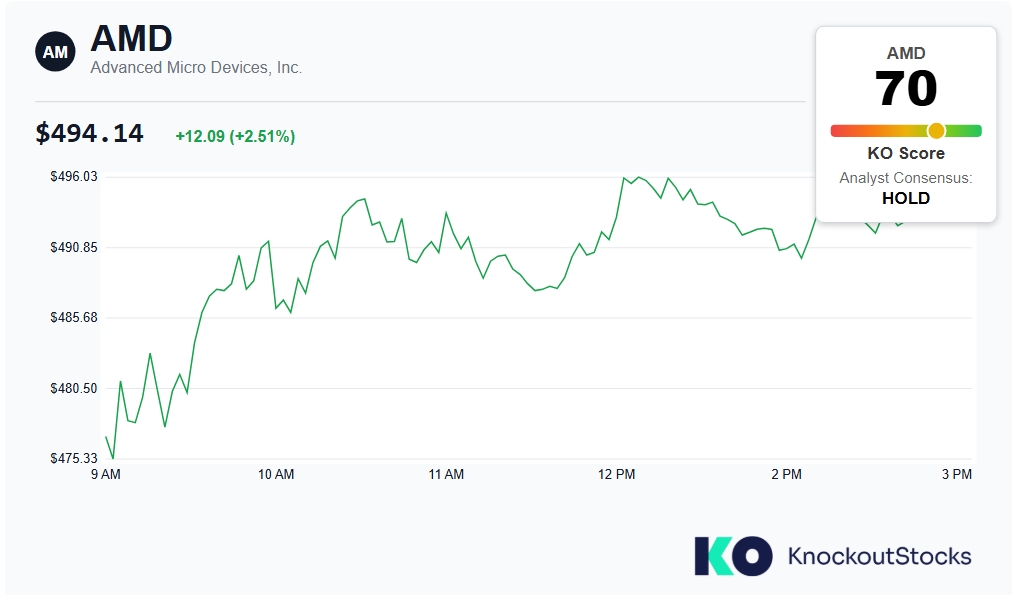
Advanced Micro Devices, Inc., AMD
The chipmaker posted Q2 revenue of $11.54 billion, up 50% from $7.69 billion a year ago. Adjusted earnings per share came in at $1.66, ahead of the $1.62 analysts had penciled in. By any traditional measure, it was a strong quarter.
Yet AMD stock fell roughly 5% on Wednesday following the results.
“It was priced for something much closer to a blowout,” said Shay Boloor, Futurum chief market strategist. “It was priced for an exceptional result, and this was not an exceptional result.”
Data Center Strength Not Enough
The headline number from the quarter was data center revenue, which hit $6.7 billion, up 107% year-over-year. Data center now makes up 58% of AMD’s total revenue, compared to 42% just a year ago.
That growth cements AMD’s position as the main alternative to Nvidia in AI infrastructure. Management also put out a bold long-term view, estimating the server CPU market could grow from around $26 billion in 2025 to roughly $220 billion by 2030.
Earnings per share jumped 246% year-over-year.
Capex Jump Spooked Investors
One number that caught investors off guard was capital expenditure. AMD’s capex hit $808 million for the quarter, up from $282 million a year ago and $389 million in the March quarter.
“That’s a shocking upside revision for the capex number,” Boloor said.
Higher spending raises questions about near-term margins and free cash flow, which likely added pressure to the stock. The company is investing in manufacturing capacity for EPYC processors and its Helios rack-scale AI systems.
For Q3, AMD guided for revenue of approximately $13 billion, plus or minus $300 million. That beat some analyst estimates of $12.5 billion but fell short of the most bullish forecasts, which had called for up to $14 billion.
“The company did beat across the board, but it wasn’t enough to reset expectations for a stock that’s trading nearly 60 times earnings,” Boloor added.
AMD also flagged a softening PC market in the second half of the year, citing higher memory and component costs weighing on demand. CEO Lisa Su said the company expects its client business to outperform the broader market despite those headwinds.
Gaming graphics revenue declined year-over-year as higher component costs pushed up graphics card prices and hit overall demand.
AMD is up more than 115% year to date heading into this earnings reaction, having surged around 142% in 2026 overall. Those gains set a high bar. Investors are no longer just asking whether AMD beat, they are asking whether it beat by enough to justify a premium valuation.
Q3 guidance of $13 billion and a record data center quarter were not enough to clear that bar this time.



Comments
Log in or sign up to join the conversation.