

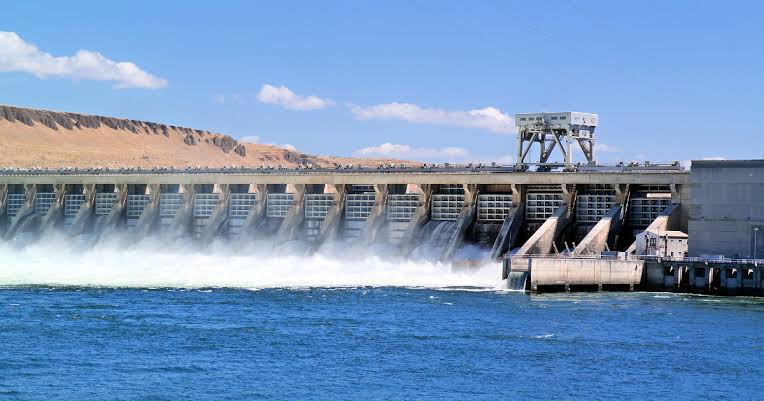
Water security is hardly a question of annual rainfall alone. Many other factors also play their role in water security, because rainwater can go waste if it is not properly catered for. Therefore, the real challenge is whether water can be stored, released, routed, and kept protected because drought, floods, demand, and electricity requirements change. That makes dams and hydropower engineering important. It links up hydrology, storage, flood management, structural safety, river hydraulics, and energy production within one system. When projects are properly planned well, reservoirs can provide water supply during dry-period and hydropower produces renewable electricity through controlled releases.
How Dams and Hydropower Engineering Supports Water Security
The World Bank observes that storing water is an important part of water security because reservoirs can improve usable water, decrease flood impacts, and support services like irrigation, potable supply, navigation, availability and hydropower. Dams and hydropower engineering drive those broad objectives into operating rules, structures, and safeguards for real river conditions.
A multipurpose project may require balancing numerous demands as follows:
Maintain consistent water supply during seasonal shortages;
Store irrigation water while protecting downstream requirements;
Decrease floods while preserving storage space;
Produce electricity when releases align with grid demand;
Manage sediment to preserve functional storage capacity;
Maintain environmental flows and safe downstream conditions.
Those objectives mutually compete. Therefore, competent engineering starts with basin data, not with a desired dam height or turbine arrangement.
Hydropower Adds Energy Security to Water Infrastructure
Hydropower grants stored water another strategic function. The World Bank stated in 2026 that hydropower supports access to energy for more than one billion people globally and that capacity needs to increase about 30% worldwide by 2035 to meet mounting demand and strengthen energy security.
Efficient integrated design estimates the whole water-to-wire pathway: catchment inflow, reservoir behavior, intake hydraulics, head losses, turbines, waterways, tailrace conditions, grid needs, and operating constraints.
For owners looking for dams and hydropower engineering services, the main question is not simply how much energy a scheme generates. Basic question is whether production remains compatible with water supply, flood control, dam safety, environmental commitments, and altering hydrology.
Climate Variability Makes Flexible Design More Important
Availability of water determines hydropower output. The IEA stated that drought conditions limited hydropower output in numerous regions during 2025, increasing dependence on fossil generation. This demonstrates why historical flow records alone are not sufficient for projects.
Modern project planning should analyze:
Floods beyond routine operating conditions;
Lengthy drought and low-inflow sequences;
Altering seasonality and sediment loads;
Reservoir evaporation and competing withdrawals;
Emergency drawdown and spillway capacity;
Operational flexibility under unsure future inflows.
This is where water resources engineering services become closely connected with structural, geotechnical, electrical, and mechanical design.
Safety and Sustainability Cannot Be Secondary
A dam focuses on risk as well as water. Failure can cause threats for downstream communities, while poor operation can damage ecosystems or other water users. Engineering therefore should consider geology, seepage, slope stability, seismic loading, spillway adequacy, instrumentation, emergency planning, and lifecycle maintenance.
The same discipline is applicable to rehabilitation. Aging gates, sediment increase, changing flood estimations, or weakening concrete can alter the risk profile of a current project. Qualified dams and hydropower engineering services should consider inspection, monitoring, and operational review as ongoing responsibilities, not one-time tasks.
Why Integrated Water Resources Planning is Important
That integration helps decision-makers compare alternatives, identify trade-offs, and avoid shifting problems elsewhere in the basin.
Frequently Asked Questions
Q.1. What do dams and hydropower engineering include?
Dams and hydropower engineering involve hydrology, reservoir studies, dam type and layout, spillways, intakes, waterways, powerhouses, turbines, hydraulics, geotechnical and structural design, dam safety, sediment, environmental considerations, and operational planning.
Q.2. How do dams enhance water security?
Dams can enhance water security by storing wet-season water to be used later, strengthen municipal and irrigation requirements, regulate flows, decrease some flood peaks, and enhance operating flexibility. Sound planning, safe design, operation, and basin-wide water allocation determine the benefits of dams.
Q.3. Is hydropower always beneficial for water security?
No, hydropower is not always beneficial for water security. Hydropower can grant renewable electricity and operational flexibility, but projects may also impact ecosystems, sediment movement, communities, and downstream water users. Site-specific evaluation and transparent trade-off analysis are critical.
Q.4. When should specialist engineering support begin?
Specialist input should commence during the screening and feasibility phase, before location, storage, dam type, installed capacity, and operating assumptions become difficult to change. Engineering staff augmentation services can provide additional technical expertise during early analysis, helping teams align water, energy, safety, environmental, and economic objectives.
Conclusion
Infrastructure that can perform safely across wet years, dry years, emergencies, and decades of changing demand can provide water security. Innovation M Engineering Services provides support to clients with coordinated dams, hydropower, hydraulic, and water-resources expertise, helping project teams examine options, risks, and design requirements before expensive decisions become fixed. The strongest projects originate with combined evidence throughout the asset lifecycle.
Comments
Log in or sign up to join the conversation.