
In the past, running a website, software application, or enterprise database meant buying physical servers, renting rack space in data centers, and managing hardware maintenance manually. Today, that physical headache has vanished for most forward-thinking organizations.
The driver behind this transformation is cloud computing—the delivery of on-demand computing services—including storage, processing power, databases, and artificial intelligence—over the internet on a pay-as-you-go basis.
Let's explore why cloud computing is the powerhouse of modern technology, which global giants rely on it, and how you can start learning it today.
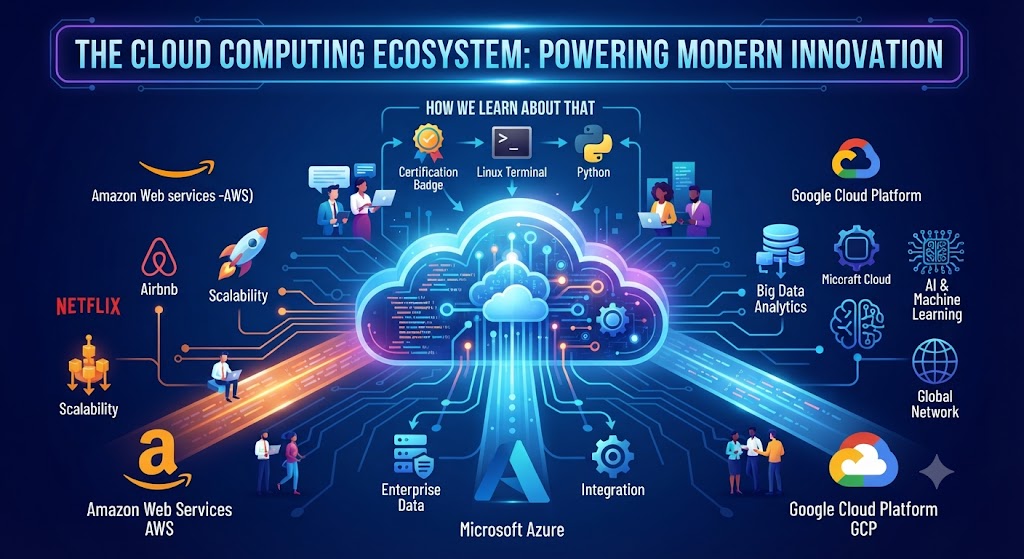
Why Cloud Computing is Most Powerful for Modern Systems
Cloud computing has fundamentally changed how software is built and scaled. Its unmatched power stems from several core advantages:
Infinite Scalability: If a retail website experiences a massive surge in traffic during a holiday sale, a traditional server might crash under the load. Cloud environments can automatically spin up extra processing power in seconds and scale down when traffic normalizes.
Cost Efficiency: Businesses no longer need to spend millions upfront on physical hardware. The pay-as-you-go model means companies only pay for the exact storage and computing power they consume.
Global Reach in Clicks: Cloud providers have data centers distributed across the globe. With a few clicks, companies can deploy applications closer to international users, drastically reducing latency.
Accelerating AI and Innovation: Modern cloud ecosystems integrate cutting-edge machine learning tools, allowing developers to build and scale artificial intelligence applications without building massive infrastructure from scratch.
Which Companies Are Using Cloud Computing?
Virtually every modern startup, enterprise, and government agency relies on cloud infrastructure. The market is anchored by three major cloud providers (hyperscalers) that power the internet:
Amazon Web Services (AWS): The undisputed market leader, AWS powers massive platforms like Netflix, Airbnb, and NASA, handling everything from database management to heavy machine learning workloads.
Microsoft Azure: Favored heavily by large-scale enterprise environments and Fortune 500 corporations. Because of its deep integration with corporate tools, companies use Azure for hybrid cloud setups and secure enterprise software deployment.
Google Cloud Platform (GCP): Known for its dominance in data analytics, machine learning, and big data management, GCP is the engine behind data-heavy organizations and AI-first startups.
Beyond infrastructure providers, software giants like Salesforce manage massive customer relationship data in the cloud, while streaming services, banks, and hospitals rely on multi-cloud setups to keep operations secure and uninterrupted.
How to Learn Cloud Computing: A Step-by-Step Path
With high demand and lucrative career opportunities, learning cloud computing is one of the best technical skills you can acquire. Here is how you can get started:
Step 1: Build Your IT Prerequisites
Before diving straight into cloud platforms, establish a solid foundation in the building blocks of technology:
Learn the basics of Linux operating systems, as the vast majority of cloud servers run on Linux.
Understand fundamental computer networking concepts (IP addresses, DNS, firewalls, and HTTP/HTTPS protocols).
Pick up a scripting language like Python or JavaScript to automate tasks.
Step 2: Grasp Core Cloud Concepts
Familiarize yourself with fundamental cloud architecture terms:
Service Models: Learn the differences between Infrastructure as a Service (IaaS), Platform as a Service (PaaS), and Software as a Service (SaaS).
Deployment Models: Understand public, private, hybrid, and multi-cloud environments.
Step 3: Choose a Cloud Provider and Get Hands-On
Pick one major ecosystem to start with—AWS, Microsoft Azure, or Google Cloud Platform. Each of these platforms offers generous free tiers for beginners. Set up a free account and practice:
Launching virtual machines (like an EC2 instance on AWS).
Setting up cloud storage buckets.
Configuring basic networking and firewalls.
Step 4: Pursue Industry Certifications
To validate your skills to future employers, study for and earn foundational certifications, such as:
AWS Certified Cloud Practitioner or AWS Solutions Architect
Microsoft Azure Fundamentals (AZ-900)
Google Cloud Digital Leader
These certifications provide structured learning paths and are widely recognized across the tech industry.
Final Thoughts
Cloud computing is no longer an emerging technology—it is the absolute standard of modern digital engineering. Whether you want to build scalable web applications, manage data systems, or dive into artificial intelligence, understanding the cloud is an essential superpower.
Are you planning to explore cloud computing for software development, or are you looking to earn your first cloud certification soon?
Comments
Log in or sign up to join the conversation.